Balanced Forces (Edexcel GCSE Physics): Revision Note
Exam code: 1PH0

Written by: Katie M
Updated on
Balanced Forces
Higher Tier Only
A resultant force is a single force that describes all of the forces operating on a body
When many forces are applied to an object they can be combined (added) to produce one final force which describes the combined action of all of the forces
This single resultant force determines:
The direction in which the object will move as a result of all of the forces
The magnitude of the final force experienced by the object
The resultant force is sometimes called the net force
Forces can combine to produce
Balanced forces
Unbalanced forces
Balanced forces mean that the forces have combined in such a way that they cancel each other out and no resultant force acts on the body
For example, the weight of a book on a desk is balanced by the normal force of the desk
As a result, no resultant force is experienced by the book, the book and the table are equal and balanced
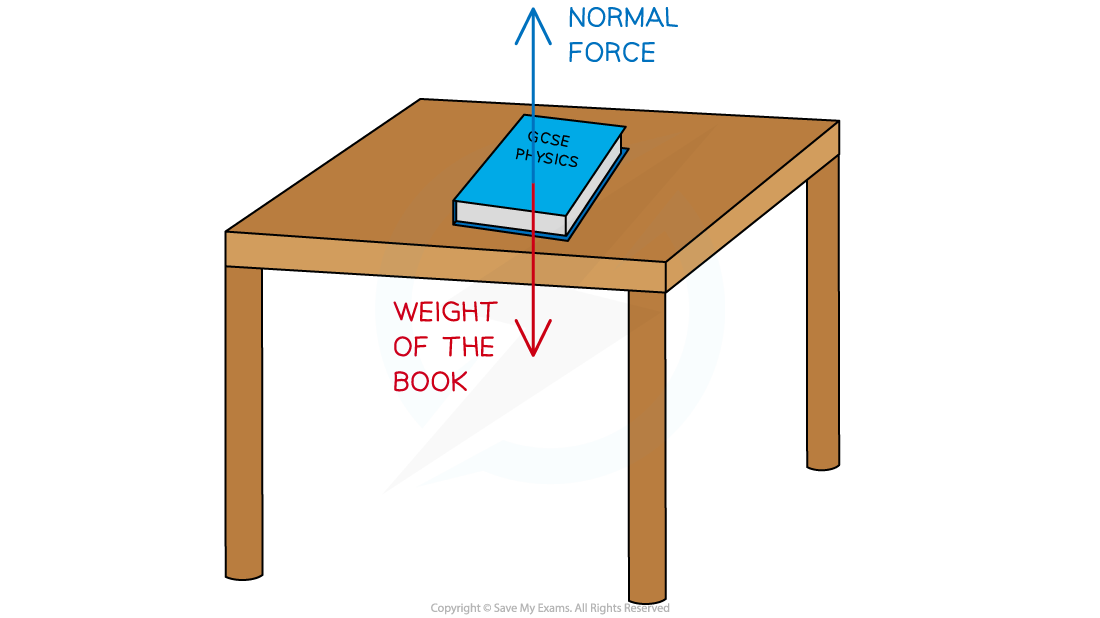
A book resting on a table is an example of balanced forces
Unbalanced forces mean that the forces have combined in such a way that they do not cancel out completely and there is a resultant force on the object
For example, imagine two people playing a game of tug-of-war, working against each other on opposite sides of the rope
If person A pulls with 80 N to the left and person B pulls with 100 N to the right, these forces do not cancel each other out completely
Since person B pulled with more force than person A the forces will be unbalanced and the rope will experience a resultant force of 20 N to the right
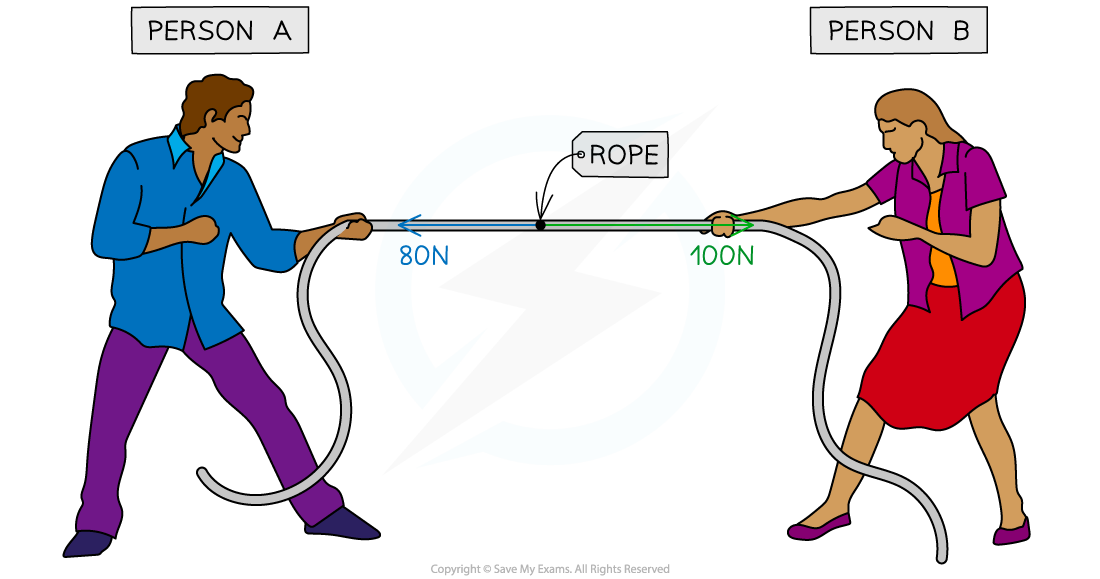
A tug-of-war is an example of when forces can become unbalanced

Unlock more, it's free!
Join the 100,000+ Students that ❤️ Save My Exams
the (exam) results speak for themselves:

Was this revision note helpful?