Moments (Edexcel GCSE Physics): Revision Note
Exam code: 1PH0

Forces & Rotation
As well as causing objects to speed up, slow down, change direction and deform, forces can also cause objects to rotate
A system of forces can also do this
An example of a rotation caused by a force is on one side of a pivot (a fixed point that the object can rotate around)
This rotation can be clockwise or anticlockwise
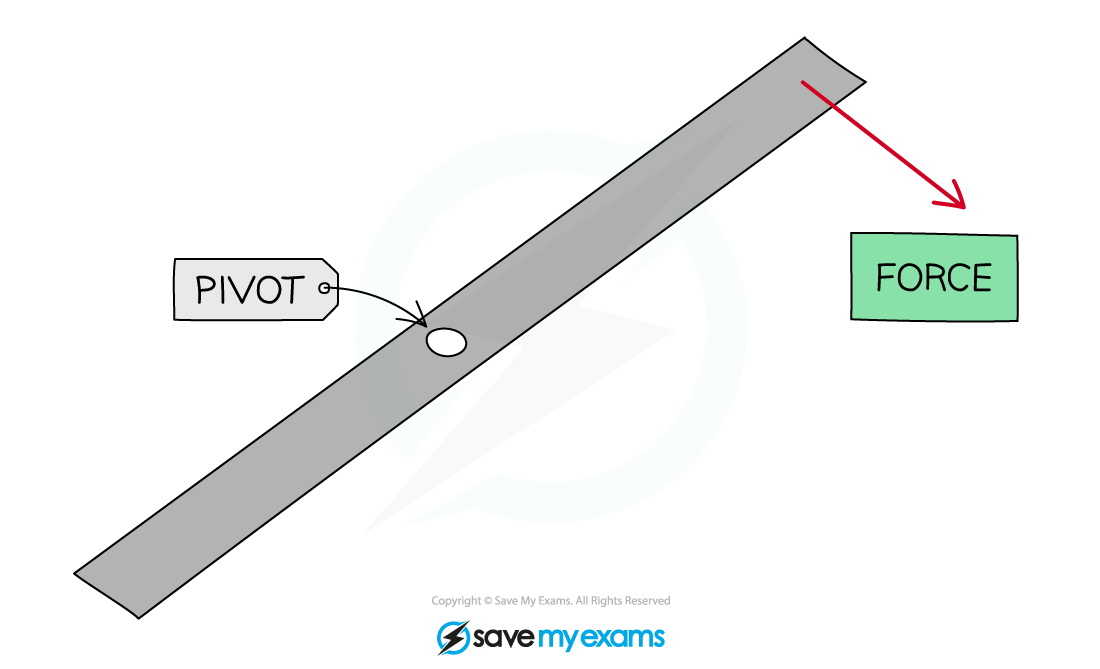
The force will cause the object to rotate clockwise about the pivot
More examples of rotation caused by a force are:
A child on a see-saw
Turning the handle of a spanner
A door opening and closing
If two forces act on an object without passing through the same point, then the object can still rotate
If the forces are equal and opposite, this is known as a couple
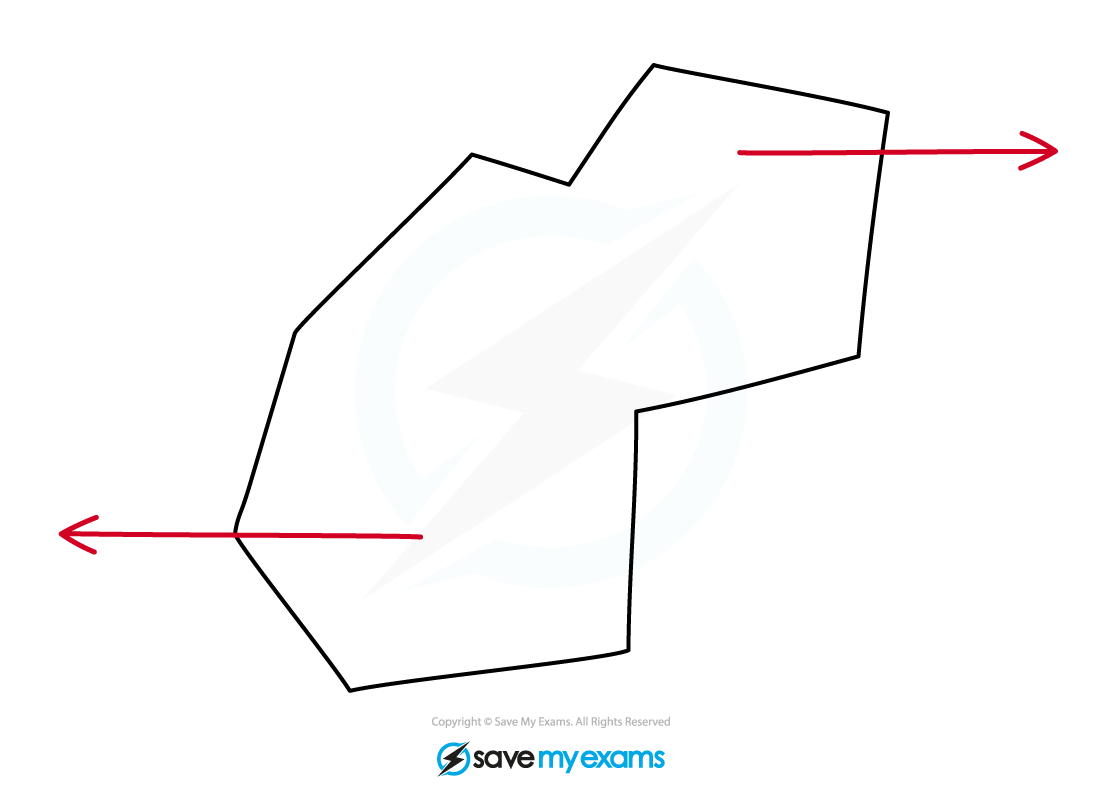
The above forces are balanced, but will still cause the object to rotate clockwise as they don’t act through a common point
The Moment of a Force
A moment is defined as:
The turning effect of a force about a pivot
The size of a moment is defined by the equation:
M = F × d
Where:
M = moment in newton metres (Nm)
F = force in newtons (N)
d = perpendicular distance of the force to the pivot in metres (m)
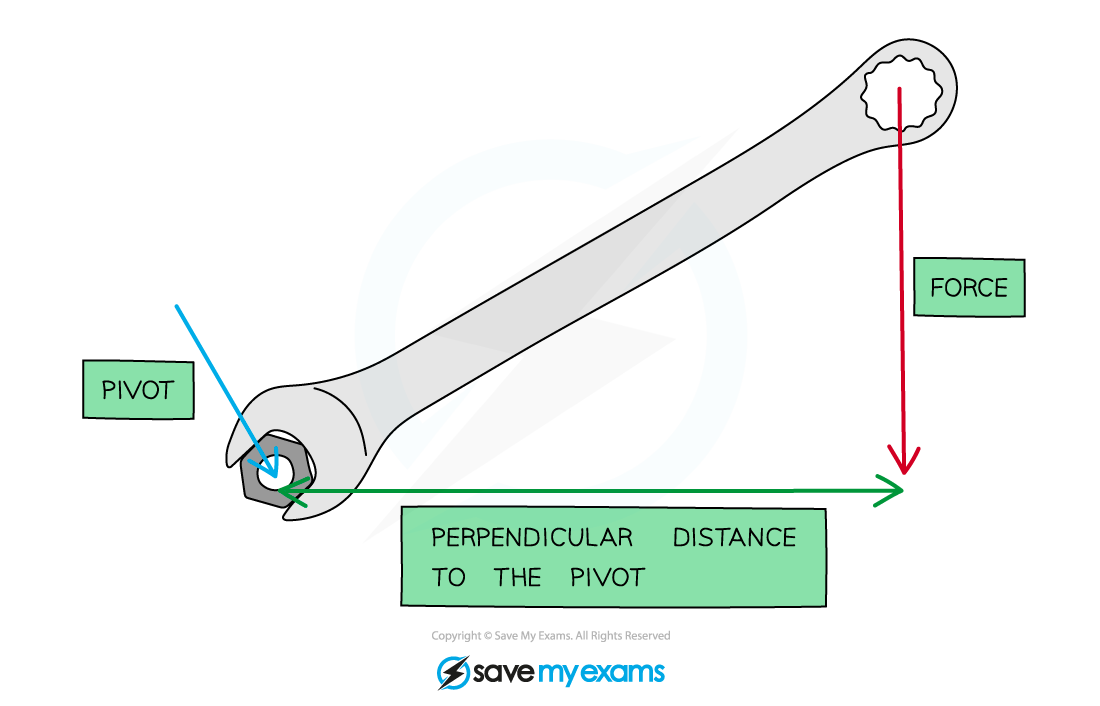
The moment depends on the force and perpendicular distance to the pivot
This is why, for example, the door handle is placed on the opposite side to the hinge
This means for a given force, the perpendicular distance from the pivot (the hinge) is larger
This creates a larger moment (turning effect) to make it easier to open the door
Opening a door with a handle close to the pivot would be much harder, and would require a lot more force
Examiner Tips and Tricks
The units of a moment is Newton metres (N m), but can also be Newton centimetres (N cm) ie. where the distance is measured in cm instead If the exam question doesn't ask for a specific unit, always convert the distance into metres

Unlock more, it's free!
Join the 100,000+ Students that ❤️ Save My Exams
the (exam) results speak for themselves:

Was this revision note helpful?
Build on this topic
