1a1 mark
Sketch the Ponzo illusion.
1b3 marks
Outline how psychologists explain the Ponzo illusion.
Was this exam question helpful?
Exam code: 8182
Sketch the Ponzo illusion.
Outline how psychologists explain the Ponzo illusion.
Was this exam question helpful?
‘Fiction’ is one explanation for why people see visual illusions.
Which of the following visual illusions is an example of fiction?
Choose one correct answer.
The Ames room
The Kanizsa triangle
The Müller-Lyer
The Necker cube
Was this exam question helpful?
Which is the best explanation for the visual illusion known as Rubin’s vase?
Choose one correct answer.
Ambiguity
Convergence
Misinterpreted depth cues
Size constancy
Was this exam question helpful?
Sketch the Müller-Lyer illusion.
Was this exam question helpful?
Outline how psychologists explain the Müller-Lyer illusion.
Was this exam question helpful?
Some visual illusions are images that can be interpreted in more than one way.
Which one of the following explains how this can occur?
Ambiguity
Fiction
Misinterpreted depth cues
Size constancy
Was this exam question helpful?
Figure 2: The Necker cube illusion
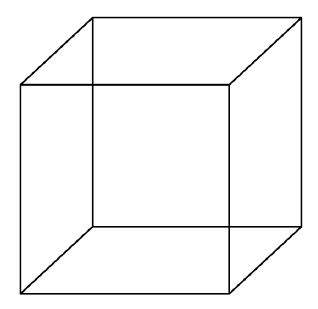
Figure 2 shows the Necker cube illusion.
Outline how psychologists would explain the Necker cube illusion.
Was this exam question helpful?
Which is the best explanation for the visual illusion known as the Ames room?
Ambiguity
Fiction
Occlusion
Size constancy
Was this exam question helpful?
Sketch the Müller-Lyer illusion.
Outline how psychologists would explain the Müller-Lyer illusion.
Was this exam question helpful?
Which is the best explanation for the visual illusion known as the ‘Necker cube’?
ambiguity
convergence
misinterpreted depth cues
size constancy
Was this exam question helpful?