Translations of Graphs (Edexcel GCSE Maths: Higher): Revision Note
Exam code: 1MA1

Translations of graphs
What are translations of graphs?
The equation of a graph can be changed in certain ways
This has an effect on the graph
How a graph changes is called a graph transformation
A translation is a type of graph transformation that shifts (moves) a graph (up or down, left or right) in the xy plane
The shape, size, and orientation of the graph remain unchanged
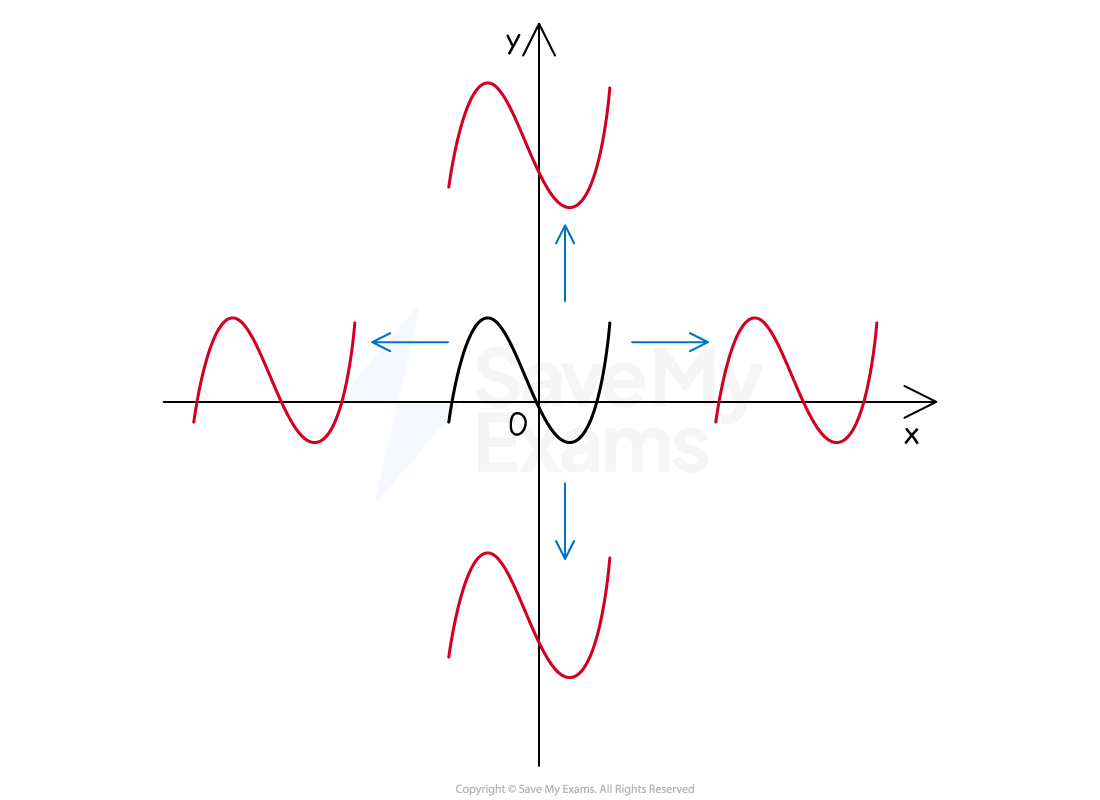
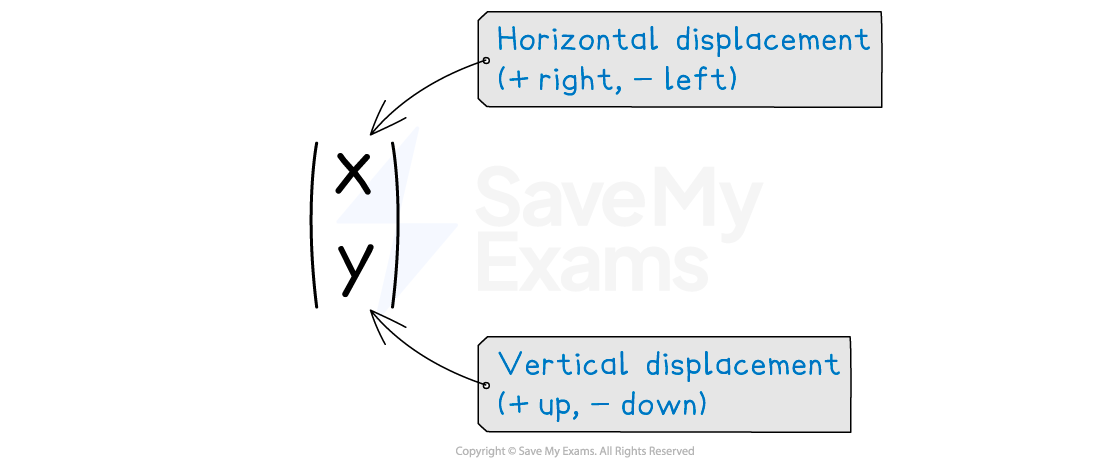
A particular translation is specified by a translation vector
How do I translate graphs?
Let be the equation of the original graph
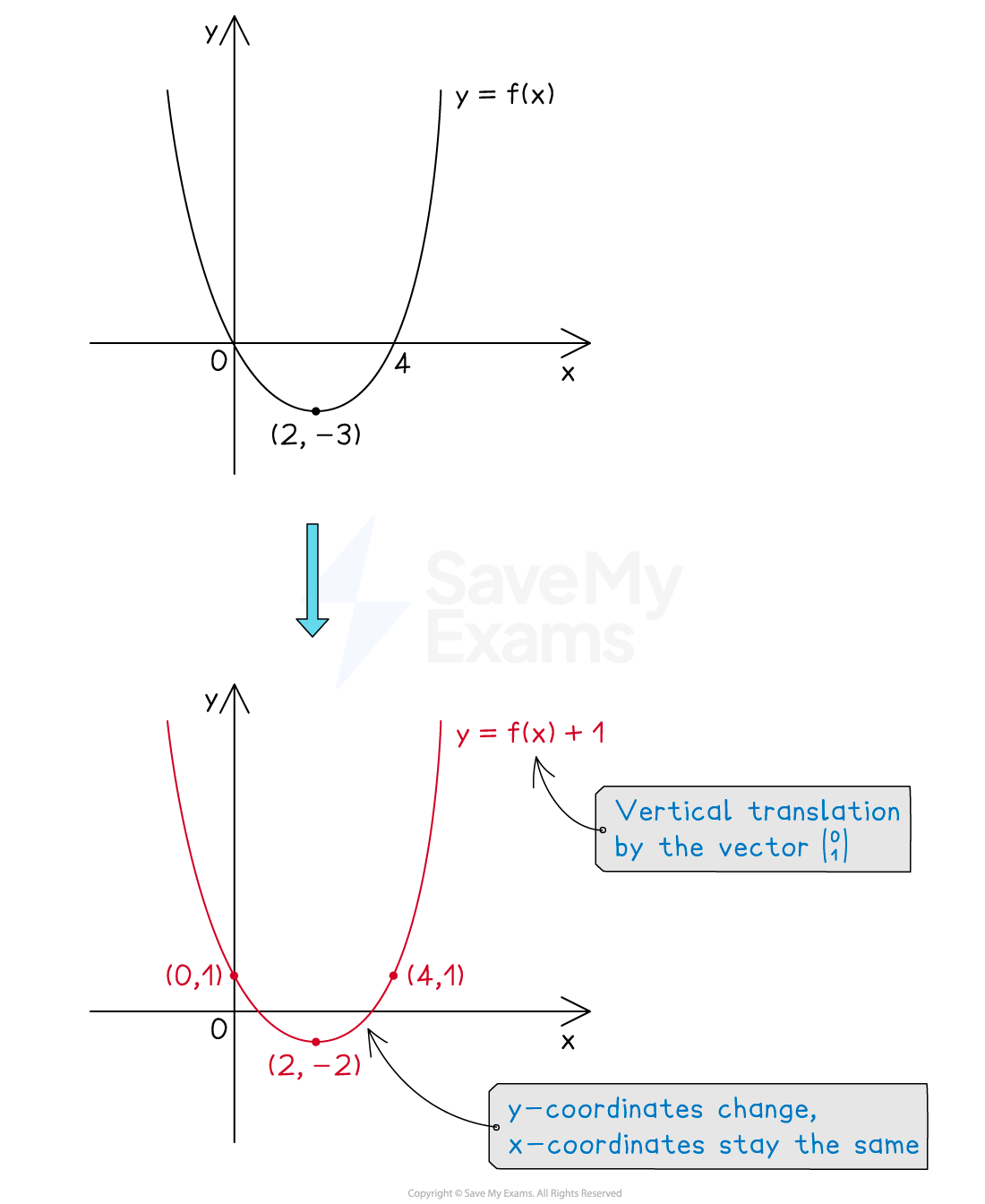
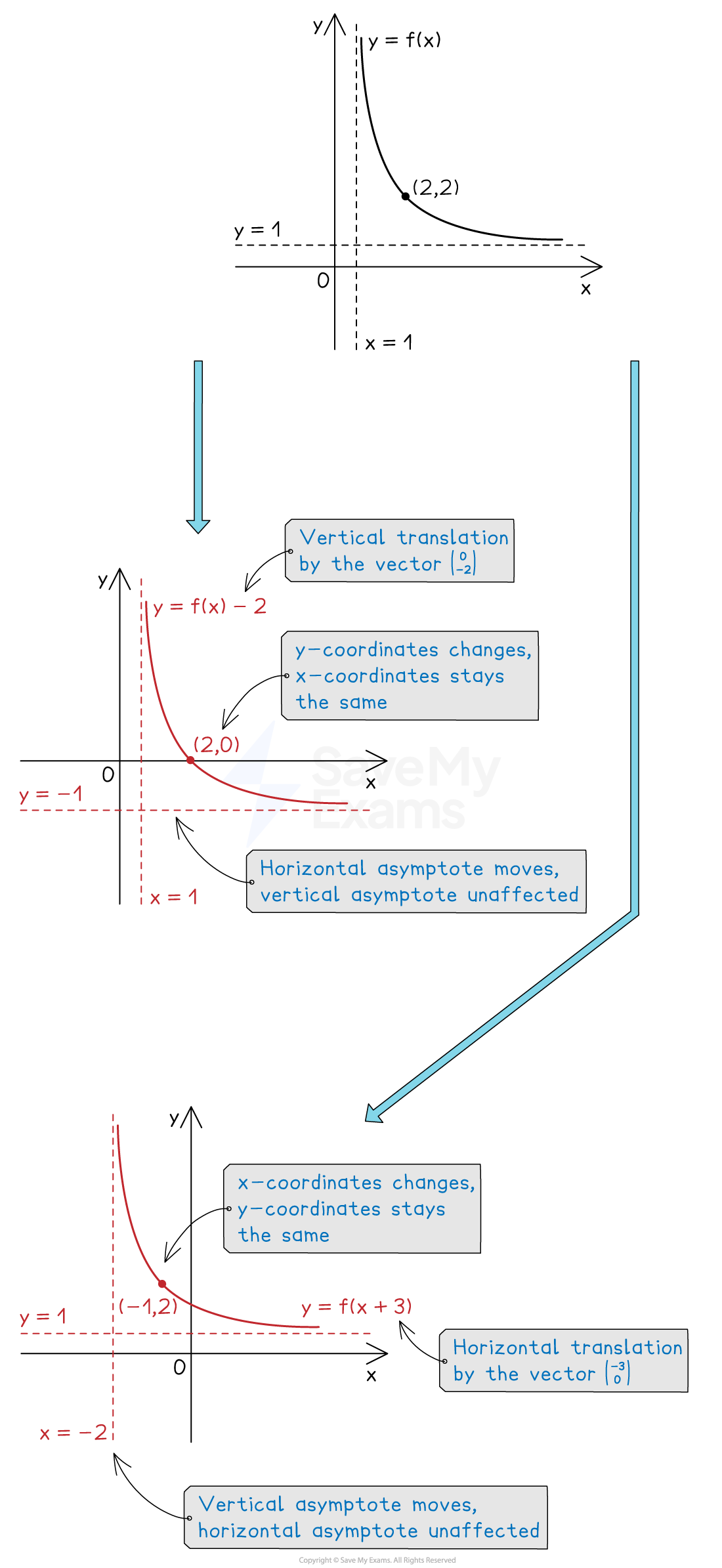
Vertical translations: y=f(x) + a
is a vertical translation by the vector
The graph moves up for positive values of
The graph moves down for negative values of
The x-coordinates stay the same
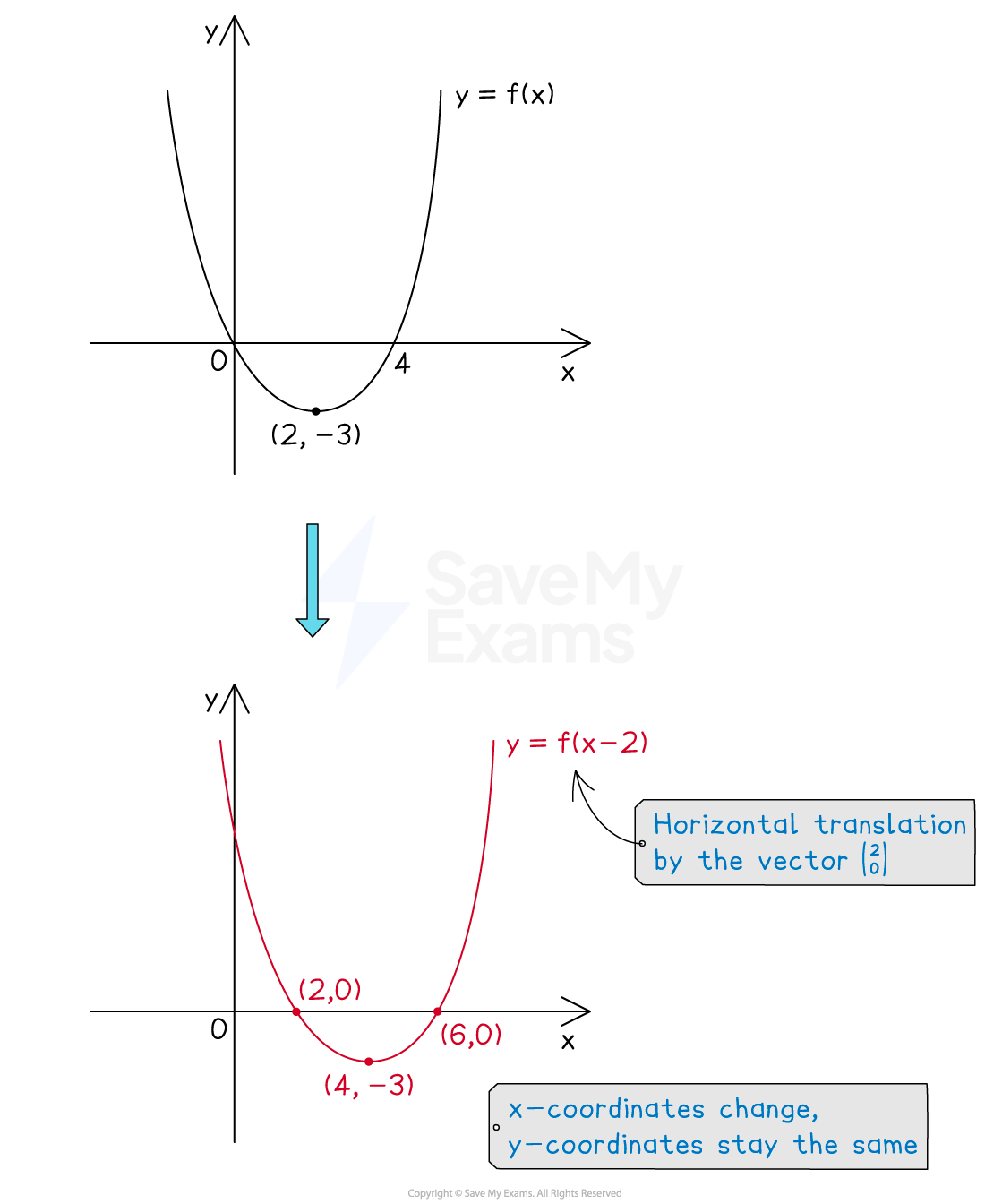
Horizontal translations: y=f(x + a)
is a horizontal translation by the vector
The graph moves left for positive values of
This is often the opposite direction to which people expect
The graph moves right for negative values of
The y-coordinates stay the same
What happens to asymptotes when a graph is translated?
Any asymptotes of f(x) are also translated
An asymptote parallel to the direction of translation will not be affected
How does a translation affect the equation of the graph?
For a horizontal translation of the graph
is subtracted from throughout the equation
Every instance of in the equation is replaced with
E.g. the graph undergoes a translation of 6 units to the right
becomes
is replaced throughout the equation by
is the new equation
The equation can be left in this form or expanded and simplified
For a vertical translation of the graph
is added to the equation as a whole
E.g. the graph undergoes a translation of 5 units down
becomes
5 is subtracted from the equation as a whole
The equation can be left in this form or simplified
How do I apply a combined translation?
For a horizontal translation of units and vertical translation of units combined
becomes
E.g. the graph undergoes a translation of 2 units up and 1 unit to the left
will become
is replaced throughout the equation by
2 is added to the equation as a whole
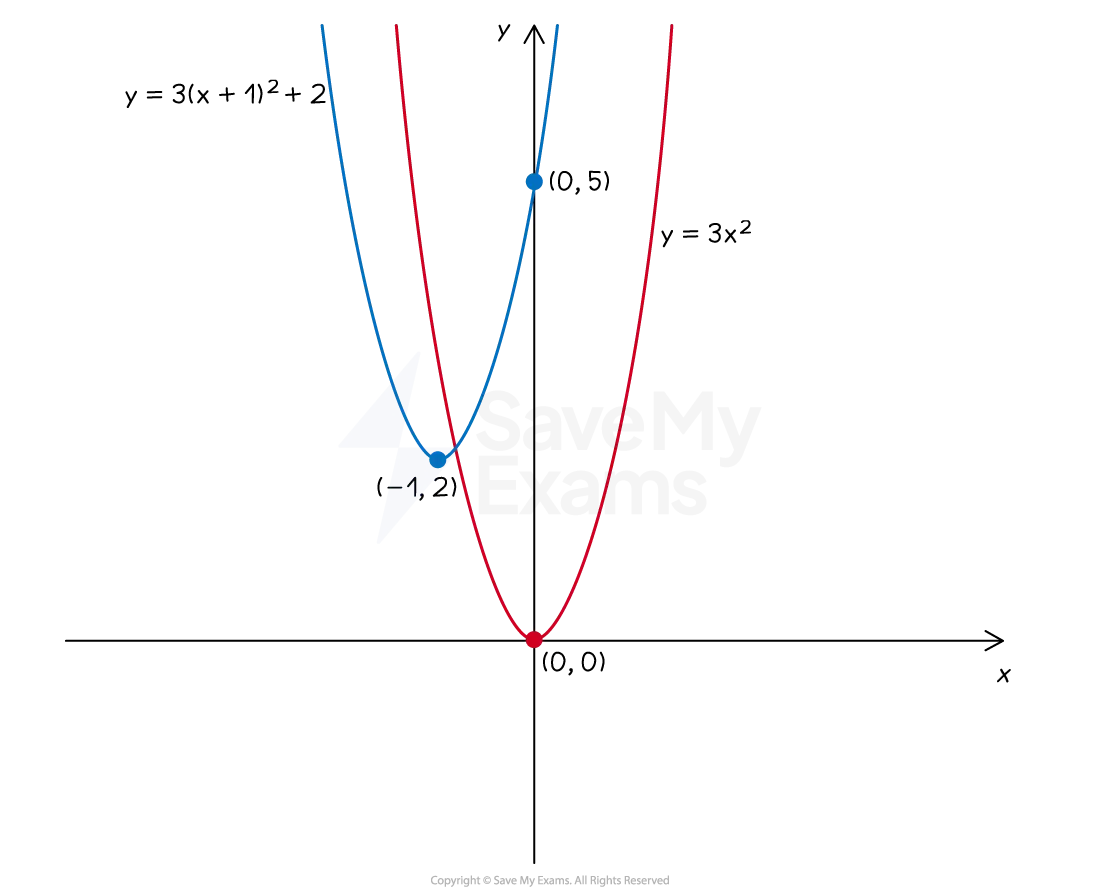
Note that when the equation is in the form
the vertex is
the value of does not affect the vertex coordinates
Worked Example
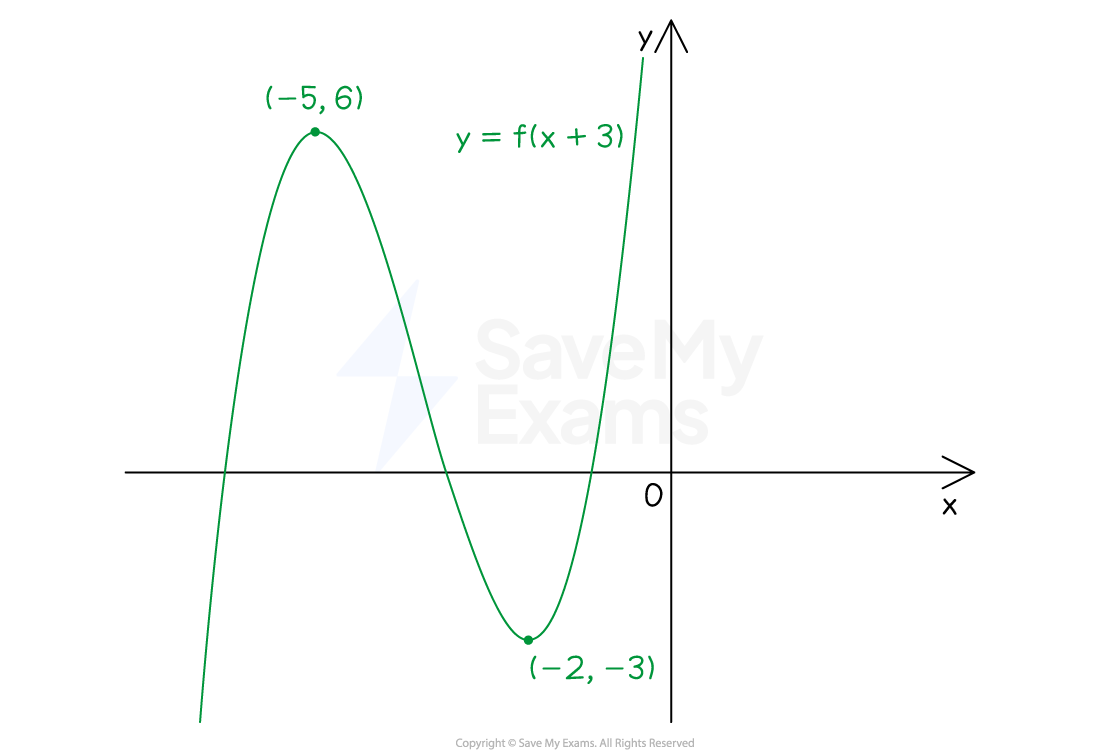
The diagram below shows the graph of .

Sketch the graph of .
Answer:
The transformation of the graph is a horizontal translation with vector (3 units to the left)
The x-coordinates of the points change (subtract 3 from each)
The y-coordinates of the points stay the same

Unlock more, it's free!
Join the 100,000+ Students that ❤️ Save My Exams
the (exam) results speak for themselves:

Was this revision note helpful?
Build on this topic
