Naming Organic Compounds (Cambridge (CIE) O Level Chemistry): Theory Questions

Exam code: 5070

2 hours31 questions
1a
1 mark

Coal gas is made by heating coal in the absence of air. The list shows the main gases present in coal gas.

carbon dioxide
carbon monoxide
ethene
hydrogen
methane
nitrogen

Which one of these gases is an alkane?

1b
1 mark

Draw the structure of a molecule of ethene. Show all of the atoms and all of the bonds.

1c
1 mark

Give the structural formula of ethene.

1d
1 mark

Name the alkane that contains two carbon atoms.

2a
1 mark

Choose from the following organic compounds to answer the questions.

butane
but-2-ene
butanoic acid
methanoic acid
methanol
propan-2-ol
propane
propene

Each compound can be used once, more than once or not at all.

Name the alkane that contains three carbon atoms.

2b
1 mark

Name the alkene that contains four carbon atoms.

2c
1 mark

Name the alcohol that contains one carbon atom.

2d
1 mark

Name the carboxylic acid that contains four carbon atoms.

2e
1 mark

Name the alcohol that contains three carbon atoms.

3a
2 marks

A chemical company separates petroleum by fractional distillation and uses the fractions to make other organic compounds.

The formulae of four of these compounds are shown.

C3H8 C4H8 C3H7OH CH3COOH

State the type of compound present for C3H8 and for C4H8.

3b
2 marks

State the type of compound present for C3H7OH and for CH3COOH.

3c
1 mark

Name the compound with the molecular formula C3H8.

4a
2 marks

Table 1.1 shows information about four organic compounds.

Table 1.1

name

structural formula

boiling point / °C

methanol

CH3OH

65

CH3CH2OH

78

propan-1-ol

CH3CH2CH2OH

97

CH3CH2CH2CH2OH

118

Name the two compounds that are missing from Table 1.1.

4b
2 marks

State the type of compound that all four compounds in Table 1.1 are.

State the ending that all four of their names share.

5a
1 mark

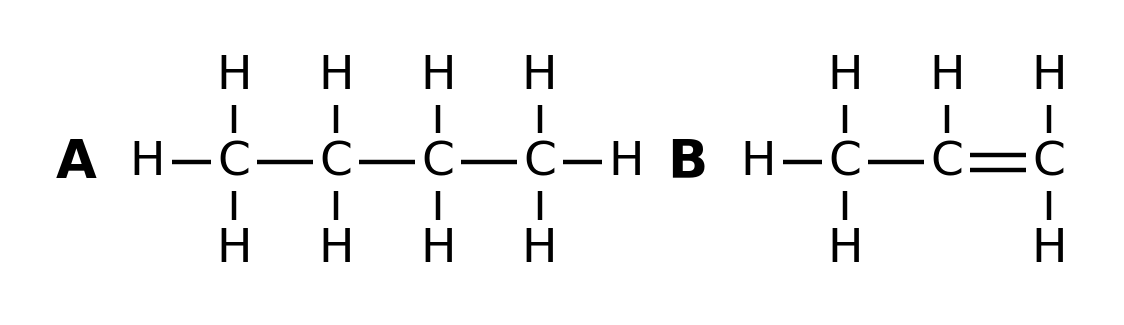
The displayed formulae of two organic compounds, A and B, are shown.

Two structures labelled A and B. A: four-carbon chain joined by single bonds, the end carbons each bonded to three H and the middle carbons each to two H. B: three-carbon chain, the first carbon bonded to three H, a single bond to the second carbon which is bonded to one H, and a double bond to the third carbon which is bonded to two H.

Name compound A.

5b
1 mark

Name compound B.

5c
1 mark

Give the structural formula of compound B.

5d
1 mark

Name the compound that belongs to the same homologous series as compound B and contains one fewer carbon atom.

1a
5 marks

Table 1.1 gives information about four organic compounds.

Table 1.1

name

structural formula

type of compound

butane

alkane

propan-2-ol

CH3COOH

carboxylic acid

methyl ethanoate

CH3COOCH3

Complete Table 1.1.

1b
1 mark

Methyl ethanoate is made by reacting an alcohol with a carboxylic acid.

Name the alcohol used.

2a
1 mark

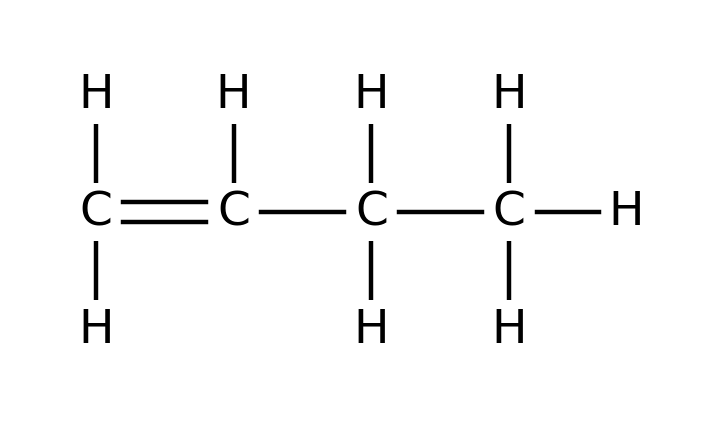
The displayed formula of compound A is shown.

Four-carbon chain with a double bond between the first and second carbons. The first carbon is bonded to two H, the second to one H, the third to two H and the fourth to three H.

Name compound A.

2b
2 marks

Explain why the name of compound A has to contain a number.

2c
2 marks

Draw the displayed formula of the other unbranched alkene that contains four carbon atoms.

Show all of the atoms and all of the bonds.

2d
1 mark

Name the compound you have drawn.

3a
2 marks

The carboxylic acids form a homologous series.

Draw the displayed formula of methanoic acid.

Show all of the atoms and all of the bonds.

3b
2 marks

Draw the displayed formula of butanoic acid.

Show all of the atoms and all of the bonds.

3c
1 mark

Give the structural formula of propanoic acid.

3d
1 mark

Name the carboxylic acid that contains two carbon atoms.

4a
1 mark

Esters are used as food flavourings and as solvents.

An ester is made by warming propan-1-ol with ethanoic acid in the presence of an acid catalyst.

Name the ester made.

4b
2 marks

Draw the displayed formula of the ester made.

Show all of the atoms and all of the bonds.

4c
1 mark

Name the other product of this reaction.

4d
1 mark

Name the ester made when methanol reacts with propanoic acid.

4e
1 mark

Name the ester made when ethanol reacts with methanoic acid.

5a
1 mark

Ethane reacts with chlorine in the presence of ultraviolet light.

In one reaction, a single hydrogen atom in an ethane molecule is replaced by a chlorine atom.

Name the organic product of this reaction.

5b
2 marks

Draw the displayed formula of this product.

Show all of the atoms and all of the bonds.

5c
1 mark

Methane also reacts with chlorine in the presence of ultraviolet light.

In this reaction, one hydrogen atom in a methane molecule is replaced by a chlorine atom.

Name the organic product.

5d
1 mark

Give the structural formula of this product.

1a
1 mark

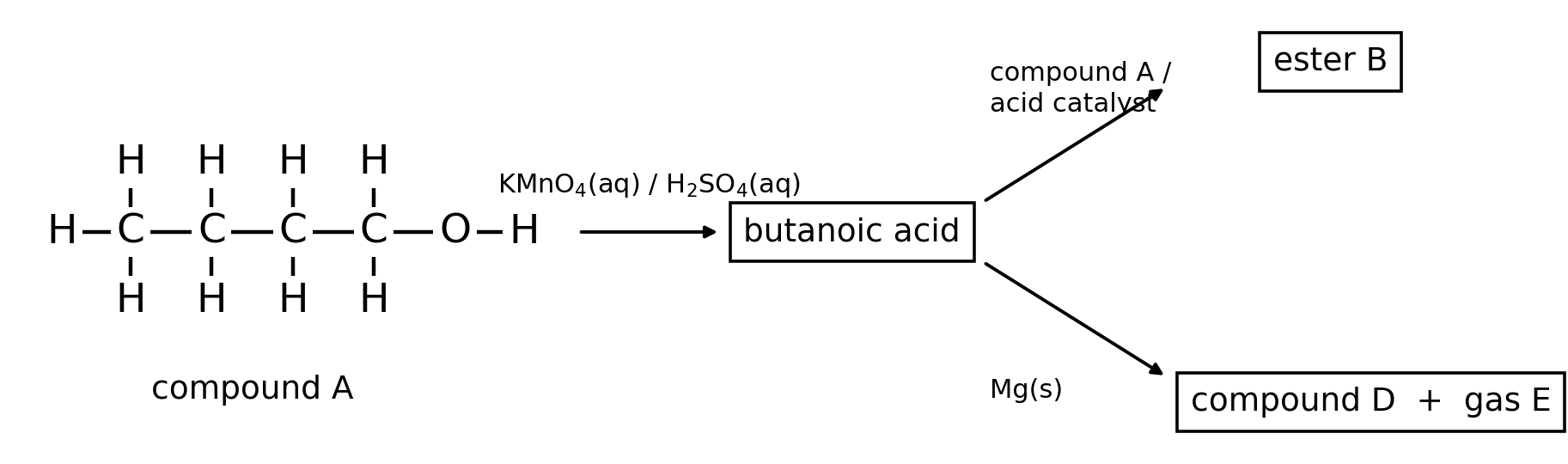
Fig. 1.1 is a flow diagram showing some reactions of an organic compound A.

A flow diagram. On the left, labelled compound A, a four-carbon chain joined by single bonds with the end carbon bonded to an O which is bonded to an H. An arrow labelled KMnO4 (aq) / H2SO4 (aq) leads to a box reading butanoic acid. From that box an arrow labelled compound A / acid catalyst leads up to a box reading ester B, and an arrow labelled Mg (s) leads down to a box reading compound D plus gas E.

Fig. 1.1

Name compound A.

1b
2 marks

Draw the displayed formula of the other unbranched alcohol that is a structural isomer of compound A.

Show all of the atoms and all of the bonds.

1c
1 mark

Name ester B.

1d
2 marks

Draw the displayed formula of ester B.

Show all of the atoms and all of the bonds.

1e
2 marks

Butanoic acid reacts with magnesium to form compound D and gas E.

Name compound D.

Name gas E.

2a
1 mark

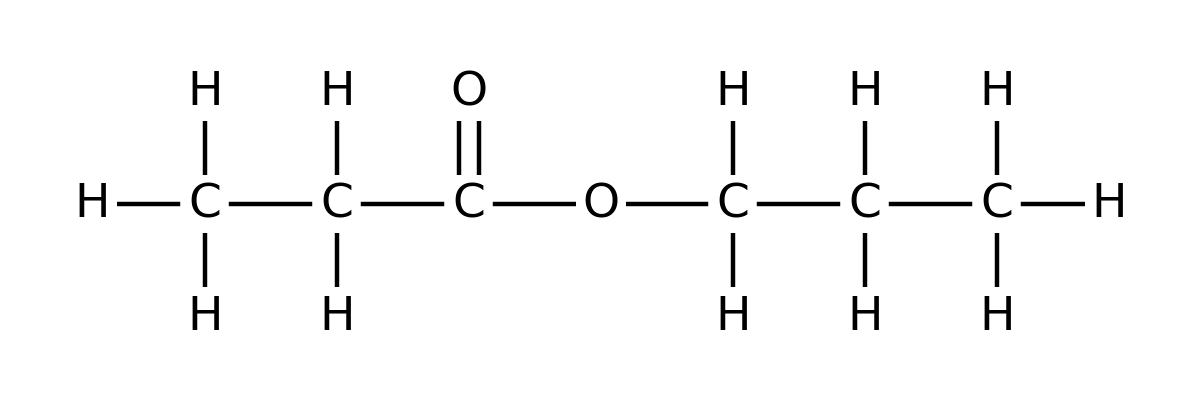
The displayed formula of an ester is shown.

A chain of two carbons, then a carbon double bonded to an O above it and single bonded to an O to its right, then a further three carbons. The first and last carbons of the structure are each bonded to three H and every other carbon in the two chains is bonded to two H.

Name this ester.

2b
2 marks

Name the alcohol and the carboxylic acid that react together to make this ester.

2c
2 marks

Draw the displayed formula of the alcohol used.

Show all of the atoms and all of the bonds.

2d
2 marks

Draw the displayed formula of the carboxylic acid used.

Show all of the atoms and all of the bonds.

2e
2 marks

Explain how the number of carbon atoms on the carboxylic acid side of this ester is worked out from its displayed formula.

3a
3 marks

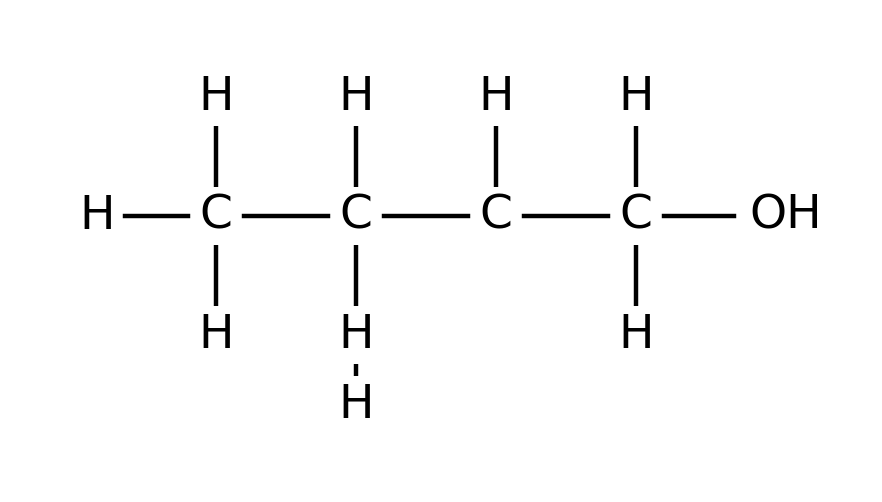
A student is asked to draw the displayed formula of butan-1-ol.

The student's answer is shown.

A student's drawing. A four-carbon chain. The first carbon is bonded to three H. The second carbon is bonded to one H above and one H below, and that lower H is bonded to a further H. The third carbon is bonded to one H only. The fourth carbon is bonded to two H and to a group written as OH.

The student's answer contains three mistakes.

Identify each mistake.

3b
2 marks

Draw the correct displayed formula of butan-1-ol.

Show all of the atoms and all of the bonds.

3c
1 mark

Give the structural formula of butan-1-ol.

4a
2 marks

An ester called butyl ethanoate is used as a food flavouring.

Name the alcohol and the carboxylic acid that react together to make butyl ethanoate.

4b
2 marks

Draw the displayed formula of the carboxylic acid used.

Show all of the atoms and all of the bonds.

4c
1 mark

Name the ester made when the same alcohol reacts with methanoic acid instead.

4d
2 marks

Explain how the name of an ester shows which alcohol and which carboxylic acid were used to make it.

5a
1 mark

But-1-ene reacts with bromine.

Name the organic product of this reaction.

5b
2 marks

Draw the displayed formula of this product.

Show all of the atoms and all of the bonds.

5c
2 marks

Explain why this product is not named 1,1-dibromobutane.

5d
2 marks

But-2-ene also reacts with bromine.

Name the organic product of this reaction.

Explain why its name is different from your answer to part (a).