1

3 marks
Study Figure 3

Figure 3
Distribution of international migrants and asylum seekers
Suggest one reason why the distribution of international migrants varies across the UK.
Was this exam question helpful?
Exam code: 9GE0
Study Figure 3
Figure 3
Distribution of international migrants and asylum seekers
Suggest one reason why the distribution of international migrants varies across the UK.
Was this exam question helpful?
Study Figure 2.

Figure 2: A map showing ethnic segregation in part of Chicago, (USA)
Suggest one reason why recently-arrived Asians tend to live in the area indicated.
Was this exam question helpful?
Study Figure 3

Figure 3
Information about four urban places compared to the UK average, 2018
Suggest one reason the percentage of foreign-born people differs between urban places.
Was this exam question helpful?
Study Figures 4a and 4b

Figure 4a and Figure 4b
Population pyramid and non-UK born data for Newcastle-upon-Tyne, North East England and for Northumberland, North East England
Suggest one reason why the population structures of Newcastle-upon-Tyne and Northumberland differ.
(3)
Was this exam question helpful?
Study Figures 2a and 2b.
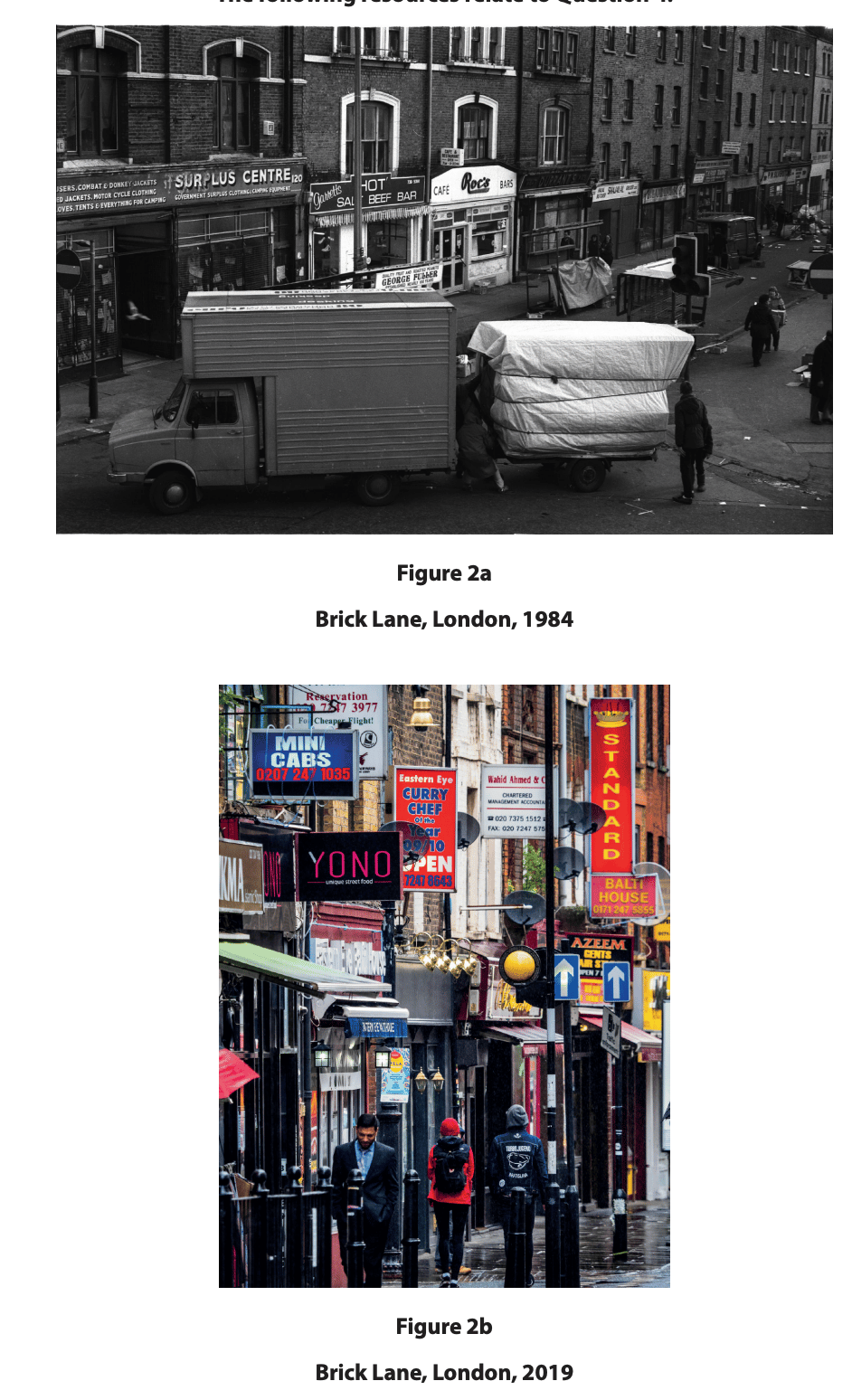
Suggest one way the photographs show that population change has taken place in Brick Lane, London.
Was this exam question helpful?
Study Figure 3.
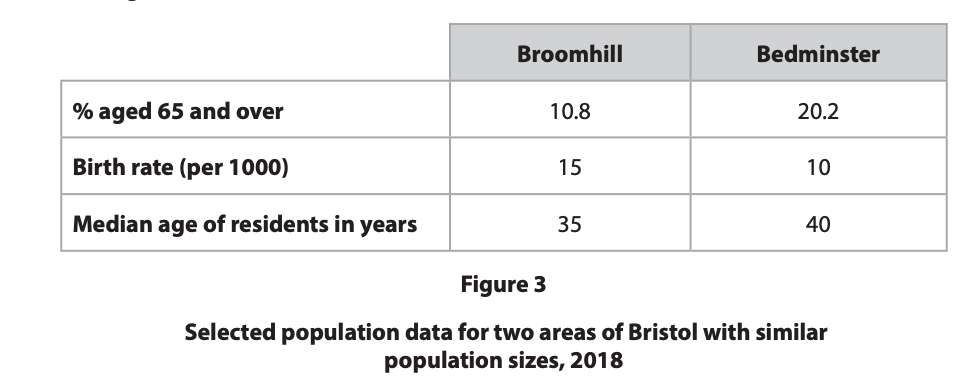
Suggest one reason for the difference in birth rates in these areas.
Was this exam question helpful?
Study Figure 1.
Figure 1: Population growth over 20 years (selected UK regions)
Region | Population change |
|---|---|
London and the South East | +29.5% |
The North East of England | +1.7% |
Suggest one reason why population growth varies between regions of the UK.
Was this exam question helpful?
Study Figure 1.
Figure 1: Demographic indicators (2019)
Place | Birth rate | Death rate | Net internal migration |
|---|---|---|---|
Liverpool (urban) | 10.7 | 10.3 | -1,152 |
Shetland (rural) | 11.2 | 9.0 | +20 |
Liverpool has a larger share of young, working-age people; Shetland has an older population.
Suggest one reason why the age structure differs between an urban and a rural place.
Was this exam question helpful?
Study Figure 1.
Figure 1: Ethnic diversity (% identifying as non-white)
Place | Non-white (%) |
|---|---|
England and Wales average | 18 |
Liverpool (Princes Park area) | 69 |
Shetland | about 3 |
Suggest one reason why ethnic diversity varies between places in the UK.
Was this exam question helpful?
Study Figure 2.
Figure 2: A map showing ethnic segregation in part of Chicago, (USA)
Suggest why some areas in Chicago have a greater degree of ethnic segregation than others.
Was this exam question helpful?
Study Figure 3
Figure 3
Information about four urban places compared to the UK average, 2018
Suggest why urban places have different population growth rates.
Was this exam question helpful?
You have studied your local place and a contrasting place. Explain the changes in the cultural characteristics of one of these places.
Was this exam question helpful?
Study Figures 4a and 4b
Figure 4a and Figure 4b
Population pyramid and non-UK born data for Newcastle-upon-Tyne, North East England and for Northumberland, North East England
Suggest reasons for the different levels of cultural diversity between Newcastle-upon-Tyne and Northumberland.
Was this exam question helpful?
Explain how regional and national influences have shaped the demographic characteristics of your local place.
Was this exam question helpful?
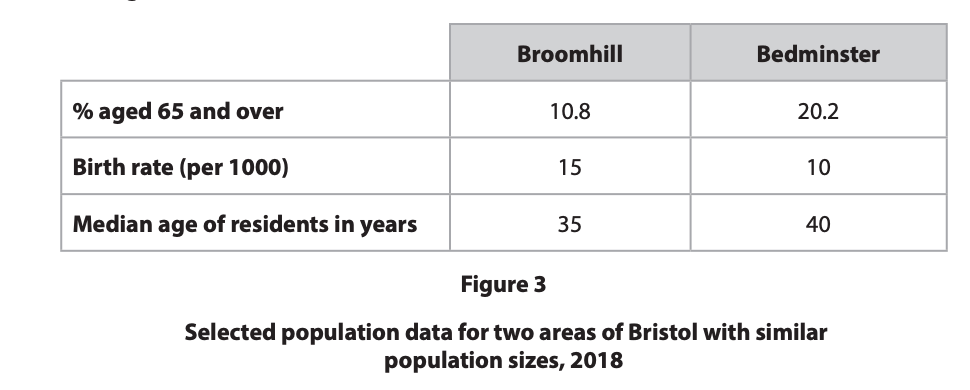
Explain why there may be changes over time in the population characteristics of these areas.
Was this exam question helpful?
Explain why your two chosen places have contrasting levels of cultural diversity.
Was this exam question helpful?
Study Figure 1.
Figure 1: Cultural diversity of two places
Place | Non-white population | Setting |
|---|---|---|
Newcastle-upon-Tyne | higher | major urban area |
Northumberland | lower | rural |
Suggest reasons for the different levels of cultural diversity between the two places shown.
Was this exam question helpful?
With reference to a named example, explain why population structure varies between urban and rural places.
Was this exam question helpful?
Study Figure 1.
Figure 1: UK population change
Year | Total UK population |
|---|---|
1972 | about 56 million |
2023 | 67.8 million |
Migration has been the main reason for population growth since the 1990s; the fertility rate in 2019 was 1.68.
Suggest reasons for the changes to the UK population shown.
Was this exam question helpful?
Evaluate the extent to which past and present connections shape the demographic and cultural characteristics of your chosen place.
Was this exam question helpful?
Evaluate the view that migration is the main cause of variations in population structure between places.
Was this exam question helpful?
Evaluate the extent to which past and present connections shape the demographic and cultural characteristics of a place.
Was this exam question helpful?