1

6 marks
Study Figure 2a

Figure 2a
Relative global ice volume over the last 450000 years
Explain the role of Milankovitch cycles in causing variations in the relative global ice volume.
(6)
Was this exam question helpful?
Exam code: 9GE0
Study Figure 2a
Figure 2a
Relative global ice volume over the last 450000 years
Explain the role of Milankovitch cycles in causing variations in the relative global ice volume.
(6)
Was this exam question helpful?
Study Figure 2b in the Resource Booklet.

Figure 2b
The distribution of permafrost and mean annual air temperature across Canada
Explain the role of mean annual air temperature in influencing the distribution of permafrost across Canada.
(6)
Was this exam question helpful?
Explain the role of glacial and periglacial landscapes in the maintenance of the water cycle.
Was this exam question helpful?
Study Figure 2b.
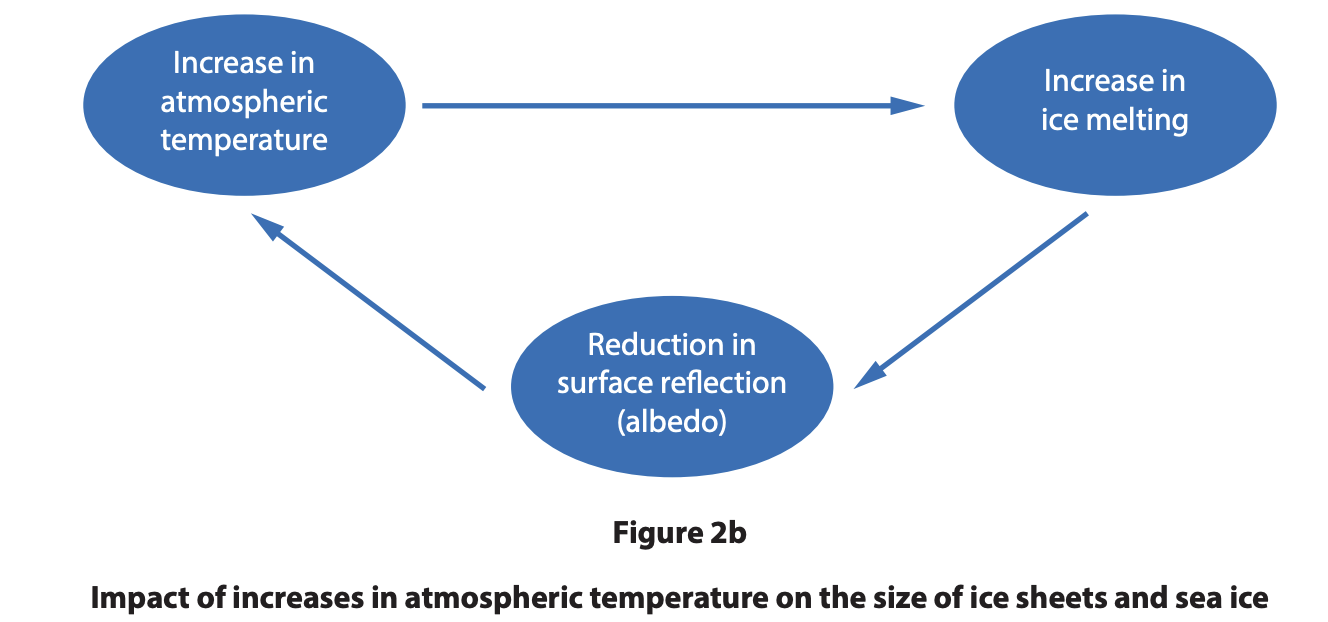
Explain the role of feedback in changing the size of ice sheets and sea ice.
Was this exam question helpful?
Explain the role of melting and refreezing cycles in forming distinctive periglacial landforms.
Was this exam question helpful?
Study Figure 1.
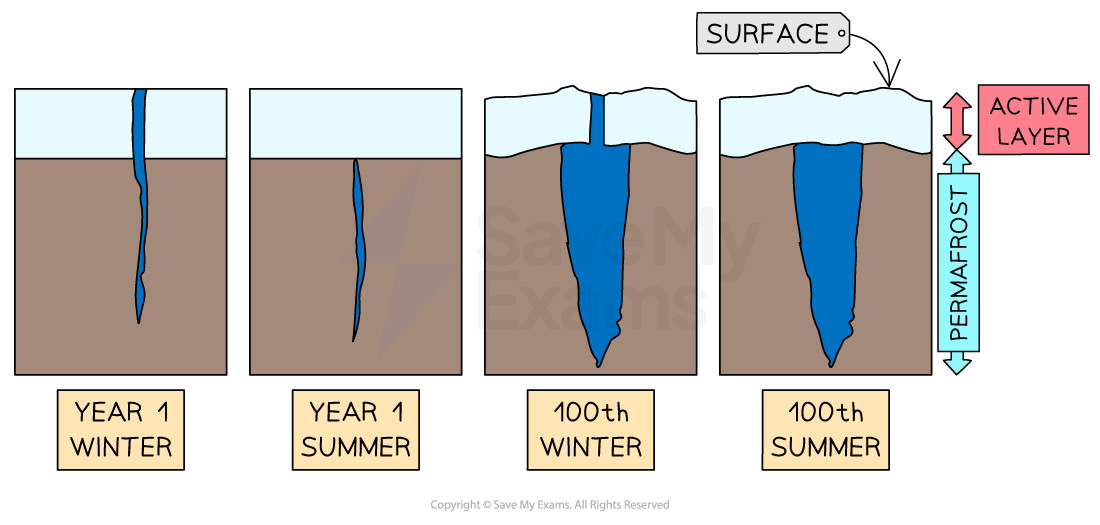
Explain how the periglacial landform shown was formed.
Was this exam question helpful?
Study Figure 1.
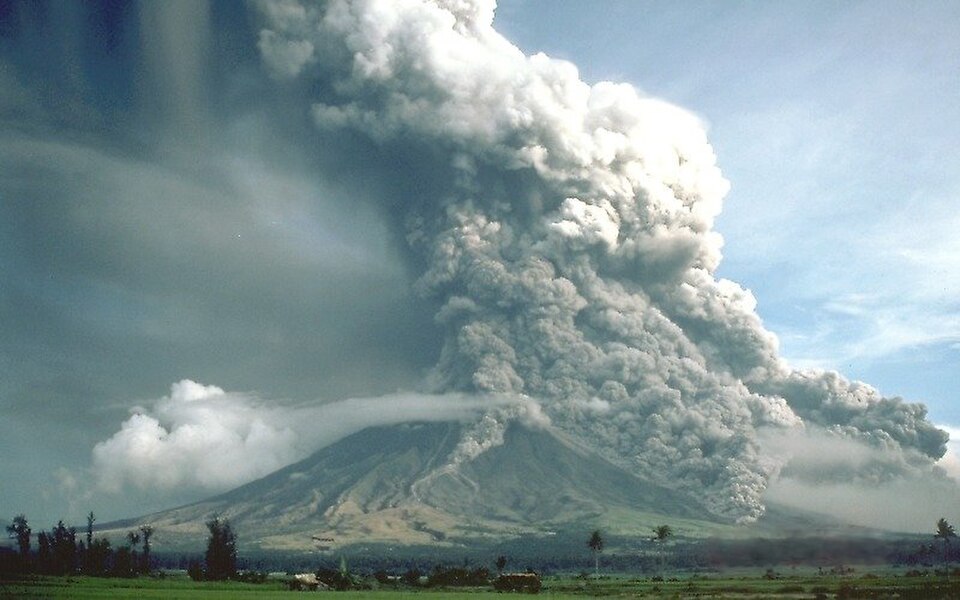
Explain how the event shown can cause short-term climate change.
Was this exam question helpful?
Study Figure 1.
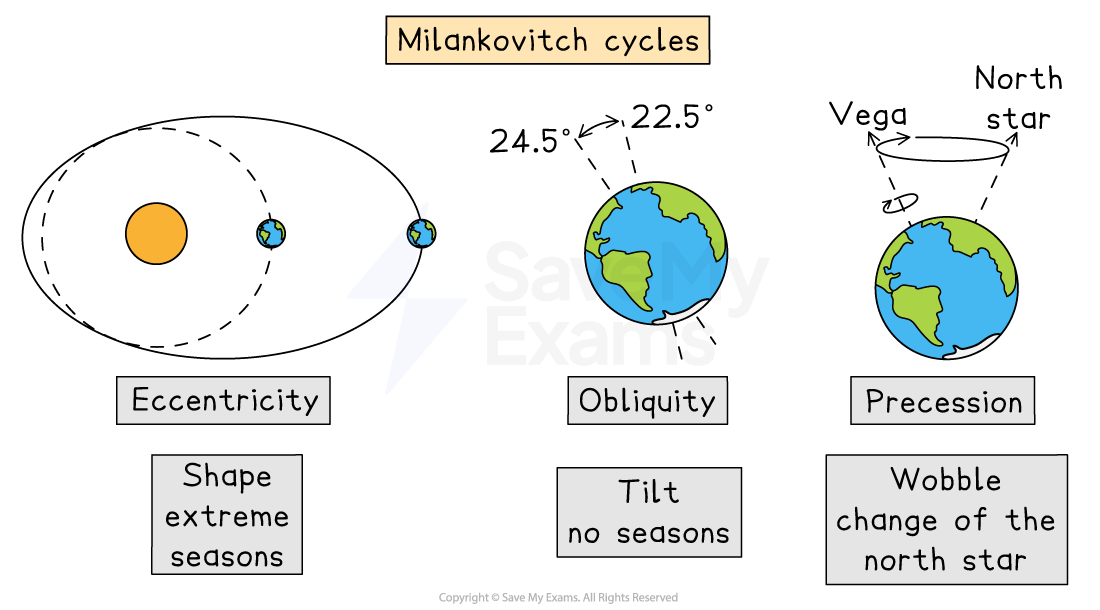
Explain how the orbital changes shown can cause long-term climate change.
Was this exam question helpful?
Evaluate the view that frost action is the most important process shaping periglacial landscapes.
Was this exam question helpful?
Evaluate the view that positive feedback mechanisms are the most important factor controlling the scale of climate change.
Was this exam question helpful?
Evaluate the view that astronomical processes are the most important cause of long-term climate change.
Was this exam question helpful?