Fuel Cells (AQA A Level Chemistry): Revision Note
Exam code: 7405

Fuel Cells
A fuel cell is an electrochemical cell in which a fuel donates electrons at one electrode and oxygen gains electrons at the other electrode
These cells are becoming more common in the automotive industry to replace petrol or diesel engines
As the fuel enters the cell, it becomes oxidised, which sets up a potential difference or voltage within the cell
Different electrolytes and fuels can be used to set up different types of fuel cells
An important cell is the hydrogen-oxygen fuel cell, which combines both elements to release energy and water
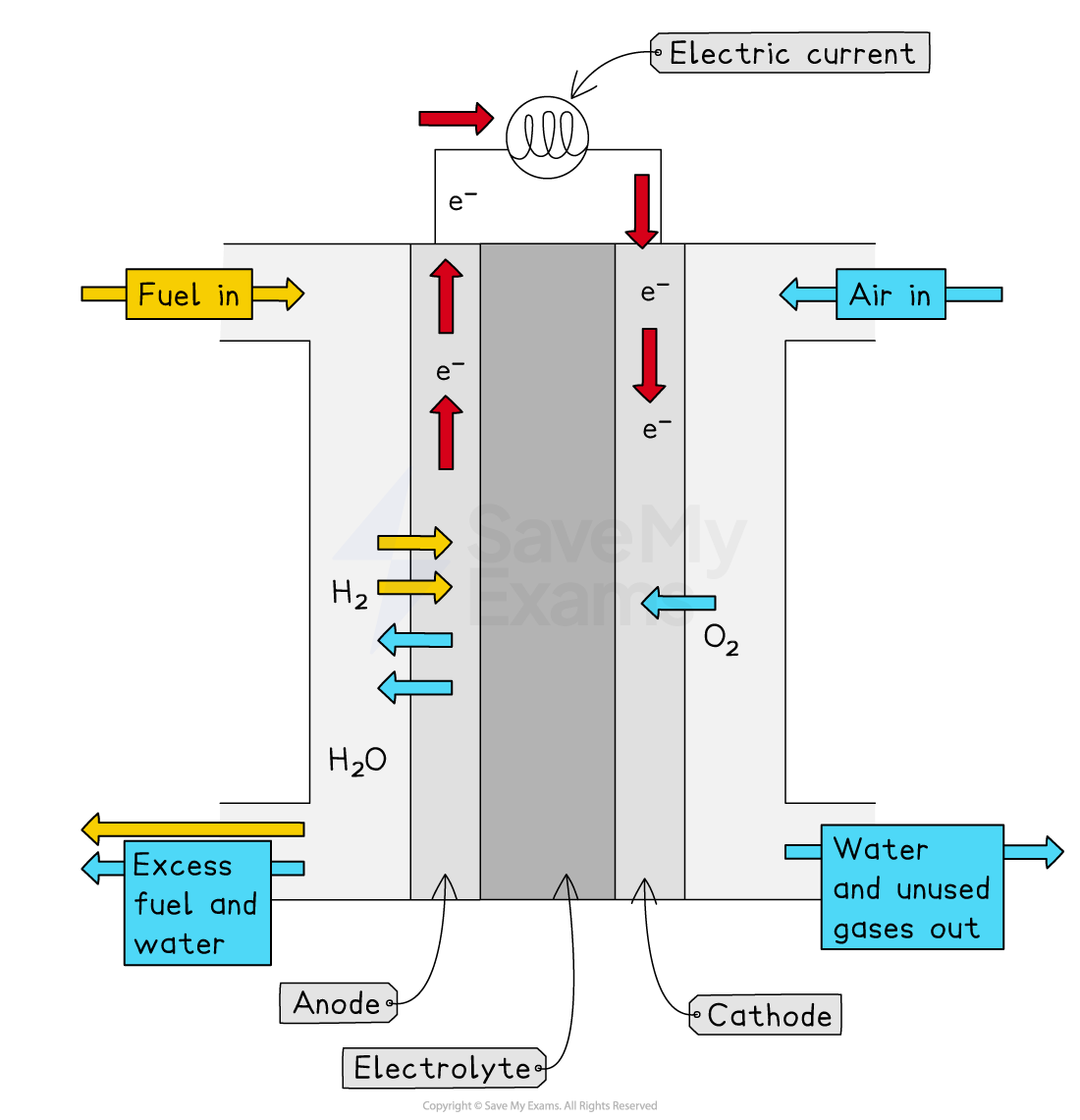
The fuel cell consists of
a reaction chamber with separate inlets for hydrogen and oxygen gas
an outlet for the product - water
an electrolyte of aqueous sodium hydroxide (acidic fuel cells also exist)
a semi-permeable membrane that separates the hydrogen and oxygen gases
The half equations are
Eꝋ = -0.83 V
Eꝋ = +0.40 V
The overall reaction is found by combining the two half equations and cancelling the common terms:
Eꝋ = +1.23 V
Although the half-equations differ depending on the electrolyte, the overall reaction is always 2H2 (g) + O2 (g) → 2H2O (l), so the EMF is the same
Benefits
Water is the only reaction product, so fuel cells present obvious environmental advantages over other types of cells
The reaction is the same as hydrogen combusting in oxygen, but since the reaction takes place at room temperature without combustion, a much larger proportion of the chemical energy is converted into electrical energy compared to combustion in an engine, where significant energy is lost as heat
There are no harmful oxides of nitrogen produced, which are usually formed in high-temperature combustion reactions where air is present
Fuel cells have been used on spacecraft, where the product can be used as drinking water for astronauts
Risks and problems
Hydrogen is a highly flammable gas, and the production and storage of hydrogen carry safety hazards
Very thick-walled cylinders and pipes are needed to store hydrogen, which has economic impacts
The production of hydrogen is a by-product of the crude oil industry, which means it relies on a non-renewable, finite resource
While steam reforming of natural gas is currently the main industrial source, hydrogen can also be produced by electrolysis of water using renewable electricity
Until a cheap way is found to make hydrogen, its widespread use in fuel cells will be limited
Hydrogen has high energy density, that is, the amount of energy contained in 1g of the fuel is high compared to other fuels, but because it is a gas, its energy density per unit volume is low, which means larger containers are needed compared to liquid fuels
Related topics
Examiner Tips and Tricks
One difference between fuel cells and other cells is that the cell operates continuously as long as there is a supply of hydrogen and oxygen; the energy is not stored in the cell.
When asked why a fuel cell doesn't need recharging, state that 'reactants/fuel are supplied continuously' — don't say the cell is reversible or that it recharges itself.
Students commonly describe the porous separator as "separating the reactions" or "stopping electrolyte mixing." The correct answer is: "It allows ions to move/flow to complete the circuit." Crucially, examiners will penalise you if you say it allows electrons to flow — ions flow through the electrolyte, electrons flow through the external circuit.

Unlock more, it's free!
Join the 100,000+ Students that ❤️ Save My Exams
the (exam) results speak for themselves:

Was this revision note helpful?
Build on this topic