Electric Charge (AQA GCSE Physics): Revision Note
Exam code: 8463

Electric Forces Between Charges
The charge of a particle is either:
Positive
Negative
Neutral (no charge)
Electrons are negatively charged particles, whilst protons are positive and neutrons are neutral
This is why in a neutral atom, the number of electrons is equal to the number of protons
This is so the equal (but opposite) charges cancel out to make the overall charge of the atom zero
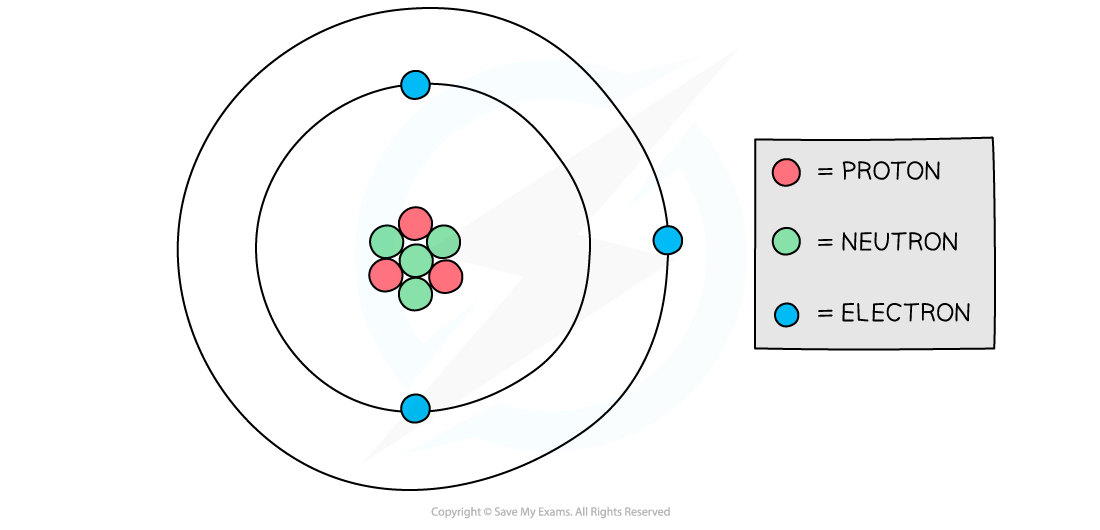
The number of negative electrons in an atom balances the number of positive protons
Therefore, an object becomes negatively charged when it gains electrons and positively charged when it loses electrons
When two charged particles or objects are close together, they also exert a force on each other
This force could be:
Attractive (the objects get closer together)
Repulsive (the objects move further apart)
Whether two objects attract or repel depends on their charge
If the charges are the opposite, they will attract
If the charges are the same, they will repel
When a person touches a charged object, electrons move between them and the person ends up with the same type of charge as the object
For example, touching a negatively charged dome makes the person (and their hair) negatively charged
Each hair then has the same charge, so the hairs repel each other and stand on end

Opposite charges attract, like charges repel
Attraction or Repulsion Summary Table

Attraction and repulsion between two charged objects are examples of a non-contact force
This is a force that acts on an object without being physically in contact with it
Examiner Tips and Tricks
Remember the saying: “Opposites attract”
Materials only become positively charged because of the loss of electrons, rather than the 'gain' of any positive charge, which is a common misconception.
If a question asks about a person touching a charged object, remember that they end up with the same charge as the object. A common mistake is to say that someone touching a negatively charged object becomes positively charged. Their hair stands on end because each hair has the same charge, and like charges repel.
If you're asked to give a reason for a force, make sure you say whether the objects have the same charge (so they repel) or different charges (so they attract). Just writing 'opposite charges attract' won't get you the mark when the force is repulsion.

Unlock more, it's free!
Join the 100,000+ Students that ❤️ Save My Exams
the (exam) results speak for themselves:

Was this revision note helpful?
Build on this topic