11 mark
X and Y are the reagents required to convert 1-bromopropane into butanoic acid.

Which row correctly identifies X and Y?
X | Y | |
|---|---|---|
A | NH3 | HCl (aq) |
B | KCN in C2H5OH | NaOH (aq) |
C | KCN in C2H5OH | HCl (aq) |
D | HCN | NaOH (aq) |
Was this exam question helpful?
Exam code: 9701
X and Y are the reagents required to convert 1-bromopropane into butanoic acid.
Which row correctly identifies X and Y?
X | Y | |
|---|---|---|
A | NH3 | HCl (aq) |
B | KCN in C2H5OH | NaOH (aq) |
C | KCN in C2H5OH | HCl (aq) |
D | HCN | NaOH (aq) |
Was this exam question helpful?
Which reaction occurs when ethane and chlorine are mixed in diffused sunlight?
A free-radical substitution with hydrogen given off.
A free-radical substitution with hydrogen chloride given off.
A free-radical substitution with no gas given off.
A nucleophilic substitution with hydrogen chloride given off.
Was this exam question helpful?
Chlorofluoroalkanes, CFCs, can be used as refrigerants, aerosol propellants and fire extinguishers.
CFCs such as CCl3F and CCl2F2 are more stable than chloroalkanes such as CCl4.
What is the reason for their greater stability?
Fluorine has a higher first ionisation energy than chlorine.
Fluorine radicals are more stable than chlorine radicals.
The C–F bond energy is larger than the C–Cl bond energy.
The C–F bond is more polar than the C–Cl bond.
Was this exam question helpful?
Light initiates the following reaction.
alkane + chlorine chloroalkane + hydrogen chloride
What happens to the chlorine molecule during this photochemical reaction?
Heterolytic fission to give an electrophile.
Heterolytic fission to give a free radical.
Homolytic fission to give an electrophile.
Homolytic fission to give a free radical.
Was this exam question helpful?
High-energy irradiation in the stratosphere produces radicals from chlorofluoroalkanes, commonly known as CFCs.
Which radical could result from this irradiation of CHFClCF2Cl?
CHFClC•FCl
•CHClCF2Cl
•CHFCF2Cl
•CFClCF2Cl
Was this exam question helpful?
Which reaction is an example of nucleophilic substitution?
CH3CH2Br + KOH (ethanolic) CH2=CH2 + KBr + H2O
CH2=CH2 + HBr CH3CH2Br
C3H7Br + H2O C3H7OH + HBr
C2H6 + Br2 C2H5Br + HBr
Was this exam question helpful?
Bromomethane, CH3Br, is used as a fumigant to destroy insect pests in grain that is to be stored. It can be made by reacting methanol with hydrogen bromide.
CH3OH + HBr CH3Br + H2O
What type of reaction is this?
Condensation
Electrophilic substitution
Free radical substitution
Nucleophilic substitution
Was this exam question helpful?
Dichlorodifluoromethane, CCl2F2, has been used in aerosol propellants and as a refrigerant.
Which statement helps to explain why dichlorodifluoromethane is chemically inert?
Fluorine compounds are non-flammable.
Fluorine is highly electronegative.
The carbon-fluorine bond energy is large.
The carbon-fluorine bond has a low polarity.
Was this exam question helpful?
The reaction of chlorine with methane is carried out in the presence of ultraviolet light.
What is the function of the ultraviolet light?
To break the C–H bonds in methane.
To break up the chlorine molecules into ions.
To break the Cl–Cl bond homolytically to form chlorine radicals.
To heat up the mixture.
Was this exam question helpful?
Four drops of 1-chlorobutane, 1-bromobutane and 1-iodobutane were put separately into three test-tubes containing 1.0 cm3 of aqueous silver nitrate at 60 °C.
A hydrolysis reaction occurred.
R represents the butane chain C4H9– and X the halogen atom.
H2O (l) + R–X (l) + Ag+ (aq) R–OH (aq) + AgX (s) + H+ (aq)
The rate of formation of cloudiness in the tubes was in the order RCl < RBr < RI
Which statement explains this order of reactivity?
The bond energy of R–X decreases from RCl to RI.
The ionisation energy of the halogen decreases from Cl to I.
The R–X bond polarity decreases from RCl to RI.
The solubility of AgX (s) decreases from AgCl to AgI.
Was this exam question helpful?
What is involved in the mechanism of the reaction between aqueous sodium hydroxide and 1-bromobutane?
Attack by a nucleophile on a carbon atom with a partial positive charge.
Heterolytic bond fission and attack by a nucleophile on a carbocation.
Homolytic bond fission and attack by an electrophile on a carbanion.
Homolytic bond fission and combination of two radicals.
Was this exam question helpful?
A reaction between chlorine and propane in the presence of ultraviolet light produces two isomeric monochloropropanes, C3H7Cl.
Which row identifies the type of bond fission in the initiation step and the expected ratio of 1-chloropropane to 2-chloropropane produced?
Type of bond fission in initiation step | Expected ratio of 1-chloropropane to 2-chloropropane produced | |
|---|---|---|
A | Heterolytic | 1:1 |
B | Heterolytic | 3:1 |
C | Homolytic | 1:1 |
D | Homolytic | 3:1 |
Was this exam question helpful?
Bromine and propene undergo an addition reaction.
Which statement about the product is correct?
It exists in cis-trans isomers.
It is more volatile than propene
It possesses a chiral centre.
It possesses hydrogen bonding.
Was this exam question helpful?
Which compound undergoes an SN1 substitution reaction?
CH3CH2CH2Br
(CH3)3CCH2I
CH2=CHCl
1-chloro-1-methylcyclohexane
Was this exam question helpful?
CCl2FCClF2 is converted to a fluorocarbon by the following route:
CCl2FCClF2 CCl3CF3 CCl2FCF3
What type of reaction is step 2?
Electrophilic substitution
Free-radical substitution
Isomerisation
Nucleophilic substitution
Was this exam question helpful?
The presence of a halogen in an organic compound may be detected by warming the organic compound with aqueous ethanolic silver nitrate.
Which compound would be the quickest to produce a precipitate?
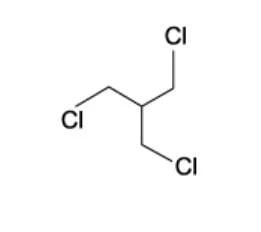
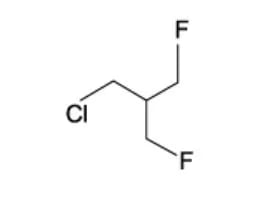
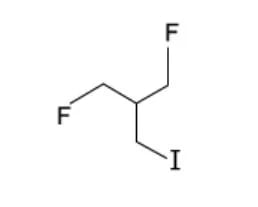
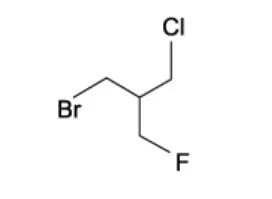
Was this exam question helpful?
In the hydrolysis of bromoethane by aqueous sodium hydroxide, which row correctly describes the attacking group and the leaving group?
Attacking group | Leaving group | |
|---|---|---|
A | Electrophile | Electrophile |
B | Electrophile | Nucleophile |
C | Nucleophile | Electrophile |
D | Nucleophile | Nucleophile |
Was this exam question helpful?
Which reaction will give the highest yield of 2-chloropropane as the only organic product?
Propan-2-ol with dilute NaCl (aq)
Propan-2-ol with SOCl2
Propane gas with chlorine gas in the presence of ultraviolet light
Propene with HCl (aq)
Was this exam question helpful?
Aqueous sodium hydroxide reacts with 1-bromopropane to give propan-1-ol.
Which statement correctly describes the mechanism of this reaction?
By a curly arrow from a lone pair on the OH– ion to the Cδ+ atom of 1-bromopropane.
By a curly arrow from the Cδ+ atom of 1-bromopropane to the OH– ion.
By a curly arrow from the C–Br bond to the C atom.
By the homolytic fission of the C–Br bond.
Was this exam question helpful?
The table shows the time taken for a silver halide precipitate to appear when halogenoalkanes react with aqueous ethanolic silver nitrate at 50 oC.
halogenoalkane | time for precipitate / s |
|---|---|
1-chlorobutane | >300 |
1-bromobutane | 120 |
1-iodobutane | 15 |
Which statement explains the differences in the times taken for the precipitate to appear?
The C–I bond is the strongest of the carbon-halogen bonds
The C-X bond strength decreases from C-Cl to C-I
The rate of reaction depends on the oxidising power of the halogens
The rate of reaction is determined by the polarity of the C-X bond
Was this exam question helpful?
Bromoethane reacts with ammonia to form ethylamine.
Which set of conditions is required to maximise the yield of ethylamine and minimise further substitution products?
Heat ammonia with excess bromoethane in a sealed tube.
Heat bromoethane with excess ammonia in a sealed tube.
Heat bromoethane with aqueous ammonia under reflux.
Heat bromoethane with excess ethanolic ammonia in a sealed tube.
Was this exam question helpful?
Consider the two-step synthesis:
ethane bromoethane ethylamine
step 1 reagents | step 2 reagents | |
|---|---|---|
A | Br2, UV light | NH3, ethanol, heat under pressure |
B | HBr, room temperature | NH3, aqueous, reflux |
C | Br2, UV light | KCN, ethanol, reflux |
D | PBr3, reflux | HNO3, room temperature |
Which row shows the correct reagents and conditions?
Was this exam question helpful?
When an isomer Y of molecular formula C4H9Br undergoes hydrolysis in aqueous sodium hydroxide to form an alcohol C4H9OH, the rate of reaction is found to be independent of the concentration of OH– ions present.
Which is the most likely molecular structure of Y?
(CH3)2CHCH2Br
CH3CH2CH2CH2Br
(CH3)3CBr
CH3CH2CHBrCH3
Was this exam question helpful?
A tertiary bromoalkene, indicated here by C–Br, reacts with aqueous NaOH. The mechanism has the reaction pathway below.

Which point in the diagram is correctly identified?


Was this exam question helpful?
When a solution of potassium cyanide in ethanol is heated under reflux with 1-chloropropane, what is the organic product of the reaction?
1-chloropropanenitrile
Butanenitrile
Ethanenitrile
Propanenitrile
Was this exam question helpful?
The compound 2-ethyl-3-methylbutanoic acid is used as a flavouring in some food.

Which compound produces 2-ethyl-3-methylbutanoic acid when heated under reflux with potassium cyanide in ethanol, followed by acid hydrolysis of the reaction product?


Was this exam question helpful?
When phenacyl chloride, C6H5COCH2Cl, is reacted with aqueous NaOH, the substitution reaction follows an SN2 mechanism.
Which structure represents the transition state for this reaction?


Was this exam question helpful?
Coniine is the major constituent of the poison 'oil of hemlock'.

Coniine can be synthesised by reacting ammonia with a dibromo compound, X,C8H16Br2 .
NH3 + X coniine + 2HBr
What is the name of compound X?
1,1-dibromo-2-propylcyclopentane
1,2-dibromo-2-propylcyclopentane
1,4-dibromooctane
1,5-dibromooctane
Was this exam question helpful?
A reaction pathway diagram is shown.

Which reaction does not have such a profile?
(CH3)3CBr + NaOH → (CH3)3COH + NaBr
C2H5Br + NaOH → C2H5OH + NaBr
CH3CHO + HCN CH3CH(OH)CN
cyclohex-1-ene + Br2 → 1,2-dibromocyclohexane
Was this exam question helpful?
Which molecule has no permanent dipole?
CCl2F2
CHCl3
C2Cl4
C2H5Cl
Was this exam question helpful?