Henry VIII: Character, Aims & Early Reign (AQA A Level History: Component 1: Breadth study): Revision Note
Exam code: 7042

Summary
Henry VIII came to the throne in April 1509, aged 17
His youth, good health and education contrasted sharply with his father
He appeared to embody the humanist ideal of the Renaissance prince: physically impressive, intellectually accomplished, pious and chivalrous
His early aims were to win military glory, project magnificence, secure the dynastic succession and act as a pious defender of the Church
Henry immediately distanced himself from his father by executing Empson and Dudley (1510)
This was a calculated act of political theatre more than genuine reform
His style of kingship differed sharply from Henry VII's in tone and culture, though underlying aims and structure showed significant continuity
The early court was transformed into a brilliant centre of Renaissance spectacle
Jousting, masques, music and humanist patronage defined the tone of the new reign
Henry VIII's Character & Aims: A Renaissance Prince?
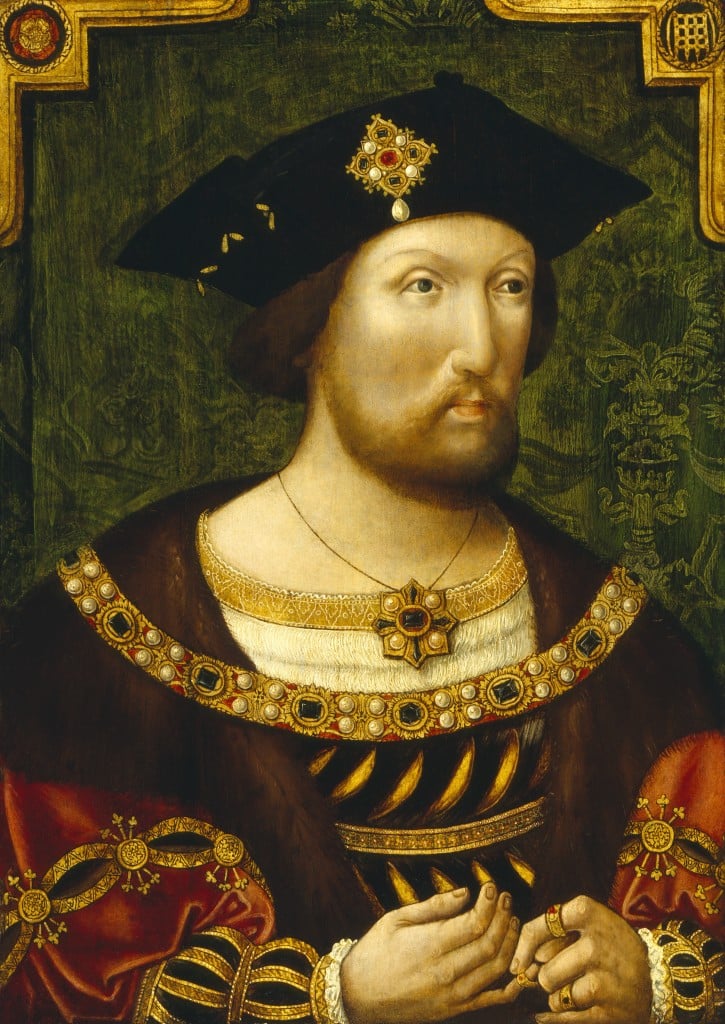
Physical appearance and personal qualities
Henry VIII succeeded his father in April 1509, just two months before his 18th birthday
He had been educated for kingship since the unexpected death of his elder brother, Arthur, in 1502
He was no longer the ‘spare’ but the heir to the throne
He was tall (around 6ft 2), powerfully built and physically imposing
He excelled at jousting, hunting and tennis, as well as being fluent in Latin and French
Henry was deeply versed in theology, devoted to the Catholic faith
Thomas More described his intellect as "angelic"
Erasmus praised him as a king fit for the golden age
Character traits
Charisma and charm:
Henry was warm, gregarious and publicly magnificent
He projected an easy confidence and accessibility that his father had lacked
Contemporaries found him captivating from the moment of his accession
Ruthlessness:
Henry was capable of sudden, calculated decisiveness
Example: The arrest and execution of Empson and Dudley in 1510
Insecurity:
Later in his reign, Henry was willing to resort to execution for treason on questionable grounds
Impulsiveness:
Henry made swift, sometimes ill-considered, decisions
Example: Most notably his rapid marriage to his brother's widow, Catherine of Aragon, just weeks after his accession
A decision that would later contribute to major political and religious problems
Strong convictions:
Henry believed firmly in his divine right to rule, and in the God-given sanction for all his actions
This made him immovable once his mind was set
The "Renaissance Prince" concept
The concept of the "Renaissance Prince", drawn from humanist thinkers such as Erasmus, described the ideal ruler as combining:
Physical prowess
Intellectual brilliance
Piety
Military glory
Personal magnificence
Henry appeared to embody this ideal in practice:
He excelled in courtly sports such as jousting, demonstrated intellectual ability through his education in languages and theology, and cultivated a court culture centred on music, learning and display
His accession was greeted with an outpouring of humanist praise from scholars across Europe
Although, it is worth noting that Henry was no passive figurehead
His chief ministers, Wolsey and Cromwell, were promoted and dismissed at Henry’s will, he remained firmly in control of government
His personal authority remained central, even when he delegated the daily business of government
Beneath the brilliance lay traits of insecurity, cruelty and impulsiveness that would define his reign more lastingly than any humanist ideal
Arguably visible from the early years of the reign
Henry's aims
Henry's aims flowed directly from his character and conception of kingship:
Aim | How he pursued it |
|---|---|
Win military glory and emulate great warrior kings (e.g. he idolised Henry V) |
|
Project magnificence and Renaissance culture |
|
Secure the dynastic succession |
|
Be a pious defender of the Catholic church |
|
Dismantle the unpopular sections of his father's legacy |
|
Addressing Henry VII's Legacy: Execution of Empson & Dudley
Addressing Henry VII's legacy
Henry VII's main legacy was threefold:
A financially secure treasury (around £300,000, but is debated by historians)
A peaceful kingdom not involved in any foreign wars
A secure Tudor dynasty (the majority of enemies and claimants had been dealt with)
However, some elements were unpopular and needed to be removed
The death of Henry VII had been concealed for two days while courtiers secured the succession
The imprisonment of Empson and Dudley early on in the new reign was a precisely staged political gesture
Empson and Dudley: Who were they?
Empson and Dudley had been the principal enforcers of Henry VII's financial system
They ran the Council Learned in Law, which pursued nobles and gentry for outstanding debts, feudal dues and recognisances
They were widely despised as the instruments of a fiscal regime that had squeezed the nobility and gentry harshly
Their arrest was therefore immediately popular
The execution and what it meant
Empson and Dudley were tried on charges of constructive treason
This was a legal fiction, since their actions had been lawful under Henry VII
They were executed in August 1510
The Council Learned was dissolved in January 1510 and many bonds were cancelled
Why did Henry do this?
To win immediate popular goodwill
Empson and Dudley were lightning rods for public anger at Henry VII's methods
To distance himself from his father's legacy and signal a more "lawful mode of governing"
As a scapegoat mechanism. Henry inherited his father's £300,000 treasury while condemning the men who had filled it
To display from the outset his capacity for ruthless decisiveness
Examiner Tips and Tricks
Don't fall into the trap of presenting the execution of Empson and Dudley as evidence of genuine financial reform. Henry inherited his father's treasury of around £300,000 intact, the core financial structures remained largely intact. The executions were political theatre, not policy change. Examiners reward students who make this distinction clearly.
Henry VIII's Style of Kingship: How Different was he from his Father?
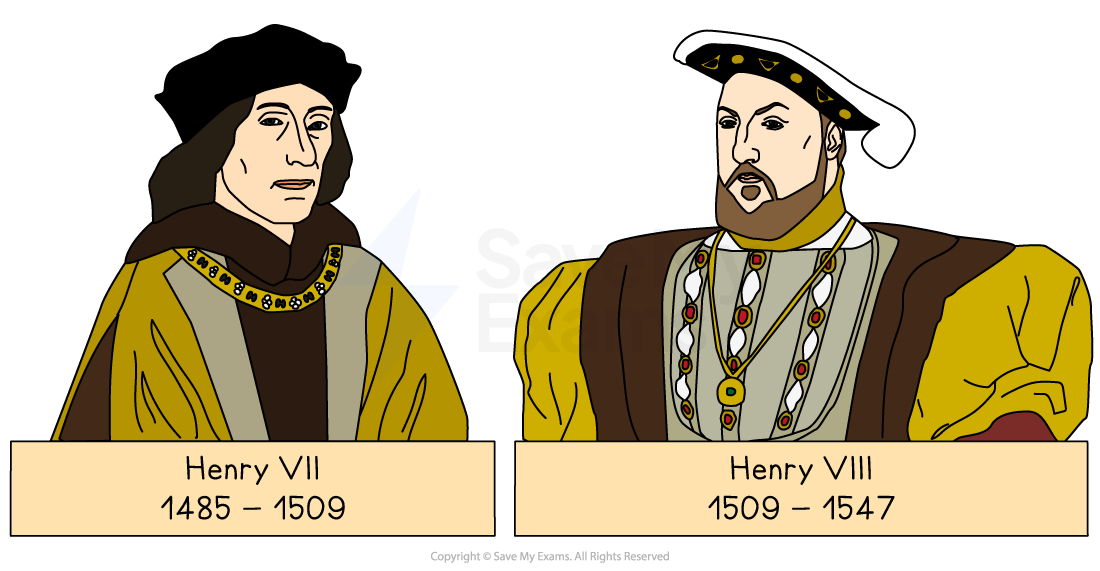
The contrast between father and son was stark and, to a significant degree, deliberate
The ill and ageing Henry VII had ruled over a court defined by suspicion and austerity
His youthful, physically imposing successor could hardly have presented a more pronounced contrast
Henry VIII actively cultivated an image that was his father's opposite
But historians debate how deep these differences actually ran
How different was he from his father?
Note: The contrasts below reflect Henry VIII's early reign most accurately. His personal style, court culture and relationship with the nobility shifted considerably as the reign progressed, particularly after 1530
Henry VII | Henry VIII |
|---|---|
Personal style:
| Personal style:
|
Financial approach:
| Financial approach:
|
Military policy:
| Military policy:
|
Court culture:
| Court culture:
|
Government:
| Government:
|
Nobility:
| Nobility:
|
Continuity beneath the surface
However, the contrast should not be overstated
Henry VIII's fundamental aims were broadly similar to his father's:
Dynastic security
Stable government
A male heir
The maintenance of English prestige
He preserved Henry VII's governmental structures, revenues and foreign alliances
The lasting effects of Henry VIII's reign, the rise of Parliament and the destruction of traditional religion, were largely unintended consequences of circumstances rather than planned policy goals
Examiner Tips and Tricks
Always distinguish between style and substance.
Henry VIII appeared very different from his father, but his fundamental aims were similar. This distinction is essential for top-mark answers.
The Early Years of Henry VIII's Reign: Court, Culture & Ambition
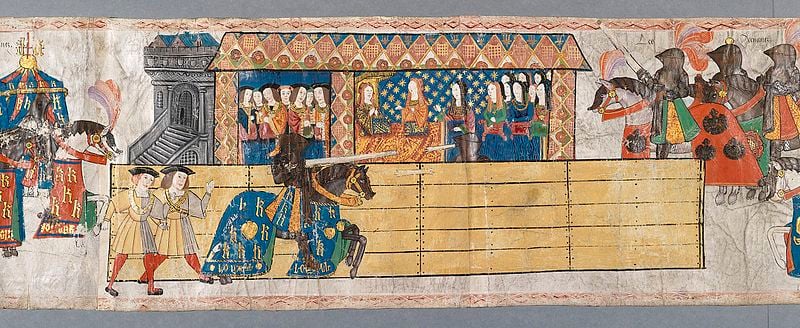
If Henry VII's court had been relatively functional and austere, Henry VIII's was a Renaissance stage
From his very first weeks as king, Henry used the court as a vehicle for projecting his own magnificence and England's prestige
It became a tool of political management
Nobles competed for royal favour through participation in spectacle
The atmosphere of the court signalled to European powers that England had a new, culturally formidable king
The court as a centre of spectacle
Jousting tournaments:
Henry was an accomplished jouster who competed publicly
Most notably at the Westminster Tournament of 1511, held to celebrate the birth of a son (who died shortly after)
Henry wore Catherine's initials on his armour as a chivalric declaration
Masques and pageants:
Elaborate theatrical entertainments combined music, dance, allegory and costume
Henry VIII participated in disguise, as a romantic convention that flattered both performer and audience
Music and the Chapel Royal:
Henry actively patronised composers and musicians; the Chapel Royal flourished under his reign
He collected instruments and was himself a skilled lutenist traditionally associated with the composition 'Pastime with Good Company'
Humanist patronage:
Henry cultivated a reputation as a learned king, corresponding with Erasmus and surrounding himself with educated men such as Thomas More and John Colet
Noble companionship:
The sons of noble families became Henry's personal companions in sport and leisure, creating a collegiate, chivalric atmosphere at court
Their political influence remained limited as Wolsey came to dominate government
Marriage to Catherine of Aragon, June 1509
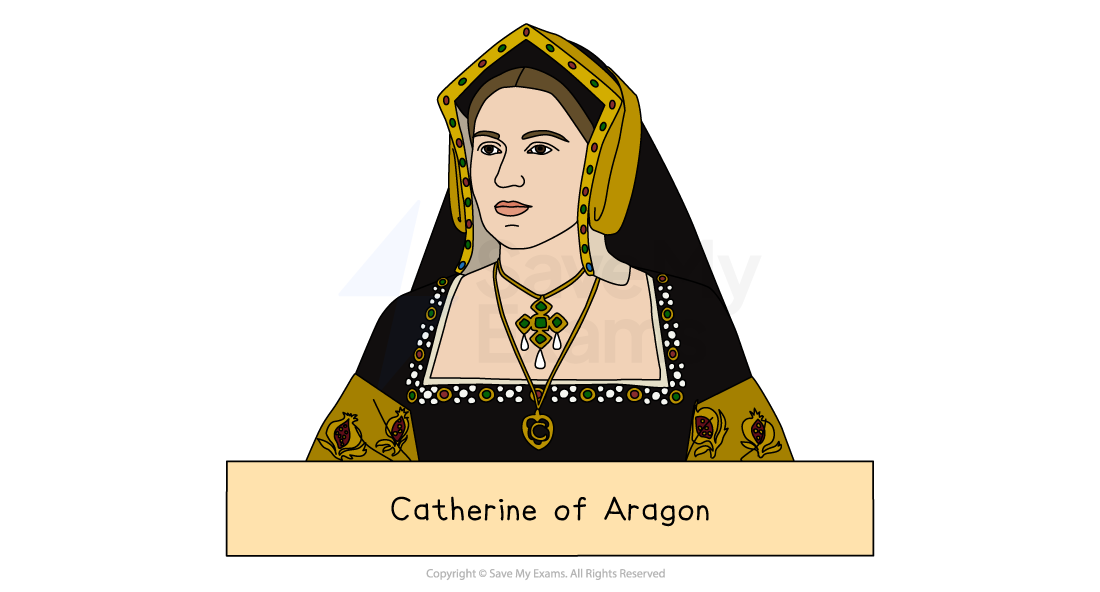
Within weeks of his accession, Henry married Catherine of Aragon, his late brother Arthur's widow
This was both a political statement and a personal choice:
It maintained the vital Spanish alliance
It secured dynastic ambition through the prospect of an heir
It reflected Henry's genuine admiration for Catherine's intelligence and status
Together, the couple embodied the promise of the new reign
Catherine was educated, popular and politically astute
Ambition and European Prestige
A defining feature of Henry's early reign was his ambition to make England's court the equal of any in Europe
Later competing directly with Francis I of France and the Holy Roman Emperor Maximilian I
Foreign ambassadors reported home on Henry's brilliance, his physical presence and the magnificence of his court
This was not vanity alone. It was diplomacy by display: projecting power and cultural authority to an international audience
Was Henry VIII a True Renaissance Prince?
The question of whether Henry VIII was a true Renaissance prince or a more complicated figure sits at the heart of this sub-topic
Use the evidence below to build and support your own argument
Evidence that Henry was a Renaissance prince
Fluent in Latin and French, deeply versed in theology and music, his intellectual credentials were genuine and widely acknowledged
Contemporaries including Erasmus and Thomas More praised his intellect and character at the time of his accession
His accession was greeted with widespread celebration
Foreign ambassadors reported his physical presence and brilliance back to European courts
Pope Leo X awarded him the title Fidei Defensor (1521), international recognition of his piety and theological learning
He transformed the court into a brilliant centre of Renaissance culture
Jousting, masques, music and humanist patronage all flourished
Evidence that the image was more complicated
He attended to government "only by fits and starts"
He showed little sustained interest in administration, relying heavily on ministers
The execution of Empson and Dudley was political theatre, ruthlessness disguised as justice from the very first days of the reign
His charm could turn to anger unpredictably
Those closest to him, including Thomas More, knew his favour could never be fully trusted
Character traits of insecurity and impulsiveness were visible early and would intensify significantly as the reign progressed
His extravagance, while impressive, depleted the substantial treasury inherited from Henry VII relatively quickly
Key historians
Susannah Lipscomb, History Today (2009) |
|
|---|---|
C. N. Trueman, Henry VIII, The Man (2015) |
|
Examiner Tips and Tricks
The key to a top-mark answer on Henry VIII’s early reign is to distinguish between image and reality.
He appeared to embody the Renaissance ideal in 1509, but his reliance on ministers, political theatre (e.g. Empson and Dudley), and emerging traits of impulsiveness suggest a more complex figure. The strongest answers will evaluate how far the image matched the reality.

Unlock more, it's free!
Join the 100,000+ Students that ❤️ Save My Exams
the (exam) results speak for themselves:

Was this revision note helpful?
