Henry VIII: The Fall of Wolsey & the Great Matter (AQA A Level History: Component 1: Breadth study): Revision Note
Exam code: 7042

Summary
Henry VIII sought an annulment of his marriage to Catherine of Aragon for three overlapping reasons: dynastic necessity, theological beliefs and his desire to marry Anne Boleyn
Only the Pope could grant an annulment, but Pope Clement VII effectively under the control of Emperor Charles V (Catherine's nephew) following the Sack of Rome (1527), making the situation seem impossible
Wolsey attempted to resolve the "Great Matter" through a legatine court at Blackfriars (1529)
It was adjourned without a verdict and never reconvened
Wolsey fell in October 1529, charged with praemunire
An ironic charge, since Henry himself had authorised his legatine powers
His fall was accelerated by factional enemies at court, particularly the Boleyn faction and the Duke of Norfolk
Historians debate whether his fall was inevitable, weighing contingency, factional politics and the constitutional impossibility of the annulment
The King's Great Matter: Why Did Henry Want an Annulment?
By the mid-1520s, Henry VIII had been married to Catherine of Aragon for more than fifteen years
Of their children, only one legitimate child, Mary (born 1516), survived infancy
Catherine (born 1485) was ageing and increasingly unlikely, in Henry’s view, to provide a surviving male heir
The memory of the Wars of the Roses made the prospect of a disputed succession genuinely terrifying
By 1527, Henry had concluded that his marriage must be dissolved
What was an annulment?
An annulment is fundamentally different from a divorce
A divorce ends a valid marriage
An annulment declares that the marriage was never legally valid in the first place
Henry was not asking the Pope to end his marriage to Catherine
He was asking him to declare that there had never been a valid marriage at all
Only the Pope had the authority to make such a declaration
This is why the political situation in Rome was so decisive
Why did Henry want an annulment?
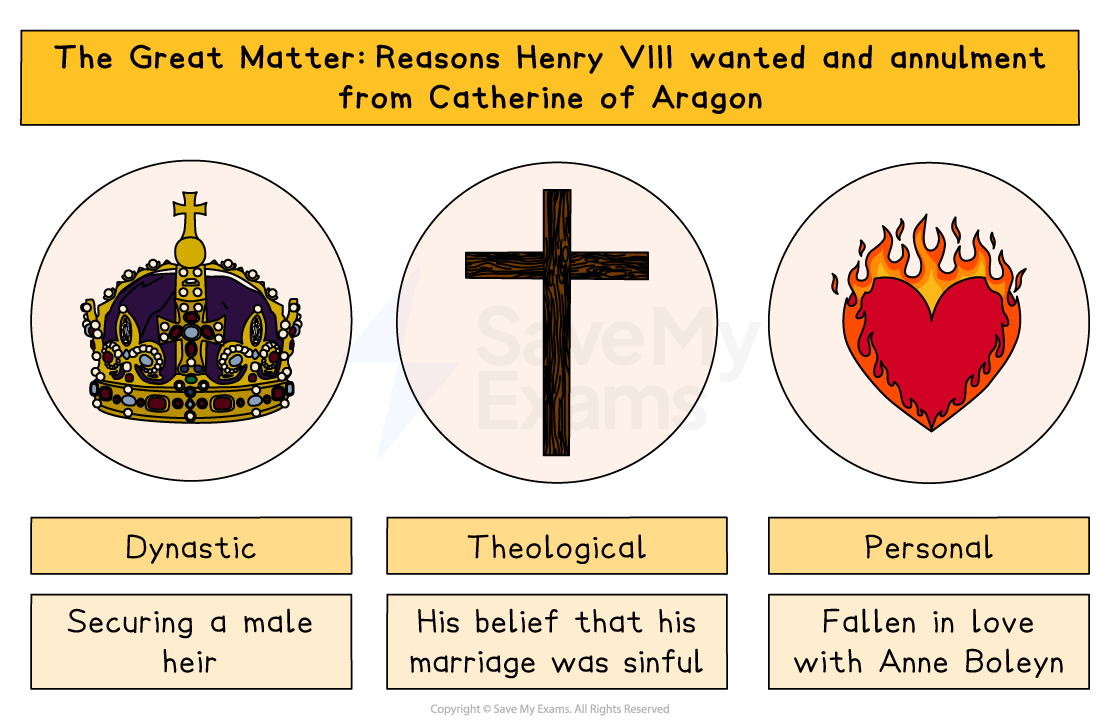
There are three main reasons as to why Henry wanted an annulment:
The dynastic argument (securing an heir)
The most straightforward motivation was dynastic necessity
Without a male heir, the Tudor succession was precarious
England had only recently emerged from decades of civil war caused by a disputed succession
Henry needed a new wife who could bear him a son
The theological argument (his marriage was sinful)
Henry appears to have genuinely believed that his marriage to Catherine was sinful and invalid in God's eyes
Catherine had previously been married to Henry's elder brother Arthur, who died in 1502
Biblical evidence:
Henry pointed to Leviticus 20:21 – "if a man shall take his brother's wife, it is an unclean thing"
However, Catherine’s supporters could counter with Deuteronomy 25:5, which seemed to permit marriage to a brother’s widow in order to preserve the family line
The case against the dispensation:
The original marriage had only been permitted through a papal dispensation issued by Pope Julius II in 1503
Henry argued that this dispensation had exceeded papal authority, meaning the marriage had never been lawful at all
Several European universities and canon lawyers were consulted, many returning opinions that supported Henry’s case
"Henry's failure to get rid of Catherine drove him onwards to attack Pope Clement and the Church in England, but this was not the whole explanation of his actions. There were two ideas present in his mind; one that he must procure a divorce; the other that kingship conferred on him a position in the Christian community which had been stolen by others, which he must recover."
J. J. Scarisbrick, Henry VIII (1969)
Scarisbrick argues the Great Matter was about more than the divorce – Henry had a developing conviction that the Pope had usurped royal authority in England. This makes the eventual Break with Rome not simply a response to the annulment crisis but the expression of a deeper belief about the proper relationship between Crown and Church.
The personal argument (fallen in love with Anne Boleyn)
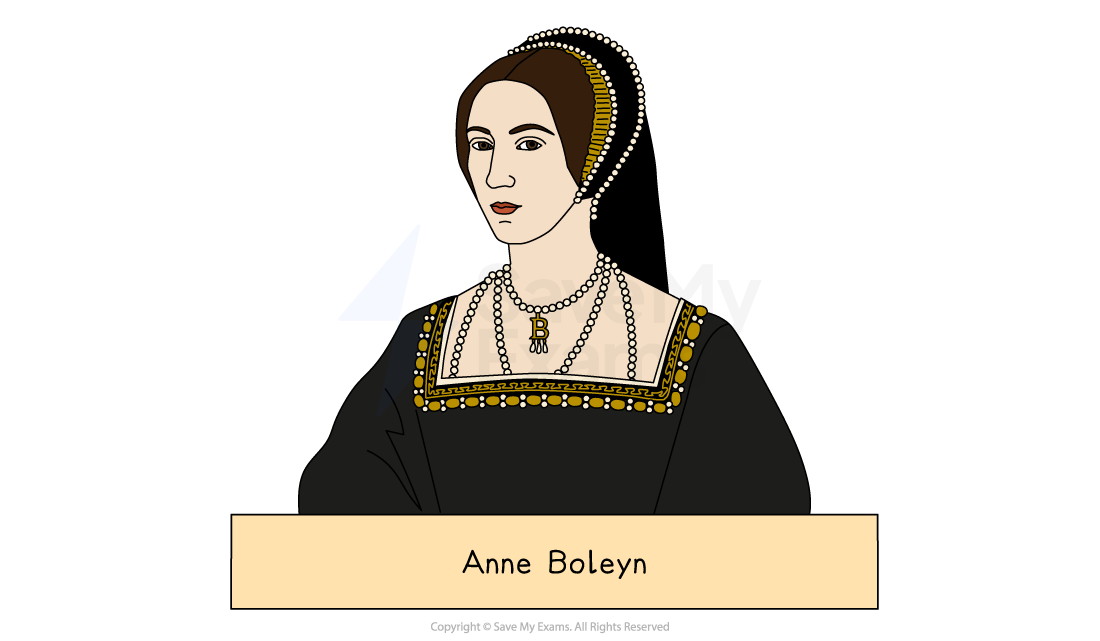
By 1526–1527, Henry had fallen deeply in love with Anne Boleyn, a sophisticated and ambitious lady-in-waiting to Catherine
Unlike previous mistresses, Anne refused to become Henry's lover outside marriage
She would accept nothing less than becoming queen
This gave Henry a powerful personal incentive to pursue the annulment with urgency
Primary cause or trigger cause?
Historians debate how far Anne was the primary cause or merely the trigger that accelerated a problem that already existed
The dynastic issue was real and pressing independently of Anne
But her refusal to settle for less than marriage transformed Henry's determination to act
"Until 1525 he was a conventional Renaissance prince, but thereafter his political and sexual needs drove him into uncharted waters, with extremely constructive results for the future of England."
David Loades, The Six Wives of Henry VIII (2009)
Loades identifies 1525 as a turning point – before that date, Henry operated within conventional royal expectations; afterwards, his personal and dynastic needs combined to push him towards radical solutions. The phrase "constructive results" is deliberately ironic, Loades acknowledges the Reformation was an unintended consequence of Henry's very personal crisis.
Securing the Annulment: Why couldn't Wolsey do it?
Wolsey had promised Henry he could deliver the annulment through his papal connections and legatine authority
Over two years of effort, he failed completely
Understanding why requires separating the failure into two problems:
the canonical problem
the political problem
Canonical problem (Papal authority) |
|
|---|---|
Political problem (Charles V) |
|
The Blackfriars legatine court, 1529
Wolsey persuaded Clement to appoint a legatine court to hear the case in England
It was presided over by Wolsey and the papal legate Cardinal Campeggio
Campeggio had secret instructions from Rome to delay proceedings indefinitely
He never intended to reach a verdict
The court opened at Blackfriars in June 1529
Catherine dramatically appealed directly to Rome, refusing to acknowledge the court's authority
In July 1529, Campeggio adjourned the court. It never reconvened
By summer 1529, the Treaty of Barcelona had moved Clement decisively closer to Cfharles V
Henry's case was increasingly hopeless
Examiner Tips and Tricks
Wolsey's failure was not primarily about his incompetence, it was the result of an impossible political situation. It is highly unlikely that any minister could have persuaded a Pope under Charles V’s influence. Examiners reward students who make this distinction: Wolsey's diplomatic skills were considerable, but the political constraints were beyond any individual's ability to overcome.
The Fall of Wolsey, 1529: How & why did he lose power?
The immediate cause: Failure of the Blackfriars court
The adjournment of the Blackfriars legatine court in July 1529 was the immediate trigger for Wolsey's fall
Henry had waited years and had nothing to show for it
Wolsey had staked his entire position on delivering the annulment; he had failed
Longer-term causes
Factional enemies:
The Boleyn faction (including Anne's father Thomas Boleyn and her uncle the Duke of Norfolk) had worked for years to bring Wolsey down
Anne herself deeply resented him, blaming him for blocking an earlier relationship with Henry Percy
Noble resentment:
14 years of dominance by a butcher's son had generated lasting hatred among the English nobility and gentry
Accumulation of power:
His monopoly of government meant there was no one to share the blame when the Great Matter failed
Henry's character:
Once Henry had decided Wolsey was useless to him, he acted with characteristic speed and ruthlessness
Loyalty ran only as far as utility
Charge of praemunire
Wolsey was charged with praemunire, the offence of exercising papal jurisdiction in England without royal consent
Irony:
Henry himself had authorised Wolsey's legatine powers
The charge was politically engineered, not legally justified
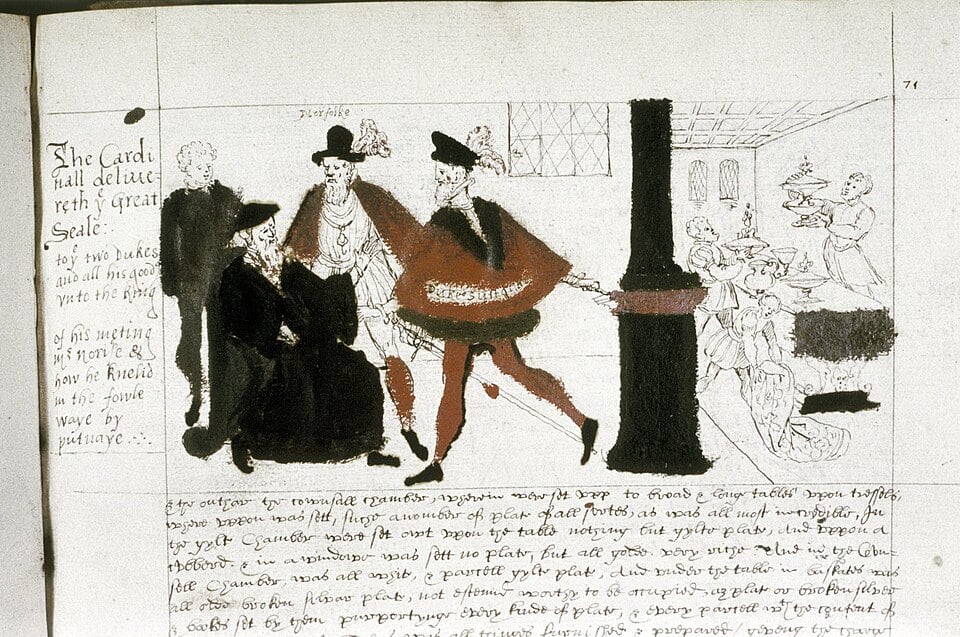
In October 1529, Wolsey surrendered the Great Seal and was stripped of the Lord Chancellorship
After the fall
Wolsey was initially allowed to retire to his northern diocese of York, which he had never visited in 15 years as Archbishop
Treason charge:
However, in 1530, he was accused of treason, allegedly seeking French and Imperial intervention on his behalf
He was summoned to London but died at Leicester Abbey in November 1530 before reaching the capital
His reported last words captured the tragedy of his position:
"If I had served God as diligently as I have done the king, he would not have given me over in my grey hairs"
Examiner Tips and Tricks
Use the praemunire charge as a specific analytical point. The fact that Henry charged Wolsey with exercising powers he had himself authorised shows the fall was politically engineered, not legally justified.
Was Wolsey's Fall Inevitable?
This is the core analytical question of this sub-topic on Wolsey
Arguments that the fall was inevitable
Wolsey's position depended entirely on Henry's favour
The moment he failed on the thing Henry wanted most, nothing else could save him
His factional enemies had waited years for an opportunity
The Great Matter gave them one
Anne Boleyn's direct access to Henry gave them a powerful advocate
The constitutional impossibility:
Given Charles V's stranglehold over Clement VII, no minister could have delivered the annulment through conventional diplomatic means
His low birth and arrogance meant he had no natural allies to protect him when he fell
He had made too many enemies over too many years
Key historians
John Guy, 'Henry VIII and his Ministers', History Review (1995) |
|
|---|
Arguments that the fall was not inevitable
Contingency matters:
Had the Battle of Pavia (1525) not given Charles V dominance over Italy, Clement might have been free to act, a different political moment could have produced a different outcome
The partnership argument (Guy):
If Henry and Wolsey genuinely governed together, Henry's role in the failure was greater than he admitted, the fall was not simply Wolsey's inevitable destiny but a choice Henry made
Wolsey came close to success:
The Blackfriars court was a genuine attempt, but it was always vulnerable to papal delay and political intervention
A different papal response or a different moment might have changed everything
Henry's genuine grief:
Contemporary accounts suggest Henry was reluctant to abandon Wolsey entirely and was manipulated into hardening his position by the Boleyn faction
Key historians
J. J. Scarisbrick, Henry VIII (1997) |
|
|---|
Examiner Tips and Tricks
On the Great Matter: avoid presenting any single motivation as the sole explanation. The strongest answers argue that dynastic necessity, theological conviction and Anne Boleyn reinforced each other – Henry needed a son, believed his marriage was sinful and had a compelling personal reason to act urgently.
On inevitability: Guy and Scarisbrick offer the sharpest contrast. Guy's partnership argument implies the fall was a political choice; Scarisbrick's analysis of Henry's decisive interventions suggests Henry was always in ultimate control – and, when he chose to act against Wolsey, nothing could prevent it.

Unlock more, it's free!
Join the 100,000+ Students that ❤️ Save My Exams
the (exam) results speak for themselves:

Was this revision note helpful?
