Henry VIII: The Break with Rome & Establishment of Royal Supremacy (AQA A Level History: Component 1: Breadth study): Revision Note
Exam code: 7042

Summary
The Break with Rome (1529–1534) saw Henry VIII use Acts of Parliament to strip the Pope of all authority over the English Church and transfer it to the Crown
The trigger was Henry's need for an annulment from Catherine of Aragon
Driven by succession anxiety, a biblical argument and his relationship with Anne Boleyn
The Act in Restraint of Appeals (1533) was the decisive breakthrough
The Act of Supremacy (1534) formally made Henry the Supreme Head of the Church of England
Sir Thomas More and Bishop John Fisher were executed in 1535 for refusing the Oath of Supremacy
The consequences of the Break were significant:
Royal authority was transformed, Parliament's role was elevated and England became diplomatically isolated from Catholic Europe
Historians debate whether the break was driven by Henry's personal circumstances (Loades) or by a deeper ideological claim to royal authority that would have emerged regardless (Scarisbrick)
The Break with Rome
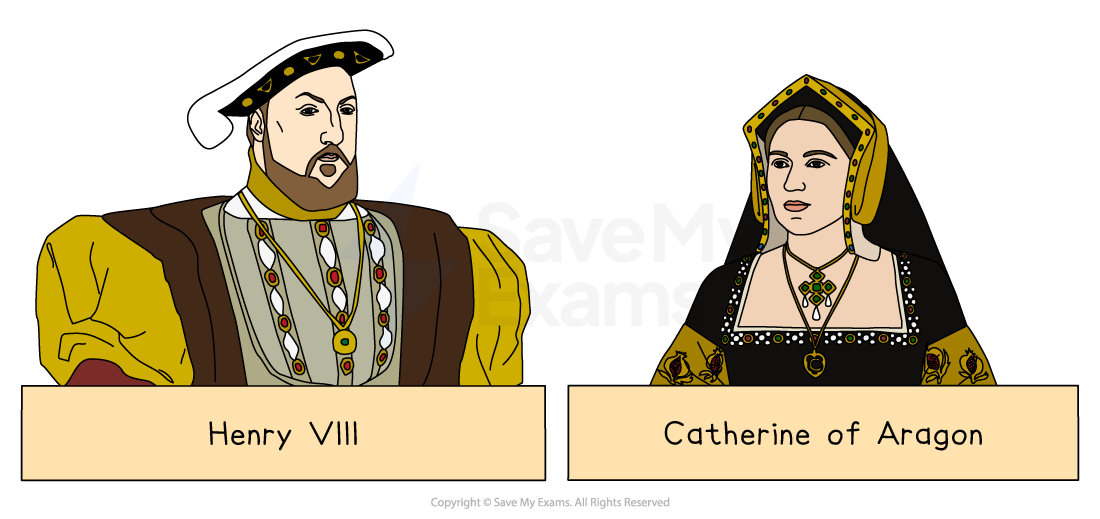
Why did Henry need an annulment?
Henry had been married to Catherine of Aragon since 1509
Their only surviving child was Mar
Henry had no male heir
He feared a disputed succession would reignite the civil wars that had ended in 1485
This led Henry to argue the marriage was biblically invalid
Leviticus 20:21 prohibits marrying a brother's widow
Catherine had been married to Henry's elder brother Prince Arthur (died 1502)
Henry argued the original papal dispensation for the marriage had been void from the start
Catherine’s supporters pointed to Deuteronomy 25:5, which supported a man marrying his brother’s widow to continue the family line
They therefore argued the papal dispensation granted by Pope Julius II (1503) made the marriage lawful
His relationship with Anne Boleyn made the situation urgent
Anne refused to be his mistress and insisted on marriage
She was pregnant by early 1533: any child had to be born in legitimate wedlock
The annulment had to come before the birth
Henry also resented papal interference in England more broadly
Payments of annates drained English wealth to Rome
Rome also had influence over English Church appointments
Why did the Pope refuse?
Pope Clement VII refused to grant the annulment
He was heavily influenced by Emperor Charles V, Catherine's nephew
Charles's troops had sacked Rome in 1527, making Clement, effectively, his political prisoner
Granting the annulment would have humiliated the most powerful Catholic ruler in Europe
Cromwell's solution
Thomas Cromwell proposed using Parliament to break the deadlock
Parliament would declare England independent of papal jurisdiction entirely
Parliamentary legislation gave the break a legitimacy that royal proclamation alone could not provide
Cromwell framed the break as the recovery of ancient rights, not a revolution
The Preamble to the Act of Appeals declared England an 'empire'
This meant a self-governing realm, free from any external authority
It drew on English legal history to make the break look historically justified
The Reformation Parliament (opened November 1529) became the instrument through which the break was built
Examiner Tips and Tricks
The Preamble to the Act of Appeals comes up regularly in mark schemes. The key point is that Cromwell framed the break as the recovery of ancient rights, not a constitutional revolution. That framing gave it a legitimacy that was very hard to challenge.
Acts of Parliament, 1532–1534
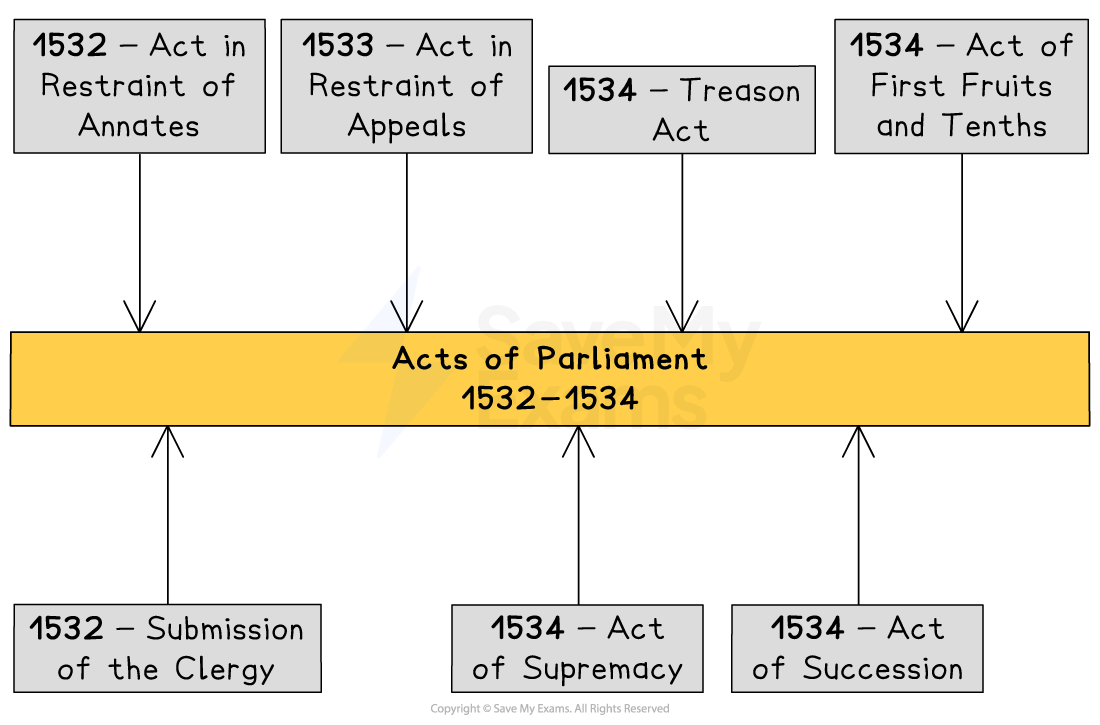
The Break with Rome was a carefully staged process
Thomas Cromwell used Parliament to dismantle papal authority step by step, giving each change the force of statute law
This was deliberate:
Statute was permanent
No future government could reverse it without an Act of Parliament
Each Act was carefully timed, some were initially suspended to use as bargaining chips with Rome
Act in Restraint of Annates (1532) |
|
|---|---|
Submission of the Clergy (1532) |
|
Act in Restraint of Appeals (1533) |
|
Act of Supremacy (1534) |
|
Treason Act (1534) |
|
Act of Succession (1534) |
|
Act of First Fruits and Tenths (1534) |
|
Examiner Tips and Tricks
The word "acknowledged" in the Act of Supremacy comes up repeatedly. Parliament was not granting Henry a new power. It was recognising one the Act claimed he had always possessed. The break was framed as constitutional restoration, not revolution.
Opposition to the Break with Rome: Thomas More & John Fisher
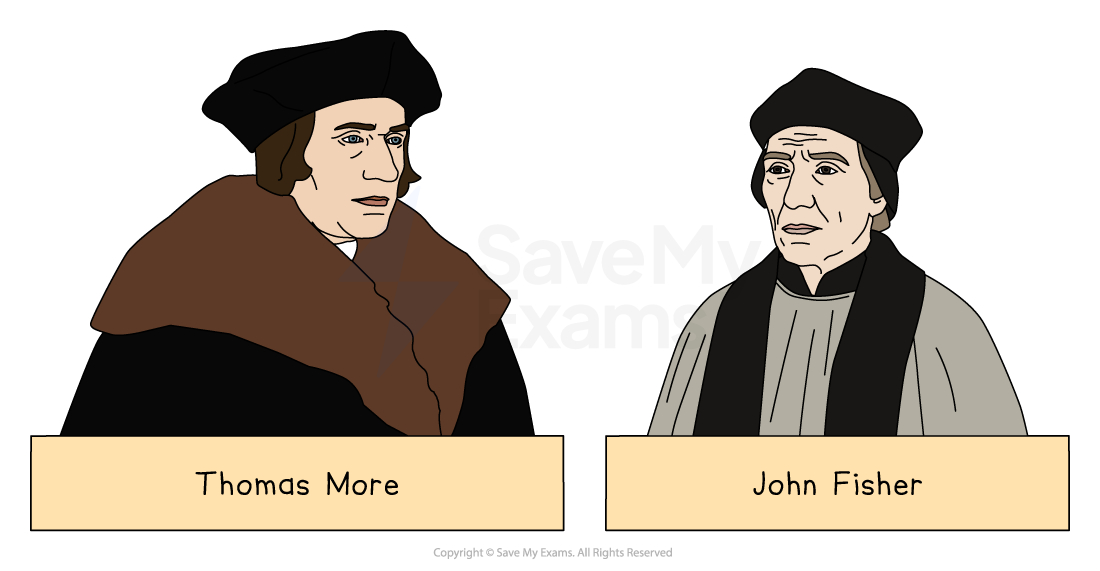
Opposition was real but ultimately ineffective
Changes came individually and appeared legal at each stage
This made coordinated resistance very difficult
Sir Thomas More (1478–1535)
More served as Lord Chancellor from 1529 to 1532
He resigned after the Submission of the Clergy
He could not accept Crown dominance over the Church
In 1534, he refused to swear the Oath of Succession and was sent to the Tower
He refused to explain his reasons
This was deliberate: it denied Cromwell a clear basis for a treason charge
A trial using testimony from Sir Richard Rich led to his conviction
More was executed on 6 July 1535, declaring himself "the King's good servant, but God's first"
His fame as a humanist scholar made his execution controversial across Europe
Bishop John Fisher (1469–1535)
Fisher had been Bishop of Rochester since 1504
Known for genuine piety, not personal ambition
He had openly supported Catherine of Aragon throughout the divorce proceedings
He also refused to swear the Oath of Succession and was imprisoned in the Tower
The Pope announced Fisher was to be made a Cardinal: Henry acted immediately
A Cardinal in the Tower would have been an impossible diplomatic embarrassment
Fisher was tried for treason and executed on 22 June 1535
Like More's execution, this worsened relations with Catholic Europe
Other forms of opposition
The Aragonese faction at court (conservative nobles sympathetic to Catherine of Aragon)
Included Henry Courtenay and Lords Darcy and Hussey
Largely silenced from 1532 by Cromwell's growing influence
Elizabeth Barton, the "Nun of Kent"
Claimed prophetic visions warning Henry would die if he divorced Catherine
Her mentors built this into a coordinated anti-reform campaign
Arrested September 1533, publicly humiliated and executed by Act of Attainder in April 1534
The Carthusian monks in London refused to accept the divorce and the supremacy
18 Carthusian monks were executed between 1535 and 1540
Why opposition failed
Changes were passed by Act of Parliament, giving them a legitimacy that was very hard to challenge openly
The Treason Act imposed the ultimate deterrent: denying the supremacy now meant execution
The piecemeal process prevented coordinated resistance
Each individual Act was hard to rally opposition around
Many conservatives believed the break was temporary
They assumed Henry would reconcile with Rome once his marital problems were solved
This delayed serious resistance until it was too late
Examiner Tips and Tricks
Avoid describing opposition as "weak". The stronger argument is that it failed to coalesce because of the Treason Act, the piecemeal nature of the reforms and the assumption the break was temporary.
What were the Consequences of the Break with Rome?
The question of how far the Break with Rome had genuinely transformative consequences sits at the heart of this sub-topic
Use the specific evidence below to build and support your own argument
Evidence that the Break with Rome had far-reaching, permanent consequences
Henry became head of both Church and State
No English monarch had previously held authority over the spiritual lives of their subjects
Parliament's role was permanently elevated
It had legislated for the most significant constitutional change in English history
Parliament was now a necessary partner in all major decisions of state
The break created the legal framework for all subsequent Reformation measures
Including the dissolution of the monasteries (covered in the next revision note)
England was excommunicated by Pope Paul III in 1538
This formally isolated England from Catholic Europe
Henry faced the real threat of a combined Franco-Habsburg invasion
Even Mary I's restoration of Catholicism (1553–1558) could not fully undo the changes
Parliament had to be used to reverse what Parliament had done
Key historians
J.J. Scarisbrick, Henry VIII (1969) |
|
|---|
Evidence that the significance of the Break with Rome has been overstated
Henry remained theologically conservative throughout his reign
In 1521, he had earned the title "Defender of the Faith" from the Pope for attacking Luther
No doctrine changed until 1536
The break was political, not religious, in its initial stages
Henry took control of the Church's organisation and finances
He did not change its theology
Contemporaries assumed the break was temporary
Even the Pope saw it as a crisis over Henry's marriage, not a permanent shift
In the short term, ordinary people experienced little change in their church services
The break affected the nobility and political class far more directly
The Six Articles (1539) reasserted Catholic doctrine
This showed Henry viewed the supremacy in personal rather than ideological terms
Key historians
D. Loades, The Six Wives of Henry VIII (2009) |
|
|---|
Examiner Tips and Tricks
Consequences questions reward thematic organisation. Group your answer around political, constitutional and foreign policy consequences rather than a flat chronological account.
The dissolution of the monasteries is the most significant social and economic consequence of the break; this is covered in the next revision note.

Unlock more, it's free!
Join the 100,000+ Students that ❤️ Save My Exams
the (exam) results speak for themselves:

Was this revision note helpful?
