Henry VIII: Wolsey - Domestic Policies & Parliament (AQA A Level History: Component 1: Breadth study): Revision Note
Exam code: 7042

Summary
Wolsey's domestic policies focused on three areas: enclosure and the poor, law and order and financial administration
His enclosure commissions (1517–1518) were his most ambitious domestic initiative, investigating illegal enclosures in England, though enforcement was limited and ultimately incomplete
The Eltham Ordinances (1526) attempted to reform the royal household and reduce expenditure, but were largely ineffective in practice
Wolsey's relationship with Parliament was consistently difficult
He preferred to govern without it, viewed it as a constraint and his attempt to bypass it with the Amicable Grant (1525) ended in humiliating failure
Historians are divided on Wolsey's effectiveness
Some see him as a genuinely great administrator who built central authority
Others argue his years were characterised by mere stability rather than meaningful reform
Wolsey's Domestic & Economic Policies: Enclosure & the Poor
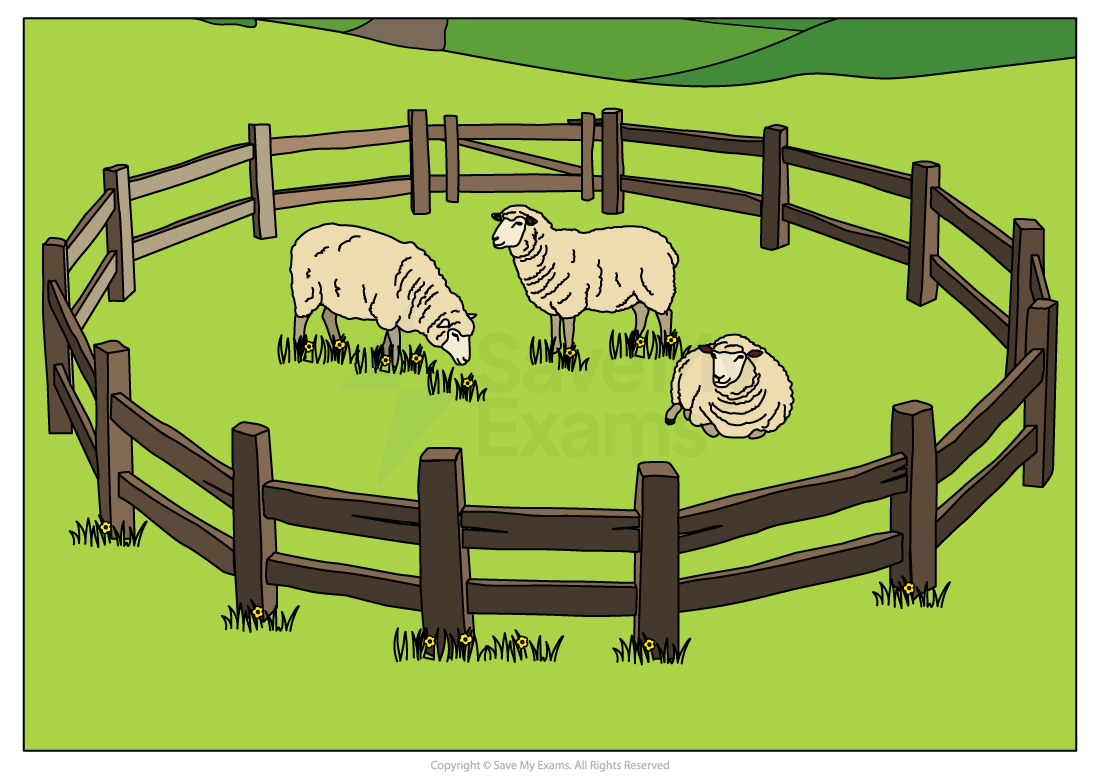
The problem of enclosure
Enclosure (the conversion of common arable land into private sheep pasture by fencing it off) was one of the most significant social and economic grievances of early Tudor England
As the cloth trade boomed, landowners found it more profitable to farm sheep than to employ agricultural labourers
This could displace rural communities, reduce arable production and in some cases contribute to depopulation
It was a source of widespread popular anger and a direct threat to social order
Wolsey's enclosure commissions, 1517–1518
In 1517, Wolsey launched the most ambitious investigation into illegal enclosure that England had yet seen
He appointed commissioners across the country to identify land that had been illegally enclosed since 1489 (the date of the first parliamentary statute against enclosure) and to report on the extent of depopulation
How did it work?
Commissioners gathered evidence from across England; tens of thousands of acres of illegally enclosed land were identified
Wolsey used the Star Chamber to prosecute the most prominent offenders, including some noblemen and wealthy gentry
A further commission followed in 1518, specifically targeting those who had failed to comply with the findings of the first
Wolsey also proposed a sheep tax in 1523 to penalise those profiting from large-scale sheep farming, though it was never implemented
How effective were the enclosure commissions?
The commissions were ambitious in scope, but limited in effect:
Strengths |
|
|---|---|
Limitations |
|
The Eltham Ordinances, 1526
In 1526, Wolsey drew up the Eltham Ordinances, a set of regulations aimed at reforming the royal household, reducing its size and cost, and improving its efficiency
He proposed cutting the number of Gentlemen of the Privy Chamber from 12 to 6
This would have reduced the direct access that powerful courtiers had to the king
The Eltham Ordinances had a clear political dimension
By reducing access to the Privy Chamber, Wolsey was attempting to consolidate his own position as the principal conduit between the king and the court
Limitations:
The household soon reverted to its previous size and the ordinances left little lasting mark
Examiner Tips and Tricks
Avoid presenting Wolsey's commissions as purely altruistic. The strongest answers note that his concern for the poor served his political interests, building popular support while attacking noble power. The fact that he himself enclosed land on his own estates is a devastating piece of counter-evidence.
Wolsey & Parliament: Why was their relationship so difficult?
Wolsey's relationship with Parliament was one of mutual hostility and suspicion
He preferred to govern without it wherever possible, regarding it as an obstacle to efficient administration rather than a necessary partner in government
This attitude created lasting tensions that contributed to both his political vulnerability and the eventual crisis of the Amicable Grant
Why did Wolsey avoid Parliament?
Control and speed:
Parliament was slow, unpredictable and capable of attaching conditions to grants of taxation
Wolsey preferred to act without such constraints
Vulnerability to criticism:
Parliament provided a forum for members to voice grievances about Wolsey's conduct, his monopoly of power and his use of legal and financial instruments
Preference for prerogative power:
Wolsey believed strong government was best exercised through royal prerogative (the king's inherent authority) rather than parliamentary statute
Personal style:
Wolsey was autocratic by temperament and genuinely uncomfortable with the messiness and unpredictability of parliamentary debate
Parliament under Wolsey – Key events
1512–1514
|
|
|---|---|
1523
|
|
1525
|
|
1529
|
|
Case Study
The 1523 Parliament: A case study in difficult relations
The 1523 Parliament is the most revealing example of the tension between Wolsey and Parliament
Wolsey demanded £800,000, an extraordinarily large sum, equivalent to several years of ordinary royal revenue
MPs were outraged
Wolsey is said to have attended the Commons in person to make his case
This was itself highly unusual and deeply resented
Ministers were not expected to browbeat Parliament directly
Result?
Parliament ultimately granted only around £150,000, less than one-fifth of what Wolsey had demanded, to be collected over two years
The Speaker, Thomas More, skilfully managed the opposition to Wolsey's demands
The episode illustrated that, even at the height of his power, Wolsey could not simply command Parliament to do his bidding
Examiner Tips and Tricks
The Amicable Grant and the 1523 Parliament together make a powerful argument about the limits of Wolsey's power. He could delay Parliament and avoid calling it, but, when he needed money, he had to either face its resistance or try to bypass it altogether. The Amicable Grant showed what happened when he tried the second option.
How effectively did Wolsey Govern England?
The question of how effectively Wolsey governed sits at the heart of this sub-topic and draws on evidence from all Wolsey revision notes
Use the specific evidence below to build and support your own argument
Evidence that Wolsey governed effectively
The subsidy raised around £300,000 between 1513 and 1523, far more than the old fifteenth and tenth system
It became the standard form of parliamentary taxation for the rest of the Tudor period
The expansion of Star Chamber under Wolsey prosecuted powerful enclosers, including members of the nobility
These groups had previously been beyond the reach of ordinary courts
The Court of Chancery heard dramatically more cases under Wolsey, providing flexible equity-based remedies unavailable in common law courts
The 1517–1518 enclosure commissions were the most systematic investigation into illegal enclosure England had seen
Commissioners surveyed tens of thousands of acres of illegally enclosed land
England remained stable and largely prosperous for over a decade under Wolsey's direction
No major domestic rebellion occurred during his period of dominance
The Eltham Ordinances (1526) demonstrated a genuine attempt to reform royal household administration and reduce expenditure
Key historians:
Giustiniani, Venetian Ambassador (1519) |
|
|---|---|
J. D. Mackie, The Earlier Tudors (1987) |
|
Evidence that Wolsey's governance was flawed
In the 1523 Parliament, Wolsey demanded £800,000 but received only around £150,000
Less than a fifth of what he asked, even after attending the Commons in person to make his case
The Amicable Grant (1525) provoked around 10,000 people in Suffolk alone to refuse payment
It had to be abandoned entirely and was a public constitutional humiliation
Wolsey himself enclosed land on his own estates
This directly contradicted his enclosure commissions and exposed the gap between his rhetoric and his conduct
He dissolved 29 monasteries ostensibly for reform, but the revenue went to fund his own educational projects (Cardinal College Oxford and Ipswich school), not broader Church reform
Parliament was not summoned between 1523 and 1529
This six-year gap stored up constitutional resentment
It left the Crown without a functioning mechanism for raising extraordinary revenue
His ultimate failure to secure Henry's annulment from Catherine of Aragon defined his final years
It brought about his fall in 1529 and undid much of his legacy
Key historians:
G. R. Elton, Introduction to Wolsey by A. F. Pollard (1965) |
|
|---|---|
C. S. L. Davies, Peace, Print and Protestantism (1977) |
|
Examiner Tips and Tricks
The strongest answers draw on all Wolsey sub-topics. Bring in the subsidy, Star Chamber and legatine authority from Rise, Power and Reforms alongside the domestic evidence here.

Unlock more, it's free!
Join the 100,000+ Students that ❤️ Save My Exams
the (exam) results speak for themselves:

Was this revision note helpful?
