Henry VIII: Foreign Policy Under Wolsey, 1509-1529 (AQA A Level History: Component 1: Breadth study): Revision Note
Exam code: 7042

Summary
Henry VIII's foreign policy moved from Henry's early pursuit of military glory against France to Wolsey's more sophisticated use of diplomacy and balance-of-power politics
Henry's early wars with France (1512–1514) produced limited military results but served his main purpose: projecting magnificence and prestige to a European audience
At Flodden (1513), the English army under the Earl of Surrey crushed the Scottish invasion, killing James IV, a far more strategically significant victory than the Battle of the Spurs (1513)
The Field of the Cloth of Gold (1520) was Wolsey's most spectacular diplomatic display
It was brilliant Renaissance theatre, but it produced no lasting alliance
Wolsey attempted to use the Habsburg–Valois Wars to position England as the arbiter of Europe
But England's actual leverage remained limited once Charles V no longer needed English support after 1525
Historians debate whether Wolsey's foreign policy was a genuine success in maximising English influence, or whether it was ultimately all spectacle with very little lasting substance
Henry VIII's Early Wars with France: Causes & Outcomes
Why did Henry go to war with France?
Henry wanted military glory above all else in the early years of his reign
He idolised Henry V and dreamed of recovering English territory in France
War with France was popular, prestigious and in keeping with the chivalric ideal of the Renaissance prince
In 1511, Henry joined the Holy League against France, alongside Pope Julius II, Spain and the Holy Roman Empire
This gave the war a religious justification as well as a political one
Wolsey organised the logistics of the campaigns brilliantly and used the war to establish himself in government
The campaigns
1512: an initial campaign in south-west France ended in disaster
English troops were abandoned by their Spanish allies under Ferdinand of Aragon
The campaign achieved nothing and seriously embarrassed Henry
1513: a second and more successful invasion of northern France
Henry led the campaign in person, which was itself important for his image as a warrior king
The towns of Thérouanne and Tournai were captured
Tournai was strategically useless and very expensive to maintain
It was sold back to France in 1518
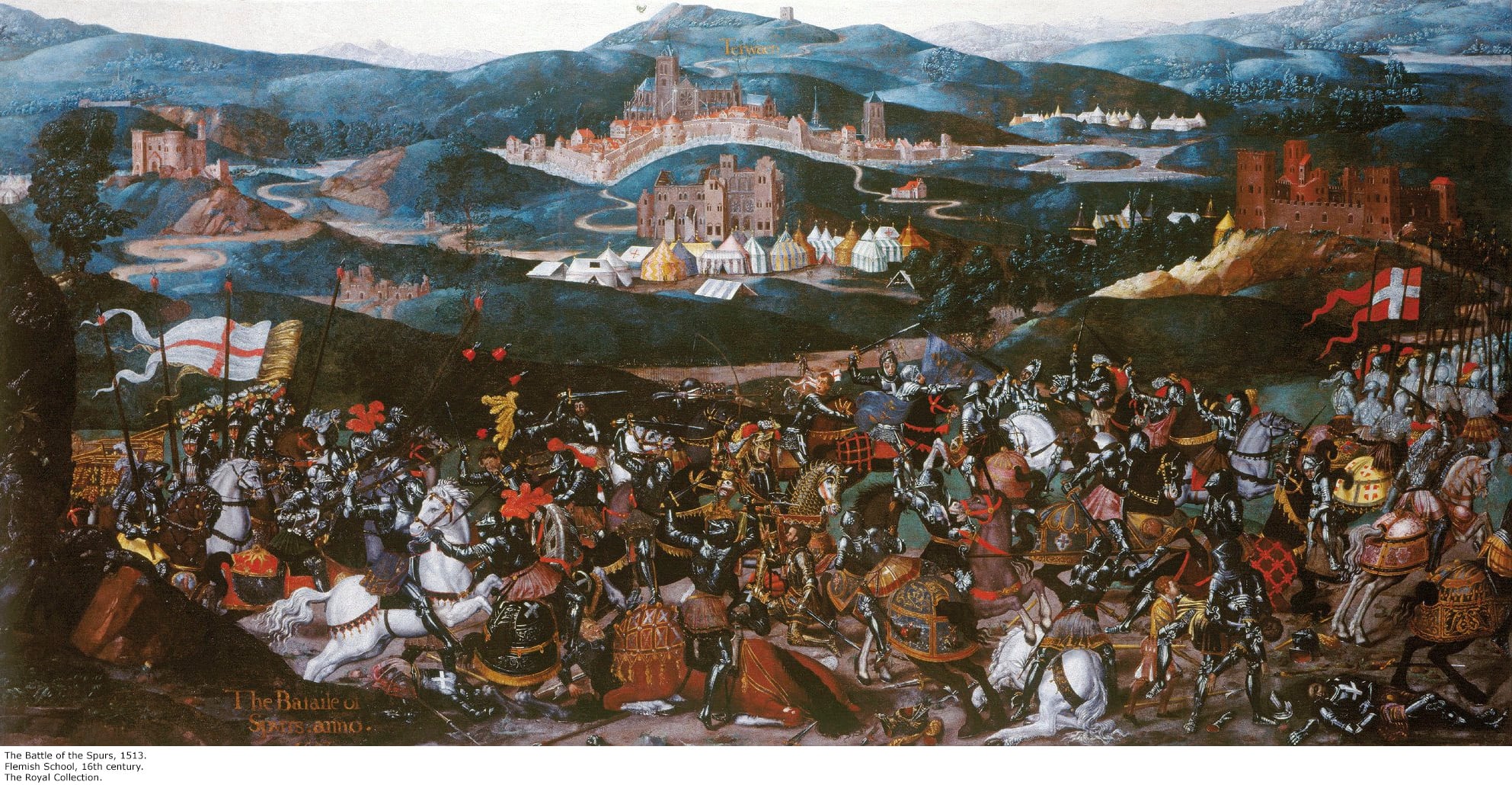
The Battle of the Spurs, 1513
A minor cavalry engagement near Thérouanne in August 1513
English forces routed a French cavalry unit that was attempting to resupply the town
It was named for the speed at which the French fled rather than the scale of the fighting
Henry presented it as a great military triumph
In reality it was a skirmish rather than a major battle
Its significance was primarily propagandistic
It gave Henry the military glory he craved
Outcomes
The Treaty of Paris (1514) ended the war with France
Henry's younger sister Mary Tudor married the elderly French king Louis XII to seal the peace
Louis XII died within three months
Francis I became king of France in 1515, fundamentally changing the dynamic
The campaigns produced limited strategic gains but served their primary purpose
Henry had demonstrated himself as a serious European monarch
Wolsey had shown his talent for organisation and was rewarded with rapid promotion
Examiner Tips and Tricks
The Battle of the Spurs is a classic example of the gap between image and reality in Henry's foreign policy. The military achievement was minimal but the propaganda value was enormous. The strongest answers make this distinction explicitly rather than treating it as a genuine military victory.
The 1512 disaster in south-west France is often overlooked. It is worth mentioning as evidence that early campaigns were not uniformly successful, and that Henry's alliance with Ferdinand of Aragon was unreliable from the start.
The Battle of Flodden, 1513: England & Scotland
Background: The Auld Alliance
Scotland and France were linked by the Auld Alliance, a mutual defence treaty that dated back to the 13th century
When Henry invaded France in 1513, France called on Scotland to open a second front against England
The Scottish king, James IV, led a large army south across the border in August 1513
He had around 30,000 to 40,000 men, one of the largest Scottish armies ever assembled
Henry was in France with his main army, leaving England vulnerable
The battle
Catherine of Aragon was acting as regent in Henry's absence and organised the English response
She oversaw the raising of an English army and reportedly sent Henry her own ornamental armour as a battle token
The English army was commanded by Thomas Howard, Earl of Surrey
The Battle of Flodden Field was fought on 9 September 1513 in Northumberland
The English forces decisively defeated the Scots despite being outnumbered
The English use of bills and artillery proved superior to Scottish pike formations
The outcome
James IV was killed in the battle
He was the last British monarch to die in battle on English soil
Around 10,000 Scots were killed, including much of the Scottish nobility
The battle was a catastrophic blow to Scotland
The new king, James V, was only 17 months old
Scotland was left with a regency government and was effectively neutralised as a military threat for a generation
Catherine sent Henry James IV's coat as a trophy
Henry later boasted that he had won more in Scotland than Wolsey had in France
Examiner Tips and Tricks
Flodden is strategically far more significant than the Battle of the Spurs, yet it receives less attention because Henry was not there. The strongest answers make this comparison directly: Flodden eliminated a military threat for a generation; the campaign in France captured two strategically unimportant towns (Thérouanne and Tournai).
Catherine of Aragon's role as regent at Flodden is a useful counter-argument against any simplistic portrayal of her as a passive figure. It also reflects the strength of her early partnership with Henry and the trust he placed in her to govern in his absence.
Wolsey & European Diplomacy: The Field of the Cloth of Gold, 1520
Wolsey's diplomatic vision
From 1515 onwards, Wolsey took control of English foreign policy
His central idea was to position England as the arbiter of Europe: the honest broker between the two great powers
France under Francis I and the Holy Roman Empire under Charles V were the dominant forces
England lacked the military strength to dominate Europe
So Wolsey used diplomacy and shifting alliances instead
The Treaty of London (1518) was Wolsey's most significant early achievement
It was a non-aggression pact signed by most major European powers
England was positioned at the centre of a new European peace framework
It was as much a propaganda triumph as a genuine diplomatic settlement
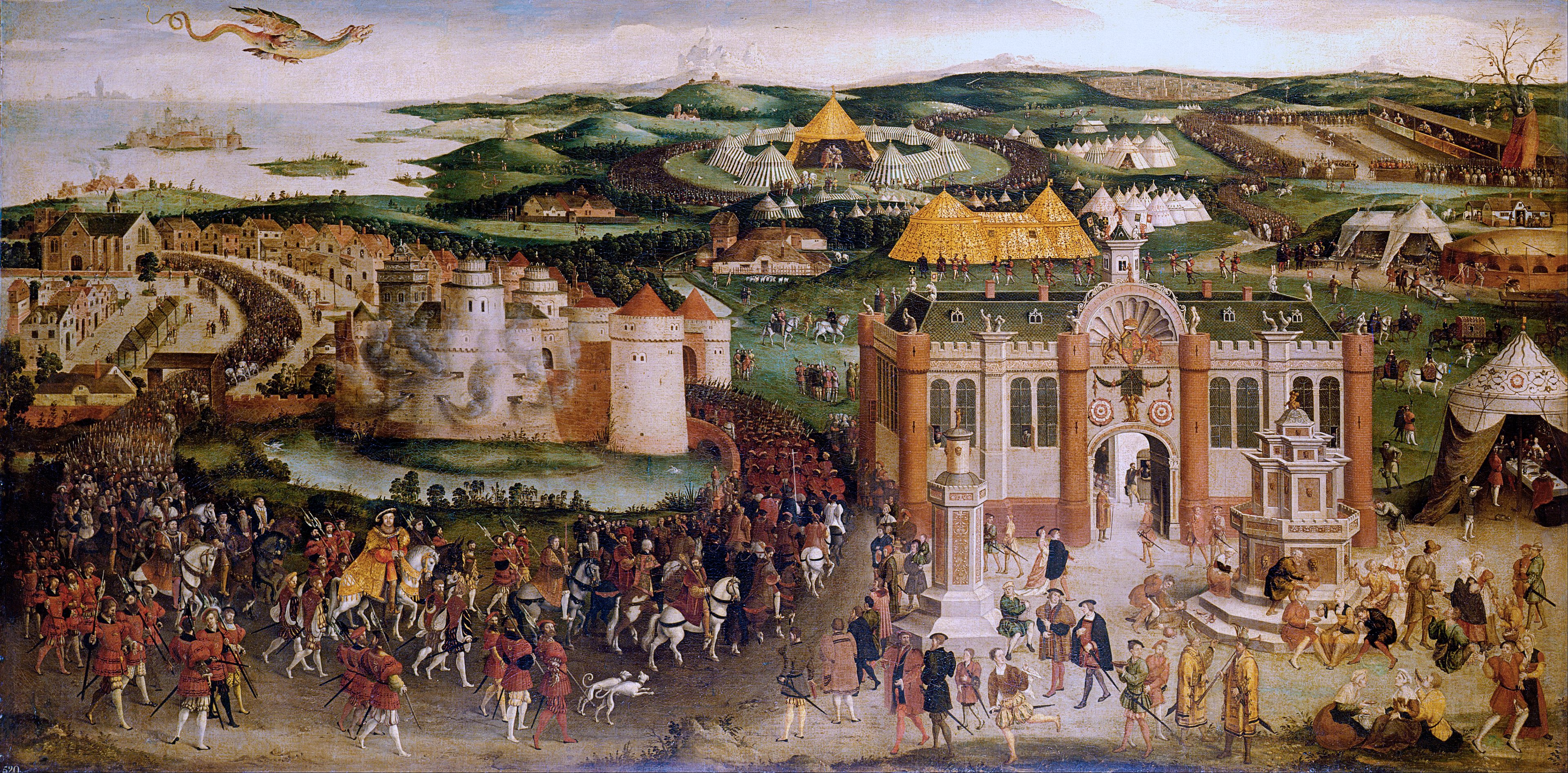
The Field of the Cloth of Gold, June 1520
Wolsey arranged a spectacular summit between Henry VIII and Francis I of France, held near Calais
It was named for the extraordinary luxury on display
Golden tents and pavilions stretched across the site
Fountains ran with wine for the assembled crowds
Jousting tournaments, banquets and pageants ran for over two weeks
The meeting cost around £15,000, an enormous sum for a diplomatic event
Its stated purpose was to cement Anglo-French friendship following the Treaty of London
The reality behind the spectacle
Neither king trusted the other
Henry met Holy Roman Emperor Charles V both before and after the Cloth of Gold summit
This signalled clearly that England was keeping its options open
The meeting produced no lasting political alliance
Within two years, England had allied with Charles V against France
Yet the Field of the Cloth of Gold still mattered
It demonstrated Wolsey's understanding of Renaissance diplomatic culture
It showed Europe that England had a magnificent, culturally ambitious king
It illustrated the central tension in Tudor foreign policy: the gap between image and substance
Examiner Tips and Tricks
The Field of the Cloth of Gold is one of those events that looks impressive but needs careful analysis. Don't just describe the spectacle: the key examiner point is that Henry met Charles V both before and after the meeting, which shows the whole exercise was diplomatic theatre rather than a genuine commitment to France.
The Treaty of London (1518) is often underrated. It was genuinely innovative: a collective non-aggression pact at a time when such things were rare. Mentioning it shows broader knowledge of Wolsey's diplomacy beyond just the famous set pieces.
The Habsburg-Valois Wars & England's Role
The Habsburg-Valois Wars (1521–1559) were a series of conflicts between the Holy Roman Empire and France, fought mainly in Italy
They dominated European politics throughout Wolsey's period in power and shaped every decision he made
England's shifting alliances
1521 |
|
|---|---|
1522–23 |
|
1525 |
|
1525–1526 |
|
1527 |
|
1529 |
|
The verdict on Wolsey's foreign policy
Wolsey was highly effective at diplomatic positioning
He kept England at the centre of European affairs far beyond what its military power merited
The Treaty of London and the Field of the Cloth of Gold raised England's prestige significantly
But England's actual leverage was always limited
When Charles V no longer needed English support after Pavia, Wolsey had no way to compel his cooperation
England was always the smaller third party in a contest between two giants
The Sack of Rome (1527) was the moment where foreign policy and domestic politics became fatally entangled
Clement VII's captivity made the divorce impossible through normal diplomatic channels
Wolsey's foreign policy failures contributed to his political fall in 1529
Examiner Tips and Tricks
The key to this topic is understanding that Wolsey's foreign policy was often reactive. He had a vision of England as arbiter of Europe, but in practice he was always responding to the moves of France and the Habsburgs. When those two powers settled their differences at Cambrai in 1529, England was simply irrelevant.
Don't treat the shift from anti-French to anti-Habsburg alliances as evidence of weakness or inconsistency. It was deliberate balance-of-power politics: Wolsey switched sides when one power became too dominant. This was sophisticated diplomacy, not hypocrisy.

Unlock more, it's free!
Join the 100,000+ Students that ❤️ Save My Exams
the (exam) results speak for themselves:

Was this revision note helpful?
