Henry VIII: Economic Development (AQA A Level History: Component 1: Breadth study): Revision Note
Exam code: 7042

Summary
Economic development under Henry VIII tells two contrasting stories:
The early and middle years saw a booming cloth trade and genuine commercial growth
The 1540s brought debasement, inflation, rising rents and a Crown that had squandered the windfall from the dissolution
The cloth trade dominated the economy throughout the reign, accounting for around 80% of England's exports
The main market was Antwerp and the chief trading company was the Merchant Adventurers
Henry failed to follow up on Henry VII's investment in exploration
While Spain and Portugal built global empires, England made little effort to engage with the new Atlantic world
Henry VIII's reign has been described as "one of lost opportunities" for failing to engage with the new Atlantic world
The dissolution transferred 10% of the kingdom's wealth to the Crown, but Henry spent it on wars
More than half of all monastic lands were sold off between 1543 and 1547
The Great Debasement (1542–1547) slashed the silver content of coins and triggered serious inflation, falling wages and rural discontent
Historians are divided:
Cook argues that Henry left a legacy of debt, debasement and universal discontent
Scarisbrick places economic problems in the context of a reign that ultimately left the Tudor monarchy stronger than it found it
Trade, Exploration & Commercial Development under Henry VIII
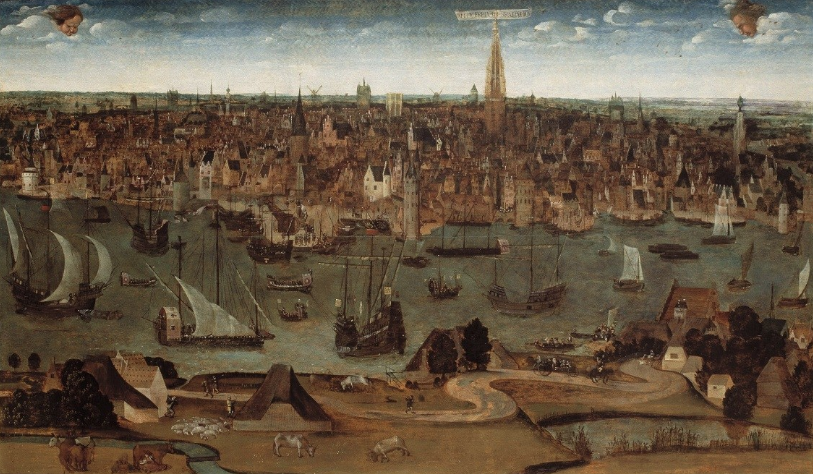
The cloth trade
England's economy was dominated by the export of woollen cloth throughou
t Henry's reign
Cloth accounted for roughly 75–80% of England's exports
A remarkable concentration in a single commodity
This also created a dangerous over-dependence
When cloth demand fell, the whole economy felt it
The main market was Antwerp in the Netherlands, the commercial hub of northern Europe
Antwerp handled re-export of English cloth across Europe and provided English merchants with access to luxury imports
The Merchant Adventurers held the dominant position in the cloth export trade
They controlled the monopoly on cloth exports to the Low Countries
Their wealth grew significantly through the early decades of Henry's reign
Cloth exports grew from around 80,000 cloths per year in 1509 to over 100,000 by the 1540s
This growth reflected genuine commercial prosperity in the early and middle parts of Henry VIII’s reign
Other trade
Raw wool exports declined relative to finished cloth as English manufacturers added more value before export
Trade with the Baltic and Hanseatic ports provided timber, naval supplies and grain
The Hanseatic League (German trading merchants) had long enjoyed preferential trading rights in England
Henry gradually reduced their privileges to favour English merchants over the course of the reign
This was a modest but commercially significant step towards protecting English trading interests
Exploration: A missed opportunity?
Henry showed almost no interest in exploration or the new Atlantic trade routes
During his reign, Spain and Portugal gained huge empires with enormous opportunities for developing international trade
England did very little to develop exploration or exploit Atlantic opportunities, and the government showed little sustained interest in doing so
The focus remained firmly on European trade and the ambition to reconquer France
Sebastian Cabot, son of John Cabot who had explored for Henry VII, spent much of his career in Spanish service rather than working for the English Crown
This was a symbolic illustration of England's failure to build on Henry VII's investment in exploration
The Newfoundland fisheries were exploited by English fishermen but without any official royal encouragement or plans for colonisation
Exploration revived in the later 1550s, particularly with the Muscovy Company expedition
Examiner Tips and Tricks
The comparison with Henry VII is worth making in any question on trade or exploration. Henry VII actively invested in John Cabot's voyages and passed Navigation Acts to protect English shipping, whereas Henry VIII showed no interest in either.
Don't confuse the cloth trade's growth with general economic health. By the 1540s, cloth exports were booming but ordinary workers were suffering from inflation, enclosure and falling real wages. Growth in one sector does not mean prosperity was shared.
The Economic Impact of the Dissolution of the Monasteries
The dissolution was the largest single transfer of wealth in England since the Norman Conquest
Its economic consequences were felt at every level: from the Crown's finances down to individual local communities
Short-term gains for the Crown |
|
|---|---|
Long-term losses for the Crown |
|
Impact on the gentry
The main long-term beneficiaries of the dissolution were the gentry
They purchased the bulk of monastic land as it came onto the market
This dramatically accelerated the growth of the gentry class
It gave them a permanent stake in the Protestant settlement
The redistribution of land also weakened the nobility relative to the gentry over the longer term
Many noble estates had relied on monastic networks for services and labour
Impact on local communities
Monasteries had been significant local economic actors
They employed labourers, purchased local produce and maintained infrastructure such as bridges, roads and sea walls
These functions were not fully replaced after the closures
Monastic schools and libraries were disrupted or destroyed
Many libraries were broken up and books were burned or sold to private collectors
Some schools were refounded, but many communities lost educational provision entirely
Historians have generally been cautious about linking the dissolution directly to a significant rise in poverty
The number of monks and nuns in each community was relatively small
Other opportunities existed within the Church and in the households of Catholic families
Examiner Tips and Tricks
The economic impact of the dissolution has two very different timescales. In the short term, Henry gained enormous wealth. In the long term, he wasted it on wars and sold the land that would have generated a permanent income stream. The strongest answers make this distinction explicit.
Don't present the gentry's gains as straightforwardly positive for England. The gentry now had a direct financial stake in preventing any return to Catholicism, which contributed to the political instability of the mid-Tudor period.
Enclosure, Population Growth & Inflation Under Henry VIII
These three forces interacted to create mounting economic pressure by the end of the reign
Together they explain why ordinary people's living standards deteriorated even as the cloth trade grew
Population growth
England's population grew from approximately 2.3 million in 1500 to around 2.8 million by 1547
This was sustained growth over several decades, not a sudden spike
Rising population put pressure on food supply, wages, housing and employment
More people competed for the same land and the same jobs
Food prices rose as demand outstripped supply
Particularly after poor harvests
The government had no effective mechanism for managing this structural pressure
Poor relief was limited and largely left to parish and charitable institutions
Enclosure
Landowners continued converting common arable land to sheep pasture throughout the reign
Sheep farming was more profitable than arable farming
It was driven by demand from the cloth trade
This displaced rural labourers and undermined traditional village communities
Wolsey's enclosure commissions (1517/1518) investigated illegal enclosures but had limited practical effect
Wolsey himself enclosed land on his own estates
This exposed the gap between his rhetoric and his practice
Enclosure continued regardless after the commissions and accelerated as the cloth trade boomed
It was a persistent source of popular grievance and contributed directly to the Lincolnshire Uprising and Pilgrimage of Grace in 1536
Inflation
Prices rose significantly across Henry's reign, driven by population growth, enclosure and rising rents
The Great Debasement of the coinage (1542–1547) made inflation dramatically worse in the last years of the reign
Silver content fell from around 92% to about 50% by 1545, and around 33% by 1546
This allowed the Crown to circulate more money to pay for wars but destroyed confidence in the currency
The debasement drove a sharp rise in prices that hit ordinary people hardest
Wages did not keep pace
The real purchasing power of labourers fell significantly
Rack-renting (raising rents to the highest possible level) added further pressure in the countryside
The consequences were passed on directly to Edward VI's government, which had to deal with the inflation crisis Henry had created
Examiner Tips and Tricks
The Great Debasement is one of the most important economic facts of the reign. Make sure you know the specific figures: silver content fell from around 92% to about 50% by 1545, and around 33% by 1546. These numbers demonstrate how dramatically Henry debased the coinage to fund his wars.
Enclosure, population growth and inflation are interlinked causes, not separate ones. The strongest answers show how they reinforced each other: growing population increased demand for cloth, which increased the incentive to enclose, which displaced labourers, who competed for fewer jobs, which kept wages down even as prices rose.
Prosperity and Depression: The State of the English Economy by 1547
By 1547, the English economy presented a deeply mixed picture
Use the specific evidence below to build and support your own argument
Evidence of prosperity and economic development
The cloth trade had grown substantially since 1509
Cloth exports rose from around 80,000 cloths per year in 1509 to over 100,000 by the 1540s
England was an increasingly significant commercial force in northern European trade
London had developed significantly as a commercial and financial centre
The city's population grew rapidly and its merchant community became wealthier and more sophisticated
The gentry class had expanded and prospered through the purchase of monastic land
This created a broader and more commercially active landowning class than had existed in 1509
The dissolution, whatever its long-term costs, had funded an ambitious foreign policy that raised English prestige in Europe
The Hanseatic League's privileges were reduced, modestly strengthening English merchants' competitive position
Key historians
J.J. Scarisbrick, Henry VIII (1968) |
|
|---|
Evidence of depression and economic failure
The Great Debasement caused severe inflation and destroyed confidence in the currency
Prices were high and rising
Wages were inadequate
Unemployment was growing
Henry squandered the dissolution windfall on wars that produced no lasting territorial or commercial gains
More than half of all monastic lands were sold off between 1543 and 1547
The Crown was left with heavy debts despite the largest land transfer since the Norman Conquest
Enclosure and population growth created widespread rural distress
Rents were increasing and real wages were falling
England had completely failed to engage with the new Atlantic economy
Spain and Portugal had built global empires while Henry focused on France
This was not merely a missed opportunity for the present
It was a failure with consequences lasting into the next century
The economic problems were passed on to Edward VI's government in an acute form
Northumberland's economic reforms, addressing debasement and inflation, were the direct legacy of Henry's financial mismanagement
Key historians
Denys Cook, Sixteenth Century England 1450–1600 (1980) |
|
|---|
Examiner Tips and Tricks
This is a "prosperity and depression" question, which invites a clear overall verdict. The strongest answers do not simply list points on both sides. A good line of argument is: the cloth trade and commercial London showed genuine prosperity for those at the top, but the majority of ordinary people faced enclosure, inflation and falling real wages. Henry's reign was economically prosperous for the few and depressing for the many.
The phrase "one of lost opportunities" captures a broader truth about Henry's economic reign: he inherited Henry VII's commercial foundations but failed to build on them in any systematic way.

Unlock more, it's free!
Join the 100,000+ Students that ❤️ Save My Exams
the (exam) results speak for themselves:

Was this revision note helpful?
