Henry VIII: Wolsey - Rise, Power & Reforms (AQA A Level History: Component 1: Breadth study): Revision Note
Exam code: 7042

Summary
Thomas Wolsey rose from humble origins (the son of an Ipswich butcher and cattle dealer) to become one of the most powerful men in England
He becameArchbishop of York (1514), Lord Chancellor (1515), Cardinal (1515) and Papal Legate (1518)
His rise was driven by his outstanding organisational abilities, particularly his brilliant management of the 1513 French campaign, which won Henry's trust and gratitude
As legate a latere, Wolsey exercised exceptional authority over the English Church, often superseding the authority of the Archbishop of Canterbury
His legal reforms revitalised the Star Chamber and Court of Chancery, expanding access to justice, though critics noted he used legal power selectively
His introduction of the subsidy was a genuine financial innovation, raising around £300,000 between 1513 and 1523
The Amicable Grant (1525) was his most significant failure, a forced loan levied without parliamentary authority that provoked widespread resistance and had to be abandoned
The Rise of Cardinal Wolsey: From Butcher's Son to Lord Chancellor
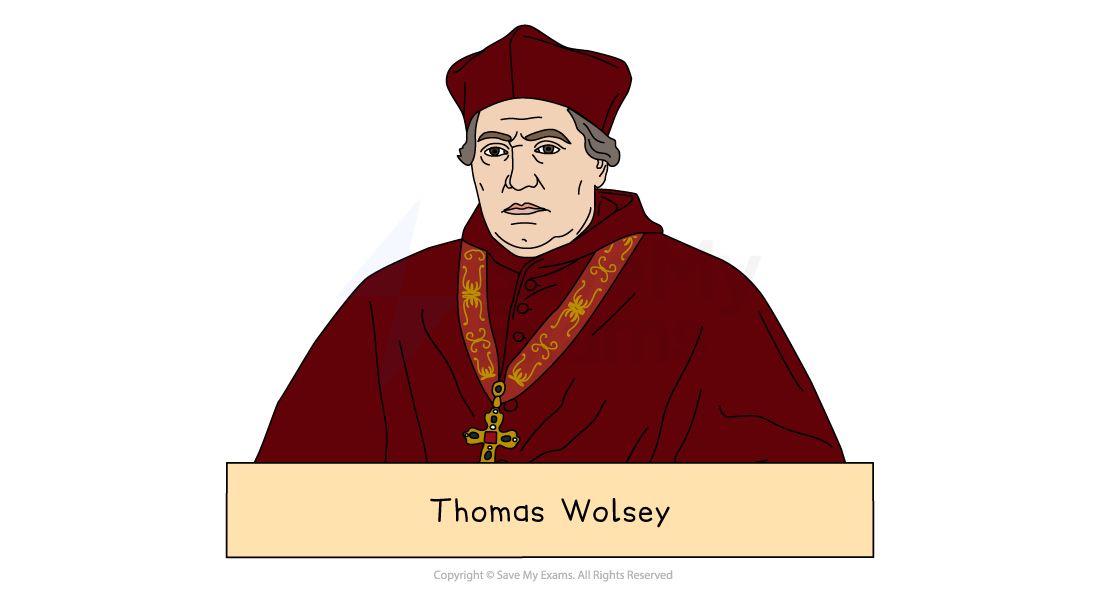
Origins and early career
Thomas Wolsey was born around 1473 in Ipswich, the son of a butcher and cattle dealer
His background made his eventual dominance of English government all the more remarkable
It also gave his aristocratic enemies ammunition they never tired of using against him
The Church offered one of the few routes for social mobility, allowing able men of humble birth to rise through education and patronage
Wolsey was educated at Magdalen College, Oxford, graduating at around age 15, earning the nickname ‘the boy bachelor;
He was ordained as a priest and rose through ecclesiastical patronage
He served as chaplain to the Archbishop of Canterbury and later to Sir Richard Nanfan, Deputy of Calais
Nanfan brought him to the attention of Henry VII
Rise under Henry VIII
Wolsey's real opportunity came with the new reign
He was appointed royal almoner in 1509, a modest post that nonetheless gave him daily access to the king
He quickly demonstrated his exceptional administrative talents
It was his brilliant organisation of the logistics, supply and finance of the 1513 French campaign that transformed his fortunes entirely
It won him Henry's deep gratitude and trust
The accumulation of offices, 1514–1518
Office (Year) | Significance |
|---|---|
Archbishop of York (1514) |
|
Lord Chancellor (1515) |
|
Cardinal (1515) |
|
Papal legate a latere (1518) |
|
"The Cardinal is the first person who rules both the King and the entire kingdom. On the ambassador's first arrival in England he used to say to him, 'His Majesty will do so and so', but, by degrees, he began to forget himself and started to say, 'We shall do so and so'. Now he has reached such a height that he says, 'I shall do so and so'."
Giustiniani, Venetian Ambassador to England, writing about Wolsey in 1519
A vivid contemporary account of how completely Wolsey came to dominate government – note this is a single viewpoint from a foreign diplomat, and Giustiniani had his own political reasons for emphasising the Cardinal's dominance over Henry.
Why did Wolsey rise so quickly?
Exceptional administrative ability:
Wolsey demonstrated exceptional administrative ability: an outstanding organiser, diplomat and political operator
He supplied the administrative competence Henry had no desire to exercise himself
Henry's governing style:
The king wanted glory and spectacle, not paperwork
He was willing to delegate the daily business of government to a trusted and capable minister
Personal access:
As royal almoner, Wolsey had daily contact with Henry from the earliest days of the reign, allowing him to build personal trust quickly
No organised aristocratic faction capable of blocking his rise:
In the early years of Henry's reign, there was no powerful noble faction organised to oppose Wolsey's rise, leaving the field open for a man of ability
The Church as a vehicle:
Wolsey used ecclesiastical offices to accumulate wealth, status and patronage networks that gave him a powerbase less dependent on the nobility
"Wolsey had the ruthlessness, the administrative skill, the reliance on new men and above all the absolute spirit of the renaissance prince. Although he was unseeing in an age of vision, an administrator rather than a creator, he was none the less a great man… At home Wolsey created a tremendous central authority in government for his master."
J. D. Mackie, The Earlier Tudors (1987)
Mackie offers a broadly positive assessment – acknowledging Wolsey's limitations as a visionary while insisting that his administrative genius and creation of centralised authority make him genuinely significant.
Examiner Tips and Tricks
Wolsey's rise is best explained as a combination of exceptional ability and Henry's own governing style. Avoid simply listing his offices: explain why Henry was willing to give so much power to one man. The key is Henry's desire to have the glory without the administrative grind.
Wolsey & the Church: Legate a Latere & Church Reform
What was a legate a latere?
A legate a latere was the most senior grade of papal legate
A personal representative of the Pope, carrying full papal authority
It was an extraordinary appointment, rarely granted to anyone outside Italy
Wolsey secured this position in 1518 and had it renewed repeatedly until his fall in 1529
It gave him authority over the entire English Church that technically superseded even that of the Archbishop of Canterbury, William Warham
Warham bitterly resented Wolsey's dominance
In practice, this meant Wolsey could hold legatine visitations of monasteries and religious houses, call Church councils, reform ecclesiastical abuses and override normal Church administration, all in the Pope's name
He was simultaneously the king’s chief minister and the most powerful churchman in England
Church reform: What did Wolsey do?
Wolsey's record on reform was genuinely ambiguous:
Monastic visitations:
He conducted visitations of monasteries and dissolved around 29 small monasteries, officially on grounds of poor standards and inefficiency
The revenue was used to fund his educational projects
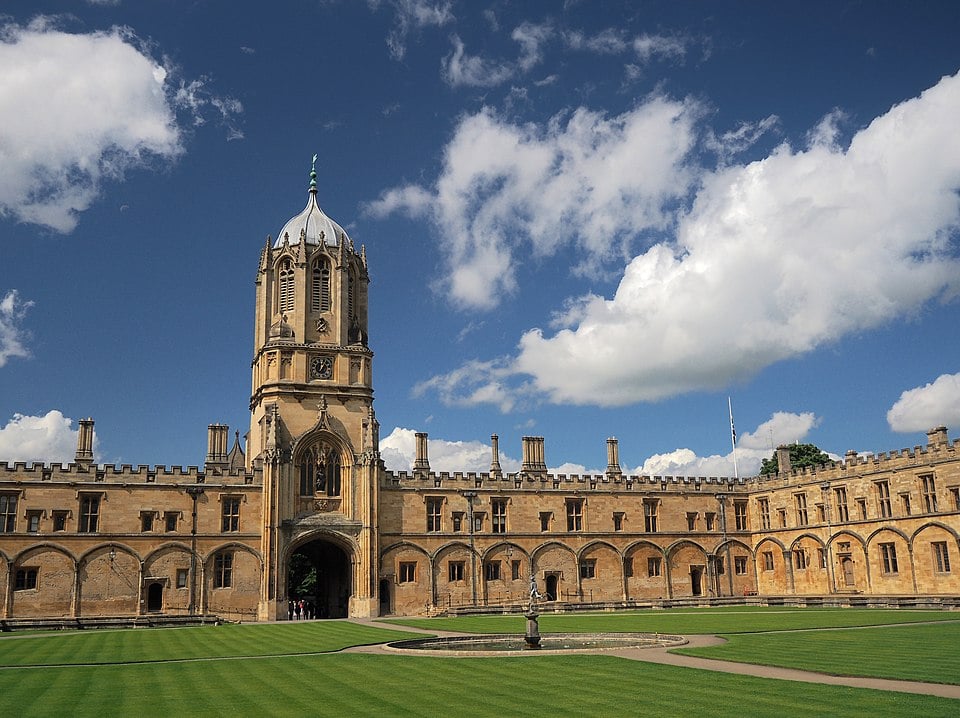
Cardinal College, Oxford (1524/1525):
Founded on the site of St Frideswide's Priory; later refounded by Henry VIII as Christ Church
An impressive monument to Wolsey's humanist patronage
Ipswich school (1528):
A grammar school in his home town, intended as a feeder for Cardinal College
It was dissolved on his fall
Attempted to address clerical abuses:
Pluralism, absenteeism and simony were all targets
Enforcement was inconsistent and rarely effective
The fundamental contradiction
The central problem with Wolsey as a Church reformer was that he personally embodied the very abuses he claimed to be addressing
He was one of the most prominent pluralists England, holding multiple major offices simultaneously
He accumulated vast wealth through his ecclesiastical positions
He had an illegitimate son, Thomas Winter, whom he favoured with Church offices
His dissolution of 29 monasteries, while later used as a model by Henry VIII, was self-serving in motivation:
The primary purpose was to generate income and prestige for his own educational projects, not to reform the Church in any meaningful doctrinal sense
Critics including humanist reformers felt his approach was superficial and hypocritical
He used the language of reform in the service of personal ambition
"It is hard to dissent from the judgement of the historian Richard Rex (writing in 1992) that 'there is nothing in Wolsey's administration of the Church of England to justify in terms of reform the enormous legatine powers devolved on him from the papacy'. Wolsey was not the deeply corrupt, power-mad prelate of Protestant legend, but neither was he the kind of inspirational, reforming leader that English Catholicism needed if it was going to surmount the twin challenges of doctrinal rebellion and growing conflict between Church and State."
Peter Marshall, 'Cardinal Wolsey and the English Church', History Review, 60 (March 2008)
Marshall, a professor at Warwick University, offers a nuanced verdict – defending Wolsey against the most extreme Protestant caricature while firmly rejecting any claim that his legatine authority was used for genuine reform.
Examiner Tips and Tricks
The key debate here is genuine reformer vs self-serving careerist. The strongest answers acknowledge both. Wolsey's dissolution of monasteries and educational projects were real achievements, but they were driven by personal ambition and financial calculation as much as any principled desire for reform. The contradiction between his words and his conduct is the heart of this argument.
Wolsey's Legal Reforms: Star Chamber & the Court of Chancery
The Court of Star Chamber
The Court of Star Chamber had existed before Wolsey, originating as an offshoot of the king's council under Henry VII
Wolsey transformed it from a rarely used body into an active, accessible and feared court
Under his supervision as Lord Chancellor, it became one of the most significant instruments of royal justice in England
Key features of Wolsey's Star Chamber
No jury |
|
|---|---|
Speed and accessibility |
|
Action against enclosers |
|
Enforcing royal authority |
|
The expansion of the Star Chamber was popular with ordinary people but made Wolsey powerful enemies among the nobility and gentry
They resented both his interference in their affairs and the use of the court against enclosure, practices many of them depended on
Historians debate whether Wolsey's use of Star Chamber reflected genuine concern for justice or political calculation, building popular support while simultaneously undermining noble power
The Court of Chancery
As Lord Chancellor, Wolsey also presided over the Court of Chancery, which operated on principles of equity, rather than the rigid technicalities of common law
This made it particularly useful for commercial disputes, fraud cases and situations where the strict application of common law would produce manifestly unjust outcomes
Under Wolsey's direction, the volume of cases heard in Chancery increased dramatically
Litigants sought the more flexible remedies it could offer
The court's expansion was a “a significant contribution to the accessibility of justice in Tudor England
Critics noted that Wolsey himself was frequently absent, delegating to subordinates and limiting consistency
Wolsey's Financial Reforms: The Subsidy, Taxation & the Amicable Grant
The old system – "The Fifteenth and Tenth"
Before Wolsey, parliamentary taxation was often raised through the fifteenth and tenth, an old fixed system in which towns paid a tenth and rural communities a fifteenth of their assessed wealth
Problems:
These assessments dated from the 14th century and bore almost no relationship to actual contemporary wealth
The same sums were demanded regardless of economic change, meaning that wealthier areas effectively escaped their fair share while poorer areas paid proportionally more
The "subsidy" – A genuine innovation
Wolsey's most significant financial achievement was the introduction of the subsidy, a far more sophisticated form of parliamentary taxation first used in 1513
What was it?
Instead of fixed assessments, the subsidy was calculated on actual income and the real value of goods, providing a far more accurate reflection of contemporary wealth
Royal commissioners were appointed to conduct local assessments
How did it operate?
It raised substantially more revenue than the old system , around £300,000 between 1513 and 1523
It was broadly fairer and more progressive in principle, falling more heavily on those with greater wealth
It became the standard form of parliamentary taxation for the rest of the Tudor and early Stuart period
A lasting institutional legacy
The Amicable Grant, 1525 – Wolsey's greatest financial failure
The Amicable Grant was Wolsey's most damaging domestic failure and a significant factor in the erosion of his political position
In 1525, following the spectacular imperial victory over France at the Battle of Pavia, Henry saw an opportunity to invade France while Francis I was in captivity
Wolsey needed to raise money quickly, but Parliament had only recently granted a subsidy and could not be called again so soon
What was it?
A non-parliamentary forced loan, described as a "voluntary gift" to the king, but in practice compulsory
The demands were severe:
Laymen were required to pay up to one-sixth of their income or goods; the clergy one-third
It was levied without parliamentary authority, constitutionally highly problematic and deeply resented
What happened?
Resistance was immediate and widespread
In Suffolk alone, around 10,000 people refused to pay
There were fears of outright rebellion. The memory of the Cornish Rebellion of 1497 was still fresh
The grant was abandoned entirely, a major public humiliation for Wolsey
The French invasion plan also had to be cancelled
The failure was both financial and political
Significance
The Amicable Grant failure is significant not only as a financial disaster but as evidence that even Wolsey's power had constitutional and popular limits
Taxation without parliamentary consent was not something Tudor subjects would accept without resistance, however powerful the minister demanding it
"Henry VIII liked to shrug off responsibility for important decisions on his efficient but unpopular minister, Wolsey. The main business of government was to keep the peace and dispense justice; and this Wolsey did but little more. Wolsey's years seem tame compared to the bustling reforms of the next decade; but there is perhaps much to be said for mere stability."
C. S. L. Davies, Peace, Print and Protestantism (1988)
Davies takes a measured, somewhat critical view – acknowledging Wolsey's competence in maintaining stability but questioning the depth of his achievement, implying that Henry used Wolsey as a convenient buffer for unpopular decisions.
Examiner Tips and Tricks
The Amicable Grant is one of the most important pieces of evidence for Wolsey's limitations. Use it to show that, even at the height of his power, he could not override constitutional norms, taxation without parliamentary consent faced a wall of popular resistance.

Unlock more, it's free!
Join the 100,000+ Students that ❤️ Save My Exams
the (exam) results speak for themselves:

Was this revision note helpful?
