Edward VI: Economy & Rebellion (AQA A Level History: Component 1: Breadth study): Revision Note
Exam code: 7042

Summary
Edward VI inherited serious economic problems from Henry VIII
Debasement, rising population and enclosure all drove inflation and rural hardship
Somerset's enclosure commissions (1548) raised expectations among the rural poor that the government could not meet
The sheep and cloth tax alienated the gentry at the same time
The Western Rising (1549) was primarily religious in character
Cornish rebels demanded the restoration of the Latin Mass and rejected the 1549 Prayer Book
Kett's Rebellion (1549) was primarily economic in character
Around 15,000 people assembled at Mousehold Heath, Norfolk under Robert Kett
Both rebellions were suppressed, around 4,000 people were killed
The Commonwealth Men, led by Hugh Latimer, used Protestant ideas to criticise enclosure and social injustice
Historians disagree on how serious the social impact of change was
Rathbone argues that Somerset promised more than he could deliver
Others point to lasting disruption from religious and economic change combined
Somerset's Social and Economic Policies: Enclosure Commissions
Somerset was genuinely concerned about the condition of the rural poor
But his policies made things worse, not better
What was enclosure?
Enclosure was the process by which landowners converted open arable fields into fenced sheep pasture
Tenant farmers who had farmed strips of land for generations were displaced
Common land, shared by whole communities, was taken into private ownership
Rural communities were disrupted and sometimes destroyed
The conversion from crops to sheep reduced the labour needed
This caused a rise in unemployment
The enclosure commission, 1548
Somerset established an enclosure commission in 1548 to investigate illegal enclosures
Government inspectors toured the countryside
The commission was led by John Hales, a committed social reformer
New taxes on sheep and cloth were introduced in 1548, directly targeting gentry income
Why did the policy backfire?
The poor welcomed the commissioners and expected the government to reverse enclosures and restore their rights
When nothing drastically changed, their frustration turned into anger
The gentry feared that their profitable sheep pastures would be threatened
The sheep tax was a direct attack on their income
Both the poor and the gentry had turned against Somerset by 1549
Somerset's Act for the Punishment of Vagabonds (1547) contradicted his image as a friend of the poor
It allowed vagabonds to be branded with a hot iron and enslaved for two years
"Somerset's policies about enclosures seemed impressive on the face of it, but he promised more than he could deliver."
Mark Rathbone, History Review (2002)
Rathbone argues that Somerset's social and economic reforms were fundamentally flawed: not because they were poorly intentioned, but because raising expectations among the poor that the government then failed to meet was more destabilising than doing nothing would have been.
Examiner Tips and Tricks
Somerset's enclosure policy is a good example of how good intentions can make things worse. He raised hopes among the poor that the government then failed to deliver on. That is the key analytical point: not that he was cruel, but that he created expectations he could not meet. That distinction is what separates a strong answer from a basic one.
Economic Problems under Edward VI: Inflation, Debasement and Enclosure
Edward VI inherited a deeply unstable economy from Henry VIII
The problems were structural and long-term
Debasement of coinage
Henry VIII had repeatedly reduced the silver content of coins from the 1540s to fund his wars
By 1546, the silver content of coins had fallen to 33%
Under Edward VI, debasement initially continued, worsening inflation before reforms began in 1551
This meant that coins looked the same but were worth less
Merchants raised prices to compensate
Real wages, therefore, fell as prices rose faster than incomes
Debasement was one of the most important causes of inflation in this period
Other Causes of the Economic Crisis:
Cause | What happened and why it mattered |
|---|---|
Rising population |
|
Inflation |
|
Enclosure |
|
Poor harvests |
|
Cloth trade slump |
|
Examiner Tips and Tricks
Questions about the 1549 rebellions often require knowledge of the economic background. Debasement is the key term to use: make sure you can explain what it means and why it caused inflation. The causes in the table above are all linked: debasement, enclosure and population growth together created the conditions for rebellion.
The Western (Prayer Book) Rising, 1549: Causes, Events and Significance
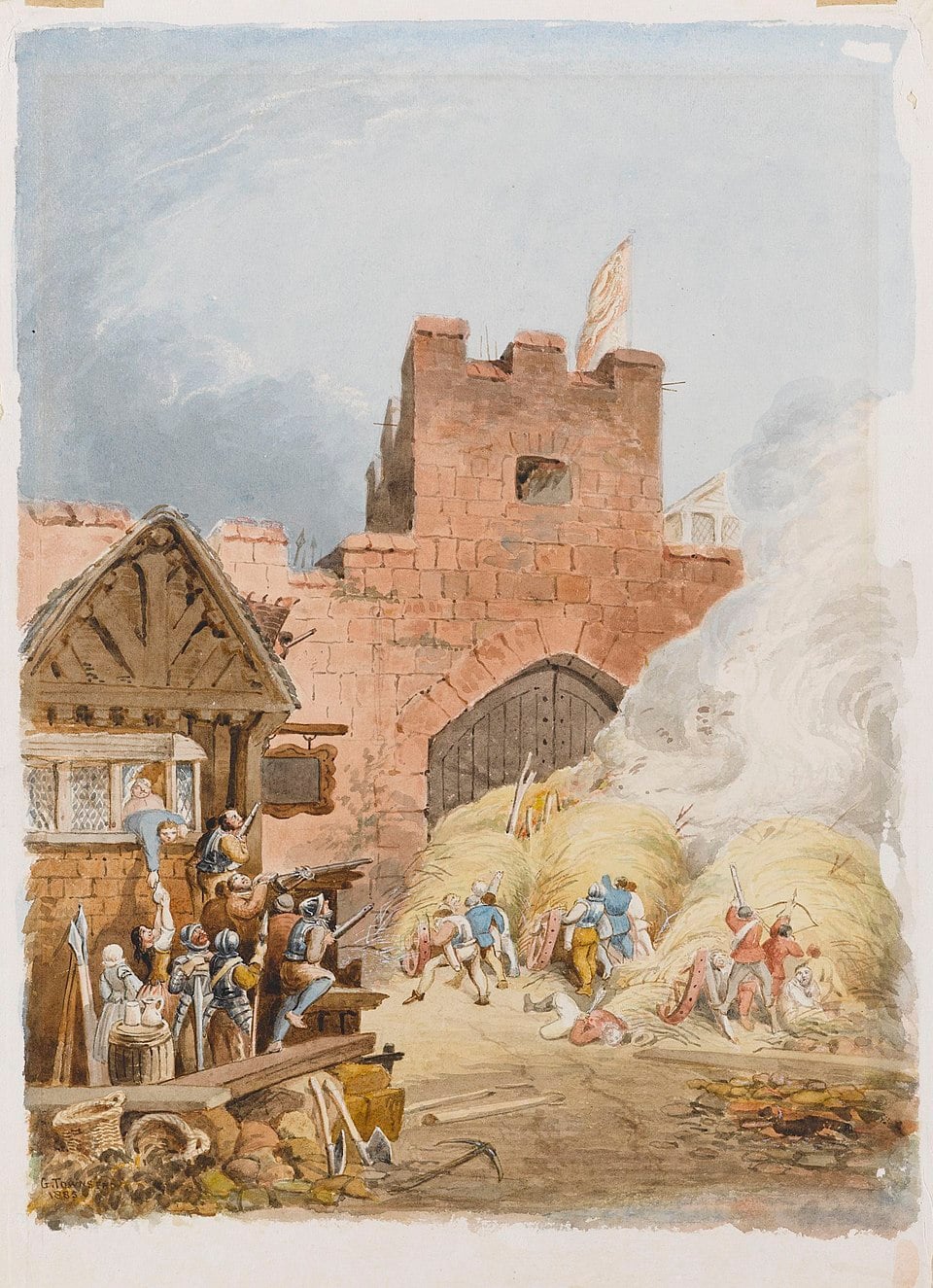
The Western Rising was the most serious religious uprising of Edward VI's reign
Its grievances were primarily about the pace and nature of Protestant reform
Background
Religious change under Somerset had been causing unease in the conservative south-west since 1547
William Body, a royal commissioner sent to enforce the removal of Catholic images, was killed by a mob in Helston, Cornwall in 1548
This was an early warning sign of the tensions building
When the government ordered the 1549 Prayer Book to be used in all churches from Whitsun, the rebellion began
Causes, Events and Significance:
Causes |
|
|---|---|
Events |
|
Significance |
|
Examiner Tips and Tricks
Questions on the 1549 rebellions sometimes ask whether religious or economic grievances were more important. For the Western Rising, the answer is religious. The rebels' demands were focused on doctrine and ceremony. Economic grievances were present, but secondary. Name the specific demands, such as Latin Mass and Six Articles, to show specific knowledge.
Kett's Rebellion, 1549: Causes, Events and Significance
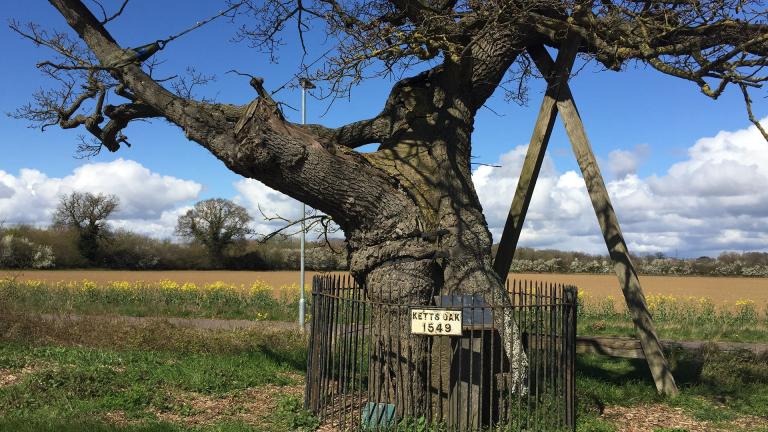
Kett's Rebellion was the largest popular uprising in Norfolk's history
Its grievances were primarily economic and social, not religious
Background
Norfolk had experienced rising prices, enclosures and poor harvests
Somerset's enclosure commission had raised expectations that were not being met
In May and June 1549, gangs began breaking down enclosure fences across Norfolk
Robert Kett
Robert Kett was a tanner and a landowner from Wymondham
When rebels attacked his own enclosures, he did not resist
Instead, he joined the rebellion and offered to lead it
He agreed to end enclosure on his own estates
The camp at Mousehold Heath
The rebels assembled at Mousehold Heath, near Norwich
At its height, the camp held around 15,000–16,000 people
Most Tudor rebellions numbered a few thousand at most
The camp was remarkably ordered and peaceful
Kett ran it like a parallel government
He established a court under the "Oak of Reformation" where complaints were heard and justice administered
Local gentry who had broken the law were brought before the court
The rebels held and used the 1549 Prayer Book in camp services
This was not a primarily religious (Catholic) rising
Causes, Events and Significance:
Causes |
|
|---|---|
Events |
|
Significance |
|
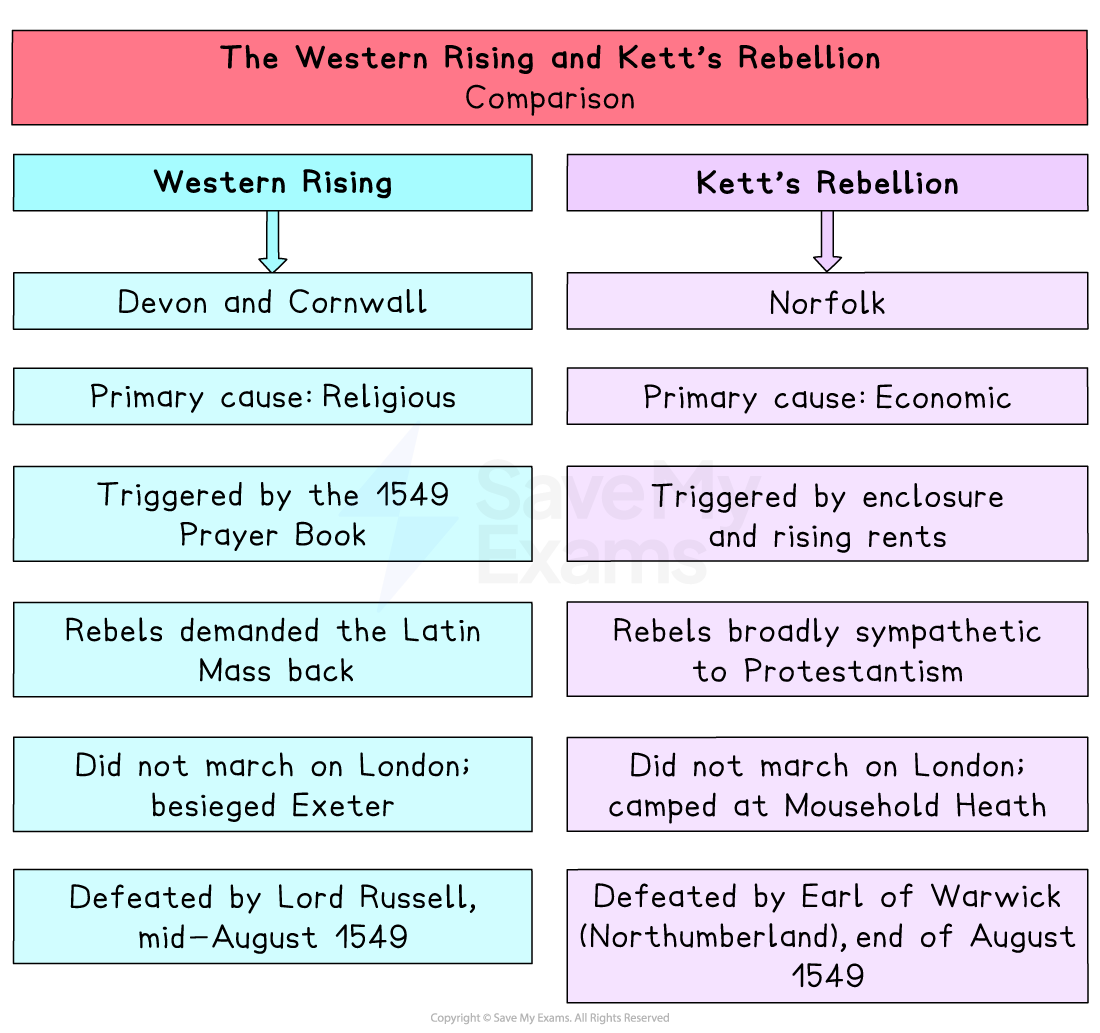
Examiner Tips and Tricks
The comparison between the Western Rising and Kett's Rebellion is a common exam topic. The key distinction is the primary cause: religious for the Western Rising, economic for Kett's. Both came from Somerset's failures, but different failures. Being precise about this distinction is what separates strong answers from vague ones.
Intellectual Developments: Humanist and Protestant Thought Under Edward VI
The reign of Edward VI saw a remarkable flowering of humanist and Protestant ideas among the educated classes
What was humanism?
Humanism was an intellectual movement that emphasised:
The study of classical Greek and Latin texts
Education and the individual's capacity for reason
Critical thinking, including criticism of Church corruption
It had been growing in England since the early 16th century
It was associated with Erasmus, Thomas More and John Colet in the Henrician period
By 1547, it was deeply embedded in the educated elite and at Oxford and Cambridge Universities
Two strands of humanism
Catholic humanism:
Associated with figures like Bishop Gardiner
Critical of Church abuses but opposed to Protestant reform
Protestant humanism:
Increasingly dominant under Edward VI
Scripture, individual faith and education as the tools of reform
Continental reformers like Martin Bucer and Peter Martyr represented the Protestant humanist tradition and directly influenced Cranmer
The two strands were in contest throughout the reign
By 1553, the Protestant strand had the upper hand at court
The Commonwealth Men
The most significant intellectual development of the reign was the emergence of the Commonwealth Men
They were a loose group of preachers, writers and officials who combined Protestant faith with calls for social justice
Their central idea was that England was a commonwealth:
A community in which all members had obligations to each other
In their view:
The rich had a religious duty to care for the poor
Greed and enclosure were sins, not just social problems
Hugh Latimer
Hugh Latimer was the most prominent Commonwealth Man
He served as court preacher to Edward VI from 1547 to 1550
His Sermon of the Plough, preached at St Paul's Cross in January 1548, was widely circulated
He attacked greedy landlords, enclosure and the exploitation of the poor
He argued that England's social problems were a religious failure, not just a political one
Other Commonwealth Men included Thomas Lever and Robert Crowley
The printing press and the spread of ideas
The relaxation of censorship after the repeal of heresy laws in 1547 led to an explosion of Protestant publishing
Metrical psalms, vernacular Bibles, theological tracts and social commentary all circulated widely
The printing press became an important means of spreading ideas beyond the educated elite
By 1553, a significant body of Protestant and humanist literature existed in English for the first time
Examiner Tips and Tricks
The Commonwealth Men are sometimes overlooked in favour of the political and religious narrative. They matter because they show the connection between Protestant thought and the social crisis of 1549: Latimer's preaching gave the poor a religious language for their economic grievances. Naming Latimer and the Sermon of the Plough shows precise knowledge.
What was the social impact of religious and economic change under Edward VI?
Use the evidence below to build your own argument
Consider what changed, what stayed the same, and who was affected the most
Evidence of significant negative social impact
The dissolution of chantries removed welfare, education and employment from hundreds of local communities
Enclosure deprived many rural families of land and the rights they had held for generations
Debasement and inflation eroded the purchasing power of wages
The poor spent most of their income on food, so rising food prices hit them hardest
The 1549 rebellions killed around 4,000 people
Both risings reflected deep social distress
The removal of familiar religious ceremonies caused genuine distress
Many people experienced religious change as loss
Church plate and wealth were confiscated
Local communities lost resources that had supported the sick, the poor and the elderly
Evidence of positive or limited social impact
Humanist ideas expanded education
Grammar schools grew
More people had access to learning
The printing press spread Protestant ideas and literacy more widely than ever before
The Commonwealth Men gave the poor a public voice
Their critique of enclosure and poverty was heard at the highest levels
Northumberland's poor law (1552) placed responsibility for the poor on parishes
A practical step towards organised welfare
The social hierarchy remained intact
The Reformation did not overturn the existing order
Many in the educated and propertied classes benefitted from the purchase of monastic land and the new Protestant culture
Continuity under change
Most ordinary people were still poor and vulnerable to harvest failure in 1553, exactly as they had been in 1547
The religious Reformation was real at the official level but patchy at the parish level
Many communities continued Catholic practice in private long after the law had changed
The social hierarchy was unchanged by the reign
Examiner Tips and Tricks
The social impact question rewards precise, specific examples rather than general statements. Avoid saying "the poor suffered" without explaining how: use debasement, enclosure, the removal of chantry provision. On the other side, avoid saying "change was limited" without explaining what did not change: the social hierarchy, the continued vulnerability of the rural poor.

Unlock more, it's free!
Join the 100,000+ Students that ❤️ Save My Exams
the (exam) results speak for themselves:

Was this revision note helpful?
