Henry VIII: The Dissolution of the Monasteries (AQA A Level History: Component 1: Breadth study): Revision Note
Exam code: 7042

Summary
The Dissolution of the Monasteries (1536–1540) saw Henry VIII close all 800–825 religious houses in England and Wales, seizing their lands and wealth for the Crown
The real causes were financial and political:
The Valor Ecclesiasticus (1535) revealed monasteries could double Crown income, and their lands could buy loyalty from the nobility and gentry
The Lesser Dissolution (1536) closed all houses with income below £200 per year. The Greater Dissolution (1539) extended closures to all remaining houses
The dissolution transferred approximately 10% of the entire wealth of the kingdom to the Crown in a single decade
The main beneficiaries were the Crown and the gentry, who purchased monastic land and gained a permanent stake in the Protestant settlement
Historians debate whether the dissolution was primarily a financial operation or a genuinely transformative event that permanently reshaped English society and religion
Why Did Henry VIII Dissolve the Monasteries?
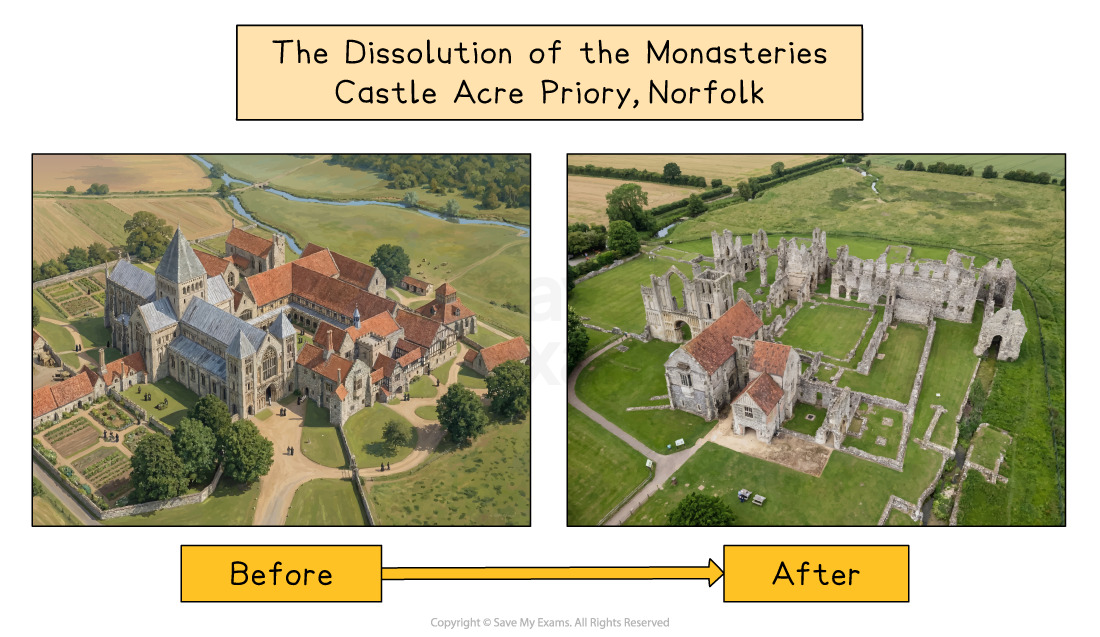
What were the monasteries?
There were around 800–825 religious houses in England and Wales in the early 16th century
Over 600 were monasteries; the rest were nunneries and friaries
They were central to medieval life: places of prayer, shelter, medicine, education and local charity
By the 1530s, their reputation had declined significantly
Numbers of regular clergy had fallen to around 10,000
Some houses had fewer than a dozen monks
Standards of discipline had slipped and many had accumulated considerable wealth and comfort
They remained, however, enormously wealthy institutions
The official reason: Corruption and moral failings
Henry and Cromwell used the findings of the visitations (1535) to justify the closures
Commissioners reported widespread corruption, immorality and neglect of religious duties
The Act for the Dissolution of the Smaller Monasteries (1536) cited "vicious, carnal and abominable living"
Most historians have dismissed this as the primary cause
Cromwell instructed commissioners to find the most damaging evidence possible
Even unfounded gossip and rumour was recorded
The level of corruption was probably no worse than in the wider Church
The real reasons for the dissolution
Financial gain |
|
|---|---|
Political loyalty |
|
Religious resistance |
|
Ideological |
|
Legal authority |
|
Examiner Tips and Tricks
The official reason for the dissolution (corruption) is almost always a red herring in exam questions. The strongest answers identify the financial motive as primary, then show how political, religious and ideological factors reinforced it. The corruption argument gave Henry a legal justification, not a genuine cause.
Don't confuse the Valor Ecclesiasticus with the visitations. They were two separate processes run in 1535: one surveyed monastic wealth, the other investigated moral standards. They served different purposes and are often confused.
The Valor Ecclesiasticus & the Visitations
Two separate surveys were carried out in 1535, serving very different purposes
Together they gave Cromwell the evidence he needed
One told him what was worth taking
The Valor Ecclesiasticus
The other provided justification for taking it
The Visitations
The Valor Ecclesiasticus |
|
|---|---|
The Visitations |
|
Examiner Tips and Tricks
The Valor Ecclesiasticus is one of the most important documents of the Tudor period. It is worth knowing its Latin meaning and its practical significance: it showed Henry that dissolving the monasteries would transform Crown finances. This makes it much more than a simple survey.
The Lesser Dissolution, 1536 & the Greater Dissolution, 1539
Cromwell adopted a staged approach, building the legal and practical framework before moving to full closure
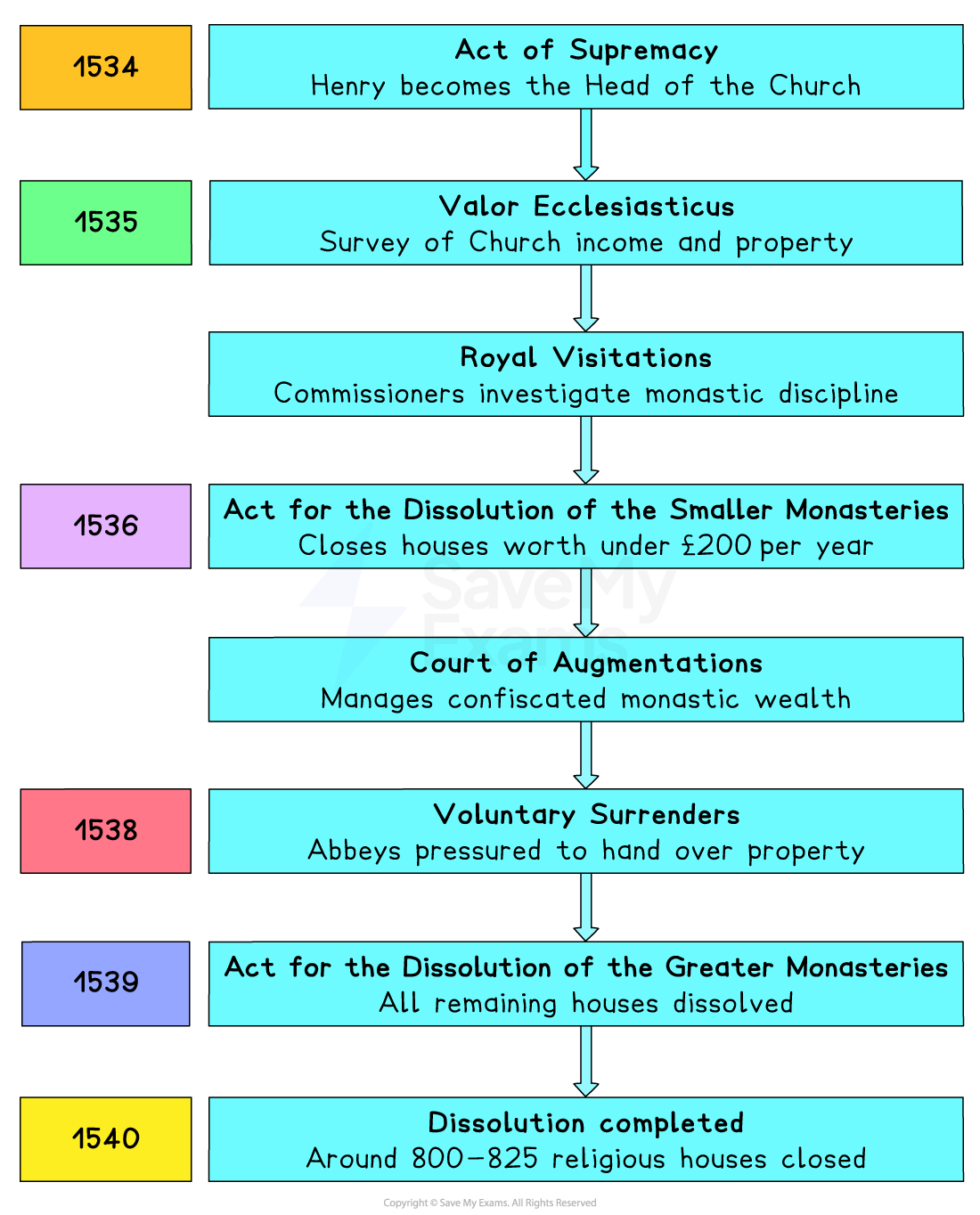
The process of dissolution, 1534–1540
1534 |
|
|---|---|
1535 |
|
1536 |
|
1537–1538 |
|
1539 |
|
1540 |
|
The Pilgrimage of Grace, 1536–1537
The closure of the smaller monasteries provoked the largest popular uprising of Henry's reign
Beginning in Lincolnshire in October 1536, it spread across the north under Robert Aske
Around 40,000 men took part, including nobles, gentry, clergy and commons
The rebels demanded the restoration of the monasteries and the dismissal of Cromwell
Henry granted a general pardon, then broke it when fresh rebellions in 1537 gave him an excuse to execute the leaders
Aske was hanged at York in 1537
The rebellion failed but revealed the depth of popular attachment to monastic life, particularly in the north
Examiner Tips and Tricks
The dissolution happened in two stages for a practical reason: Cromwell tested the process with smaller, less powerful houses first. If you are asked about the process, make sure you distinguish between the two Acts and their different scopes.
Note: The Pilgrimage of Grace is covered in full in the Society and Rebellion revision note.
The Political, Social & Economic Impact of the Dissolution
Winners
The Crown: dissolution brought approximately 10% of the entire wealth of the kingdom to Henry in a single decade
It was the largest transfer of land in England since the Norman Conquest
Henry used the wealth to fund his ambitious foreign policy
In the longer term, however, he sold off more than half the monastic lands between 1543 and 1547 to fund wars
The Crown lost the long-term income these lands would have generated
The gentry: much monastic land was purchased by lesser gentry families
This accelerated the growth of the gentry class and gave them a permanent stake in the Protestant settlement
They had a direct financial interest in preventing any return to Catholicism
For some historians, the growth of the gentry is the most important long-term consequence of the dissolution
Protestants: the closure of Catholic strongholds made any return to Rome practically very difficult
Monasteries had been physical reminders of the old faith and centres of Catholic ritual
Losers
Monks and nuns: lost their homes and livelihoods
Most received pensions or one-off payments, but these were often small
The government was least generous to friars and nuns from the poorest establishments
About one-fifth of ex-monks secured paid positions within the Church to supplement their pensions
Local communities: monasteries had provided welfare, medicine, education and hospitality
These services were not fully replaced after the closures
Monastic libraries were broken up or burned, destroying centuries of accumulated learning
Some schools closed, though others were refounded (many King Edward VI schools today are refounded monastic schools)
The landscape: impressive monastic buildings fell into disrepair and became ruins
Others were sold off and converted into houses for the wealthy
The physical landscape of England was permanently altered
Examiner Tips and Tricks
When writing about the impact of the dissolution, organise your answer by winners and losers rather than giving a flat chronological account. The Crown and gentry gained; monks, local communities and learning lost.
Avoid linking the dissolution directly to a rise in poverty. Historians have generally refused to make this connection, because the number affected in each local community was not large and other opportunities existed. However, it is proposed as a cause for the lack of provisions for the poor during harvest failures under Elizabeth I's reign.
How Significant was the Dissolution of the Monasteries?
The question of how significant the dissolution was sits at the heart of this sub-topic
Use the specific evidence below to build and support your own argument
Evidence that the dissolution was highly significant and permanently transformative
It was the largest transfer of land since the Norman Conquest
Around 10% of the kingdom's wealth changed hands in a single decade
It permanently destroyed Catholic institutional life in England
Monasteries, nunneries and friaries had existed for over five centuries
It created a new propertied class with a vested interest in Protestantism
Gentry families who bought monastic land had a direct financial reason to resist any Catholic restoration
This made the Protestant settlement far more durable than it might otherwise have been
It reshaped the physical landscape of England permanently
Monastic ruins became a defining feature of the English countryside
Great houses built on monastic land became centres of gentry power and culture
It made any return to Catholicism practically very difficult
Mary I tried to restore Catholicism between 1553 and 1558 but could not restore the monasteries
Too much land had been sold and too many people had a stake in keeping it
The Pilgrimage of Grace showed the depth of popular feeling, suggesting the dissolution was genuinely socially disruptive
Evidence that the significance of the dissolution has been overstated
Henry squandered much of the wealth within a generation
More than half of all monastic lands were sold off between 1543 and 1547 to fund wars
The Crown lost the long-term income these lands would have generated
The social impact on the poor was less dramatic than often claimed
Historians have generally refused to link the dissolution to a significant rise in poverty
The number of monks and nuns affected in each community was relatively small
Other opportunities existed within the Church and in the households of Catholic families
The dissolution did not in itself create a Protestant England
Doctrinal change came separately and much more slowly
Many ordinary people continued to attend the same parish church with very similar services
Examiner Tips and Tricks
This is a "how significant" question, which invites you to reach a clear judgement rather than simply listing consequences on both sides. The strongest answers make a case: either that the dissolution was highly significant because it permanently reshaped land ownership and made Catholic restoration practically impossible, or that its significance was limited because Henry wasted the wealth and doctrinal change came separately.
The growth of the gentry is often the strongest argument for long-term significance. Gentry families who bought monastic land had a permanent financial stake in the Protestant settlement. This arguably matters more than the short-term financial windfall to the Crown.

Unlock more, it's free!
Join the 100,000+ Students that ❤️ Save My Exams
the (exam) results speak for themselves:

Was this revision note helpful?
