Adaptations (AQA GCSE Combined Science: Trilogy: Biology): Revision Note
Exam code: 8464

Adaptations to the environment
Adaptations are:
features that enable organisms to survive in the conditions in which they normally live
These adaptations may be structural, behavioural or functional:
Structural: a physical part or feature of an organism, e.g.:
the white fur of a polar bear provides camouflage in the snow so it has less chance of being detected by prey
seals have a thick layer of fat (blubber) to insulate them against cold conditions
Arctic foxes have small ears to reduce surface area : volume ratio; this minimises heat loss in a cold environment
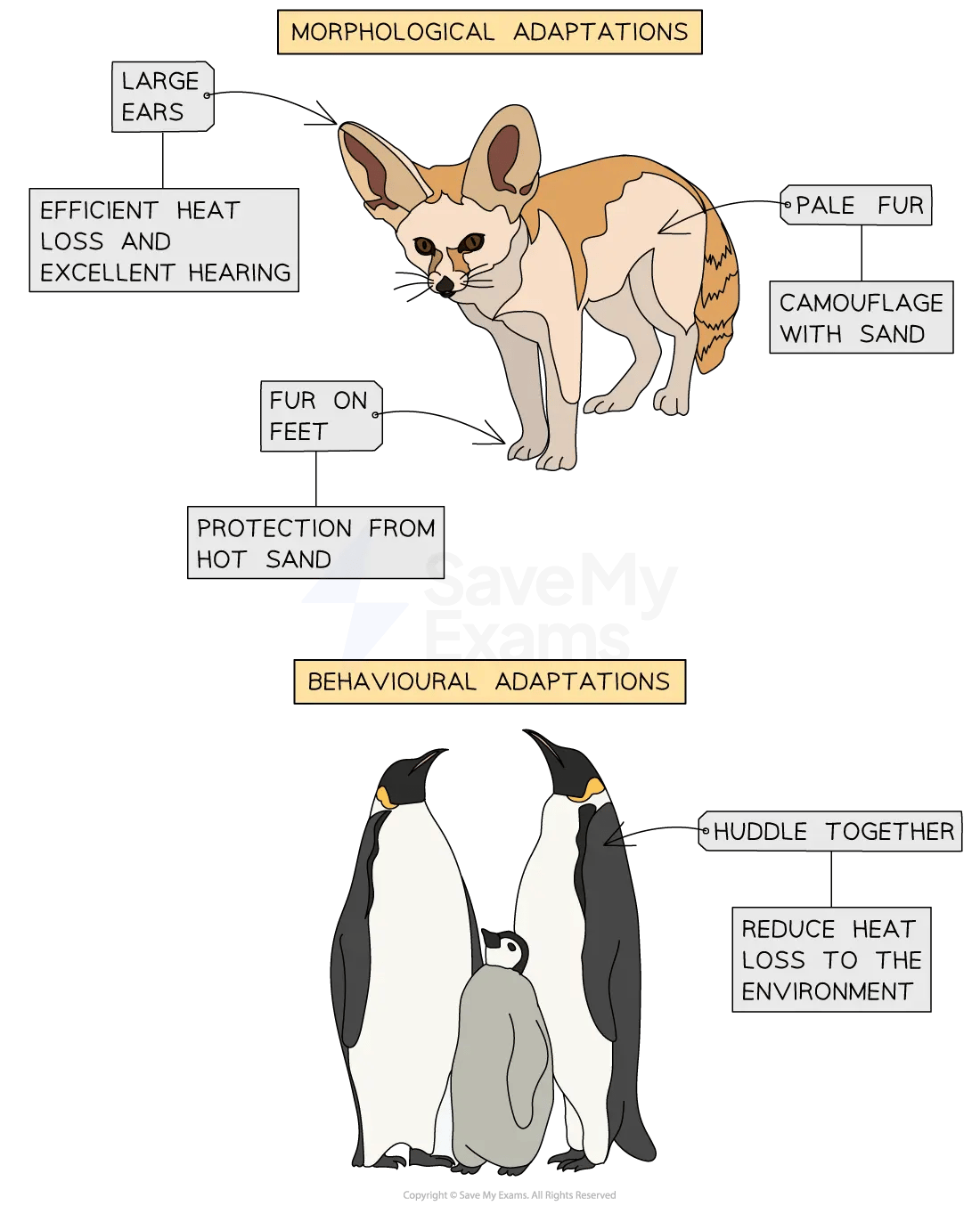
desert foxes have large ears to increase surface area : volume ratio; this increases heat loss in a hot environment
Behavioural: the way an organism behaves, e.g.:
reptiles bask in the sun to absorb heat
rabbits dig burrows in which to avoid predators while they sleep
some desert animals are only active in the early morning, late evening or at night, when it is cooler
Functional: biological processes within the organism, e.g.:
snakes produce venom to kill prey
mosquitos produce chemicals that stop an animal’s blood clotting when they bite, so that they can feed more easily
some desert animals have kidneys adapted to produce very concentrated urine, helping them retain water
Examiner Tips and Tricks
Make sure you understand the concept of surface area : volume ratio and why this is important when it comes to temperature regulation.
When explaining an adaptation you should always describe the feature, and then state exactly how it aids survival in the relevant environment.
Extreme adaptations
Some organisms live in environments that are extreme, such as:
very high or low temperatures,
very high or low pressures
high salt concentration
Organisms that can live in extreme environments are called extremophiles
Examples include:
bacteria living in deep sea volcanic vents where conditions are extremely hot, pressure is high and there is no sunlight
bacteria living in the dead sea, where salt concentrations are many times higher than normal sea water

Unlock more, it's free!
Join the 100,000+ Students that ❤️ Save My Exams
the (exam) results speak for themselves:

Was this revision note helpful?
Build on this topic