Response to Exercise (AQA GCSE Combined Science: Trilogy: Biology): Revision Note
Exam code: 8464

Effect of exercise
Muscles must contract for the body to move, and contraction requires energy from respiration
When exercising, the number of muscle contractions increases, so there is a greater energy demand and the muscles need a greater supply of oxygen for aerobic respiration
The human body reacts to the increased demand for oxygen in a number of ways:
The breathing rate and breath volume increase during exercise to:
increase the oxygen absorbed into the bloodstream by diffusion
increase the rate of carbon dioxide removal
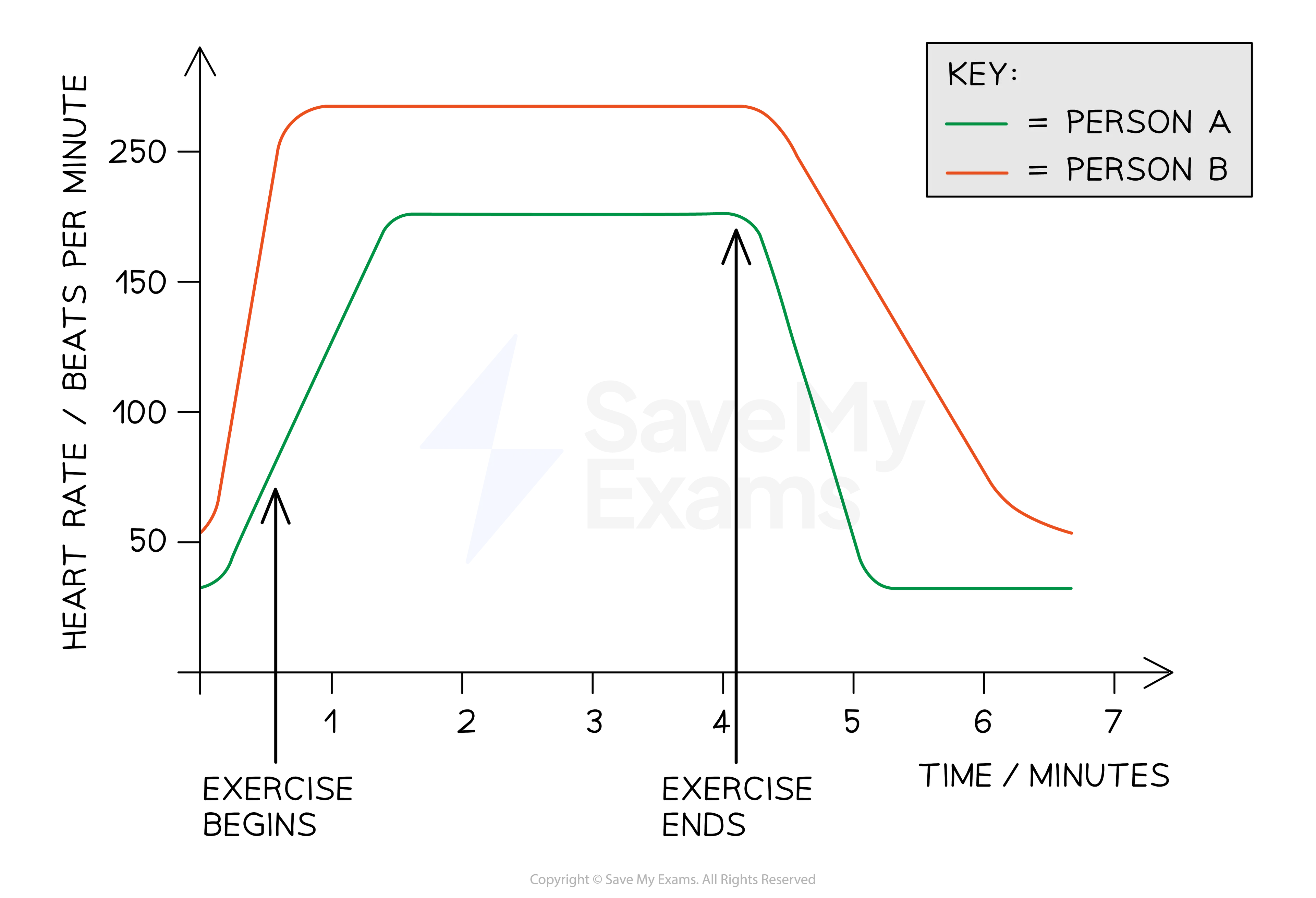
The heart rate increases
These changes increase the supply of oxygenated blood to the muscles
Anaerobic respiration during exercise
When exercising vigorously, the body may not be able to supply sufficient oxygen to the muscles to meet the demand
In this situation, some of the energy supplied to the muscles comes from anaerobic respiration; the incomplete breakdown of glucose without oxygen
This releases much less energy than aerobic respiration and results in the formation of lactic acid
During long periods of vigorous activity, muscles become fatigued and stop contracting efficiently as a result of increased levels of lactic acid
An oxygen debt is created
Investigating the effect of exercise on the body
It is possible to investigate the effects of exercise on the body by taking measurements before and after a period of exercise
Breathing rate can be measured by counting the number of breaths per minute
Heart rate can be measured by taking a pulse
It is important that the time over which breathing rate and pulse rate are measured is consistent, and that individuals fully recover before starting a new activity
Use groups of people (at least five in each group – not one person repeated), control variables such as age, sex, fitness and the type and length of exercise, calculate the increase for each person and compare the mean increases
Oxygen debt
Higher Tier Only
Oxygen debt is:
the amount of extra oxygen the body needs after exercise to react with the accumulated lactic acid and remove it from the cells
After exercise, the body processes this lactic acid as follows:
Blood flowing through the muscles transports the accumulated lactic acid to the liver
In the liver, the lactic acid is converted back into glucose
The extra oxygen taken in after exercise reacts with the lactic acid and breaks it down
After exercise, breathing rate and heart rate stay high to supply the extra oxygen needed to break down (oxidise) the lactic acid – this repays the oxygen debt

Unlock more, it's free!
Join the 100,000+ Students that ❤️ Save My Exams
the (exam) results speak for themselves:

Was this revision note helpful?
Build on this topic