Human Defence Systems (AQA GCSE Combined Science: Trilogy: Biology): Revision Note
Exam code: 8464

Non-specific defences
The human body has a number of mechanisms that are the first line of defence against an infection
The non-specific defence systems of the human body against pathogens include:
Non-specific defence system | Explanation |
|---|---|
Skin | A physical barrier that stops infectious organisms from entering the body |
Nose | Lined with hairs that trap particles from the air Mucus traps pathogens before they enter the body |
Trachea and bronchi | Mucus traps pathogens Specialised cells known as ciliated cells have tiny hairs which waft mucus out of the airways and to the back of the throat, where it can be swallowed |
Stomach | Hydrochloric acid has a low pH that kills pathogens in food, drink and mucus |

The immune system
The immune system of the body is highly complex, with white blood cells being the main component
Once a pathogen has entered the body, the role of the immune system is to prevent the infectious organism from reproducing and to destroy it
White blood cells help to defend against pathogens by:
phagocytosis
production of antibodies
production of antitoxins
Phagocytosis
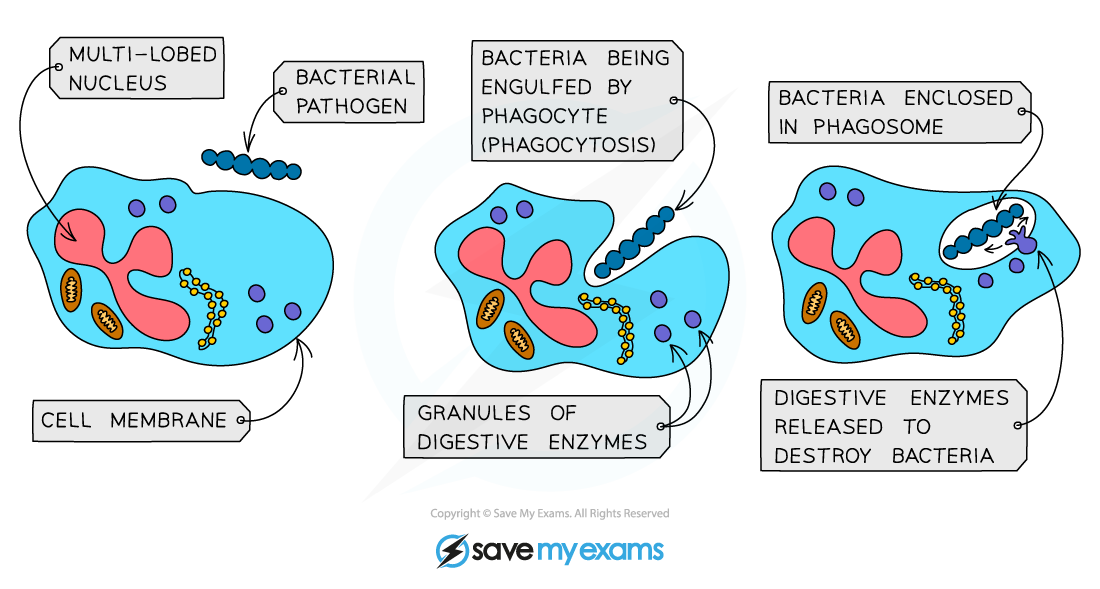
Phagocytes destroy pathogens in a non-specific way through phagocytosis
The phagocyte:
engulfs the pathogen
releases enzymes to digest and destroy the pathogen
Production of antibodies
Antibodies are proteins that are produced by white blood cells known as lymphocytes
The antibodies produced need to be specific (complementary in shape) to the antigens on the surface of the pathogen
This is a specific immune response
The antibodies bind to the pathogen and help to destroy it

Production of antitoxins
Some pathogens (usually bacteria) can produce substances that act as toxins and cause illness
Lymphocytes can produce antitoxins that neutralise the effects of the toxin

Examiner Tips and Tricks
Make sure you know the difference between antigen, antibody and antitoxin:
An antigen is a molecule found on the surface of a cell
An antibody is a protein made by lymphocytes that is complementary to an antigen
An antitoxin is a protein that neutralises the toxins produced by bacteria

Unlock more, it's free!
Join the 100,000+ Students that ❤️ Save My Exams
the (exam) results speak for themselves:

Was this revision note helpful?
Build on this topic