Translocation (AQA GCSE Combined Science: Trilogy: Biology): Revision Note
Exam code: 8464

Translocation
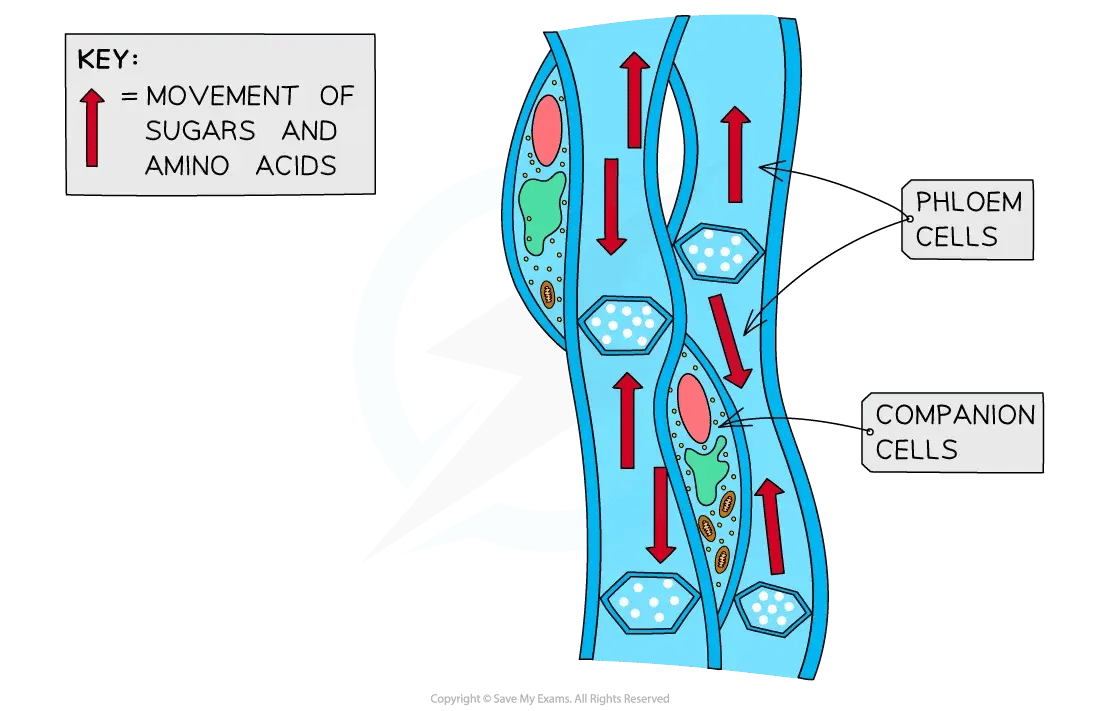
Translocation can be defined as:
the movement of dissolved sugars through phloem tissue
Sugars may be transported upwards or downwards in the phloem:
Sugars travel from the leaves to the rest of the plant when photosynthesis is taking place
Sugars travel from storage organs to the rest of the plant when photosynthesis is not taking place
Sugars transported by translocation will either be used immediately by the plant or stored
Comparing transport in the xylem and phloem
Tissue | What is Moved | Process | Direction of Flow |
|---|---|---|---|
Xylem | Water and mineral ions | Transpiration stream | Unidirectional: from roots to leaves |
Phloem | Dissolved sugars (sucrose) | Translocation | Bidirectional: either upwards or downwards |

Unlock more, it's free!
Join the 100,000+ Students that ❤️ Save My Exams
the (exam) results speak for themselves:

Was this revision note helpful?
Build on this topic