Meiosis (AQA GCSE Combined Science: Trilogy: Biology): Revision Note
Exam code: 8464

Meiosis
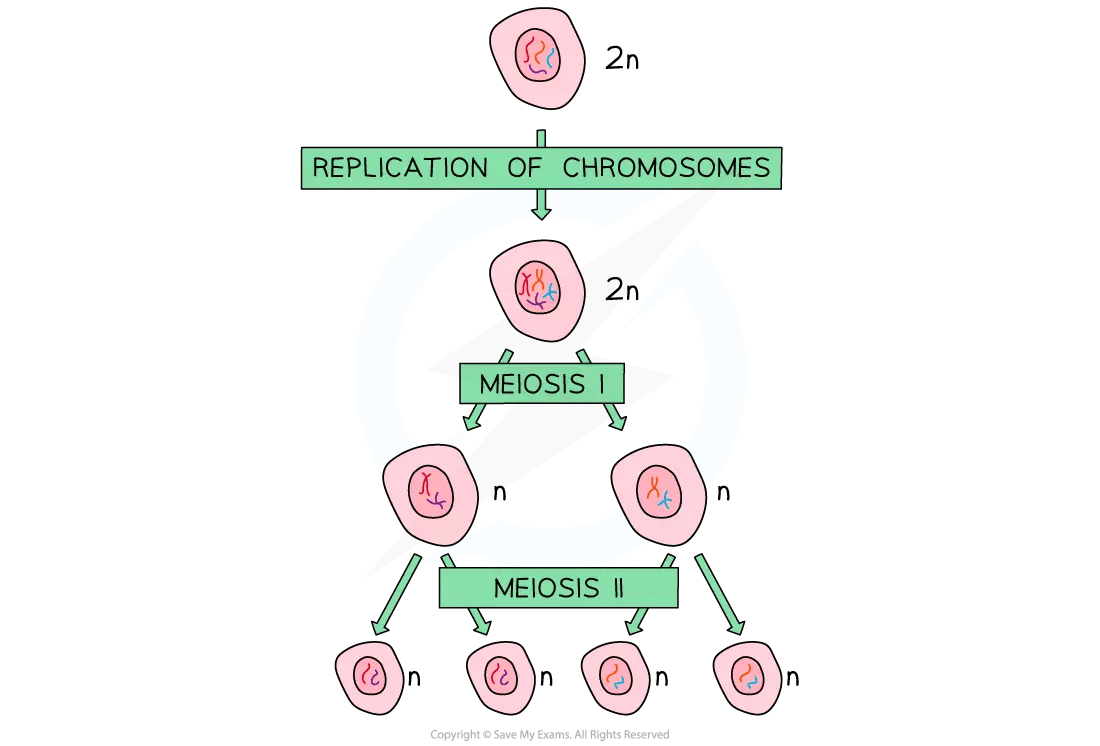
Cells in reproductive organs divide by meiosis to form gametes (sex cells)
During meiosis the number of chromosomes is halved
Otherwise, there would be double the number of chromosomes after they join at fertilisation
For example, a human body cell has 46 chromosomes (23 pairs); each gamete has a single set of 23 chromosomes – one from each pair, not 23 pairs
The cells produced during meiosis are genetically different from each other and the parent cells
The process of meiosis involves:
copying the original DNA
two rounds of cell division
the production of four daughter cells from each parent cell
The importance of meiosis
Meiosis is important for life cycles because:
it produced gametes; this enables sexual reproduction
it halves the chromosome number, ensuring that fertilisation restores the normal number of chromosomes
it generates genetic variation in offspring
Each gamete receives one chromosome from each pair, chosen at random, so meiosis forms new combinations of maternal and paternal chromosomes every time a gamete is made
Therefore when gametes fuse randomly at fertilisation, every offspring inherits a different combination of alleles
Fertilisation
Gametes join at fertilisation to restore the normal number of chromosomes
When the male and female gametes fuse, they become a zygote (fertilised egg cell)
This contains the full number of chromosomes, half of which came from the male gamete and half from the female gamete
The zygote divides by mitosis to form two new cells, which then continue to divide and after a few days form an embryo
Cell division continues and eventually many of the new cells produced become specialised (the cells differentiate) to perform particular functions and form all the body tissues of the offspring
The process of cells becoming specialised is known as cell differentiation

Unlock more, it's free!
Join the 100,000+ Students that ❤️ Save My Exams
the (exam) results speak for themselves:

Was this revision note helpful?
Build on this topic