Sphere, Cone & Pyramid (SQA National 5 Maths): Revision Note
Exam code: X847 75

Calculating the volume of standard solids
What is volume?
The volume of a 3D shape is a measure of how much space it takes up
You need to be able to calculate the volumes of a number of standard solids:
Spheres
Cones
Pyramids
Examiner Tips and Tricks
From your National 4 Maths course, you should also be familiar with calculating the volumes of cubes, cuboids, prisms and cylinders.
How do I find the volume of a sphere?
To calculate the volume, V, of a sphere with radius r, use the formula
This formula is given to you in your exam
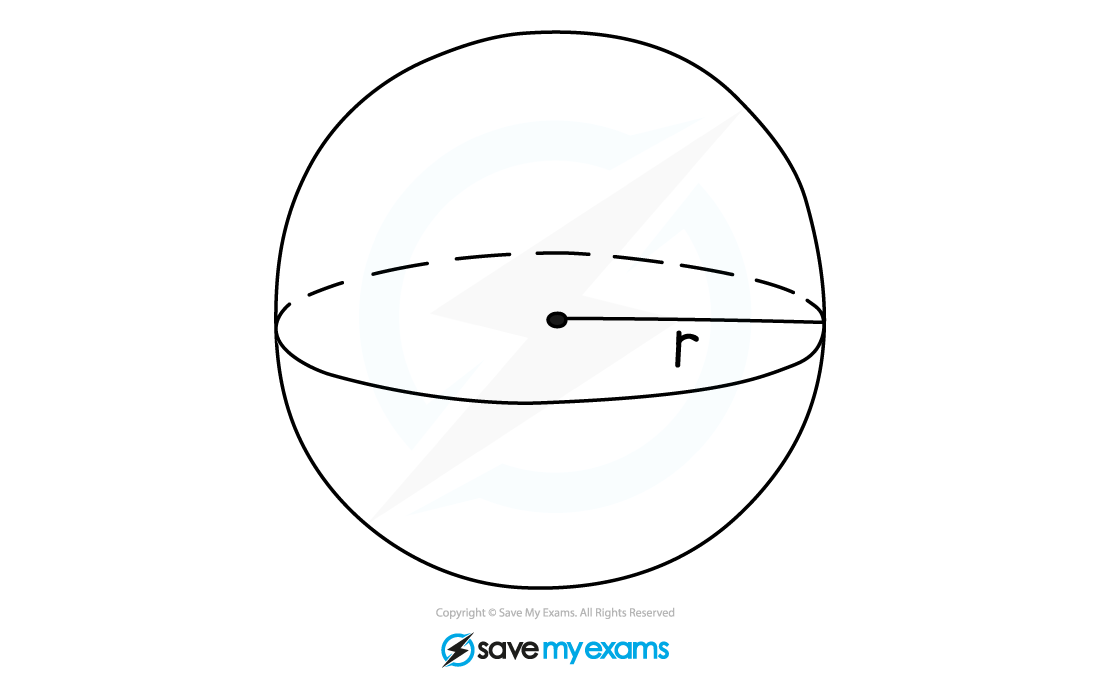
A hemisphere is half of a sphere
If you need to find the volume of a hemisphere
Find the volume of a sphere with the same radius
and divide it by 2 (or multiply it by )
How do I find the volume of a cone?
To calculate the volume, V, of a cone with base radius r, and perpendicular height h, use the formula
This formula is given to you in your exam
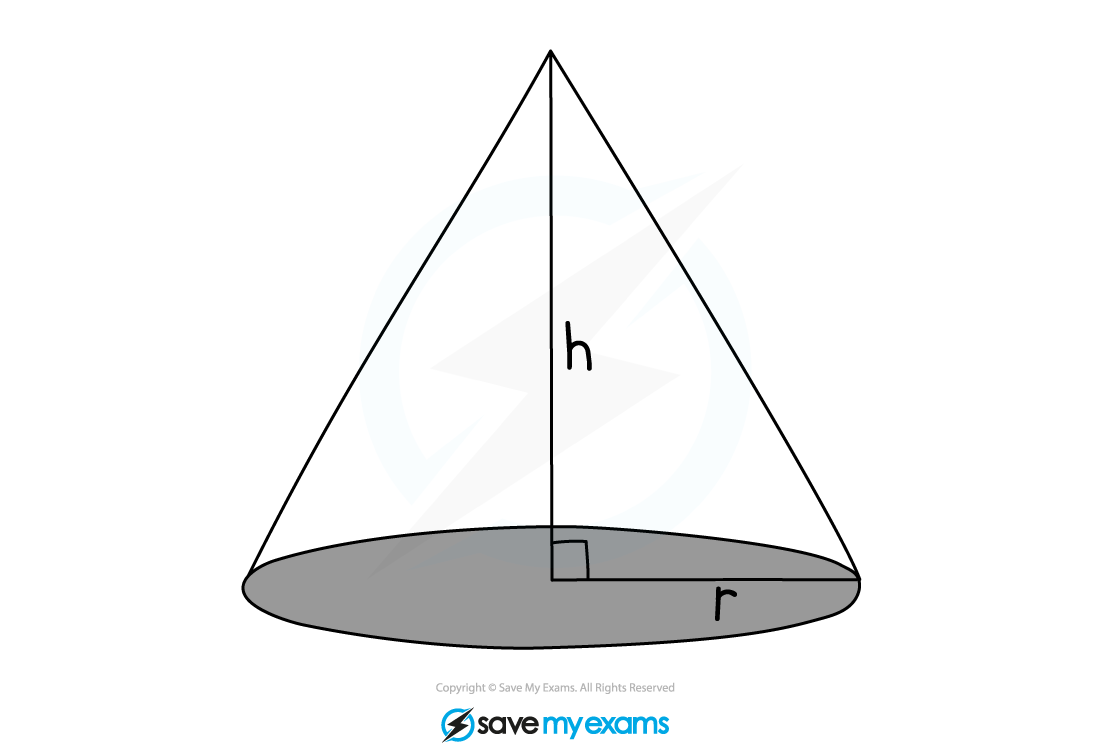
The height must be a line from the top of the cone that is perpendicular to the base
How do I find the volume of a pyramid?
To calculate the volume, V, of a pyramid with base area A, and perpendicular height h, use the formula
This formula is given to you in your exam
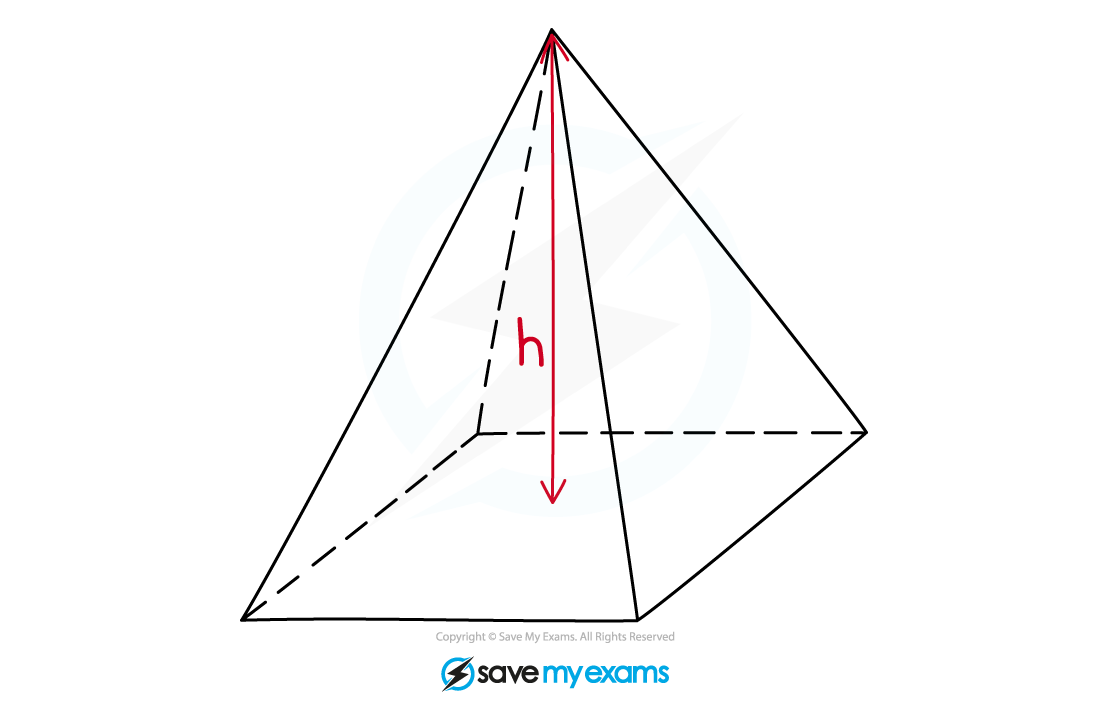
Note that volume formula for a pyramid is similar to the volume formula for a cone
The height must be a line from the top of the pyramid that is perpendicular to the base
The base of a pyramid could be a square, a rectangle or a triangle
Examiner Tips and Tricks
The volume formulae for spheres, cones and pyramids are all included on the Formulae List in the exam paper.
Examiner Tips and Tricks
Be careful with sphere and cone questions.
The question may give you the diameter instead of the radius
Remember to halve the diameter to find the radius before substituting into the formula
Worked Example
A sphere has a diameter of 9 centimetres.
Calculate the volume of the sphere, and round the final answer to 3 significant figures.
Answer:
The sphere's diameter is 9 cm
This means the radius, , is 4.5 cm
Use the formula for volume of a sphere,
Use your calculator to evaluate that
Round to 3 significant figures, as required, and don't forget to include units
382 cm3 (3 s.f.)
Worked Example
The diagram below shows a cone with diameter 20 centimetres and height 90 centimetres.
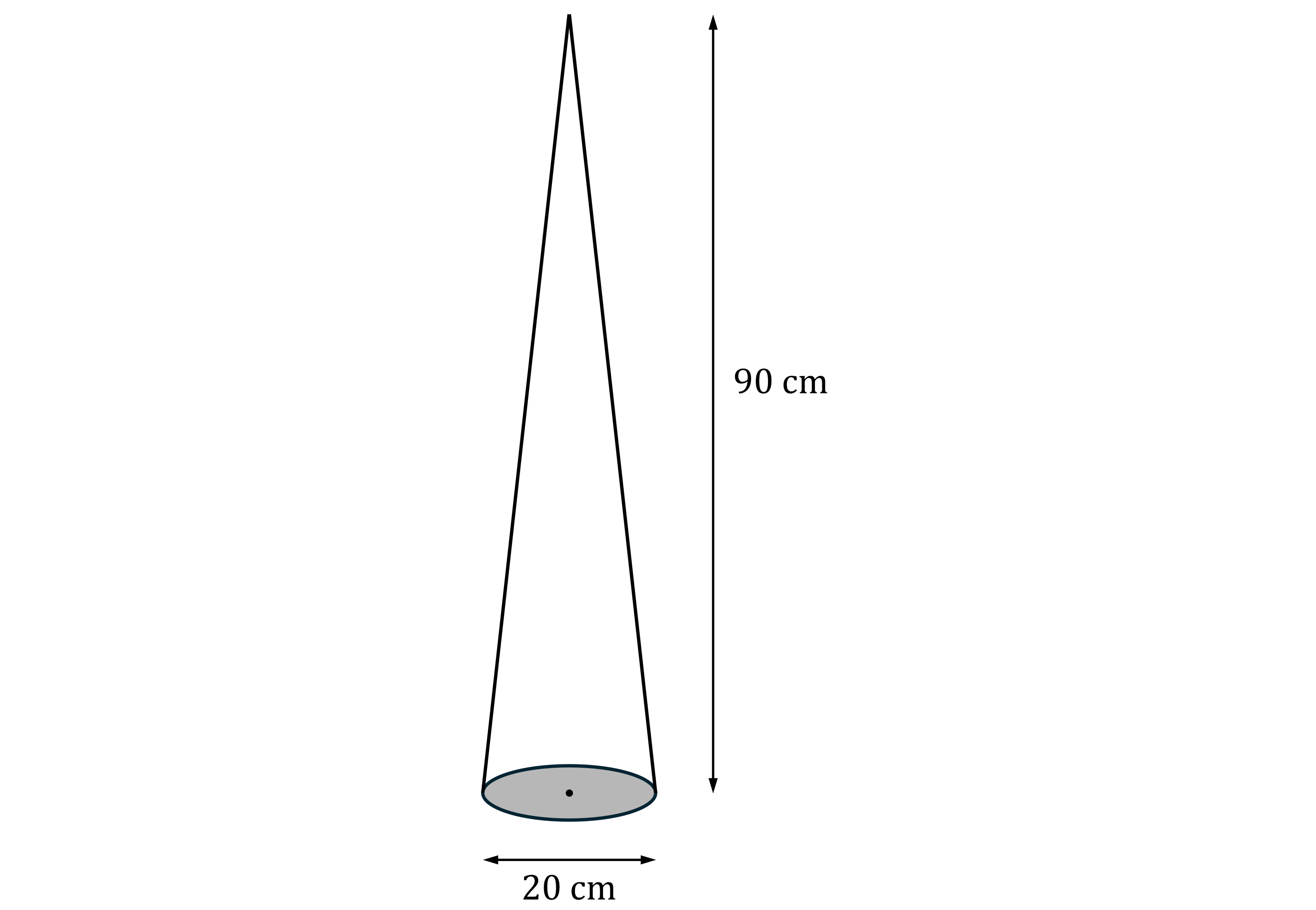
Without using a calculator, calculate the volume of the cone.
Take .
Answer:
The cone's base diameter is 20 cm
This means the radius, , is 10 cm
Use the formula for volume of a cone,
Use , as the question says
and
Don't forget to include units in your final answer
9420 cm3

Unlock more, it's free!
Join the 100,000+ Students that ❤️ Save My Exams
the (exam) results speak for themselves:

Was this revision note helpful?
Build on this topic