Carbon Cycle (Edexcel A Level Geography): Exam Questions

Exam code: 9GE0

2 hours16 questions
1
3 marks

Study Figure 1, which shows the major global stores of carbon.

Figure 1: Selected global carbon stores

Store

Approx. size (gigatonnes of carbon, GtC)

Oceans (dissolved, biological, sediment)

~38,000

Seabed sediments

~1,750

Atmosphere

~600–800

Note ~93% of CO₂ is held in the oceans

Suggest one reason why the oceans are the largest active store of carbon.

2
3 marks

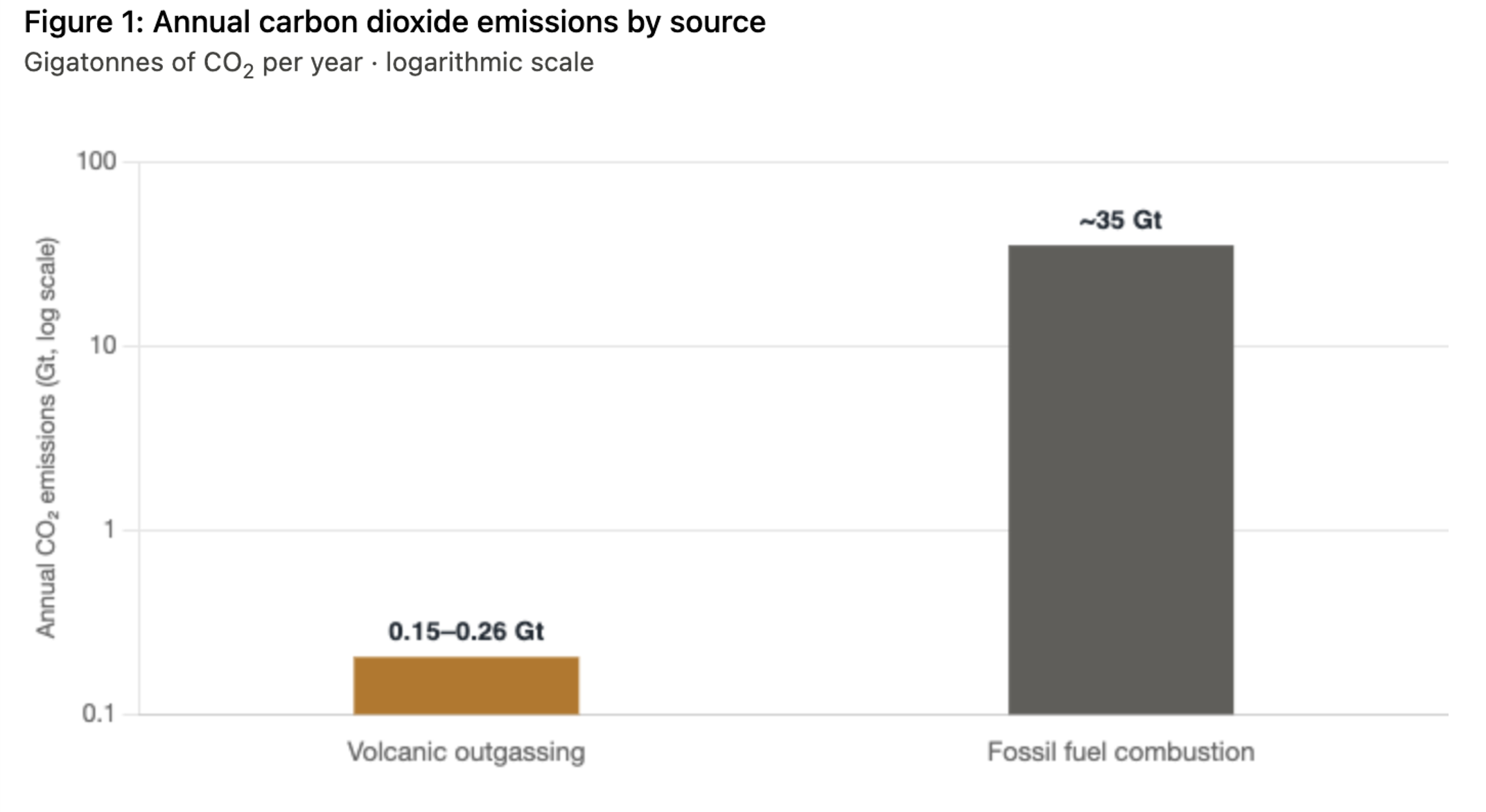
Study Figure 1, which compares two sources of carbon dioxide emissions.

Bar chart comparing annual CO₂: volcanic outgassing 0.15–0.26 Gt versus fossil fuel combustion about 35 Gt on a logarithmic scale.

Suggest one reason why human activity has unbalanced the carbon cycle more than volcanic activity.

3
3 marks

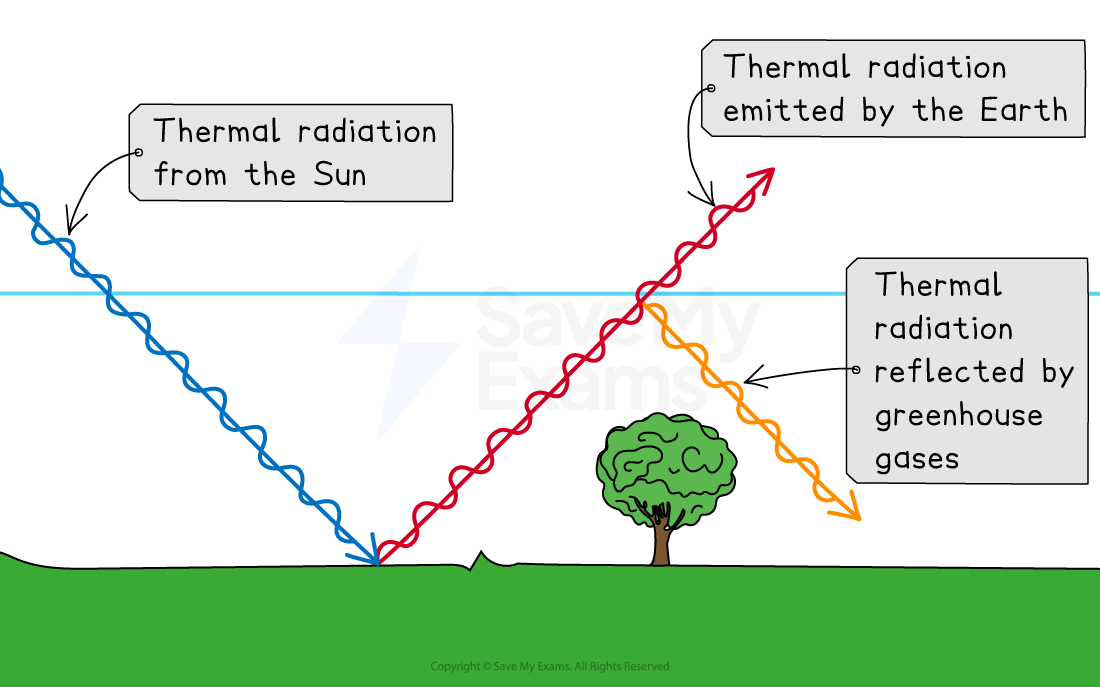
Study Figure 1, a diagram of the greenhouse effect.

Diagram of the greenhouse effect showing solar radiation entering, Earth emitting heat, and some thermal radiation reflected back by greenhouse gases.
Figure 1 - The greenhouse effect

Suggest one reason why rising concentrations of carbon dioxide lead to higher global temperatures.

4
3 marks

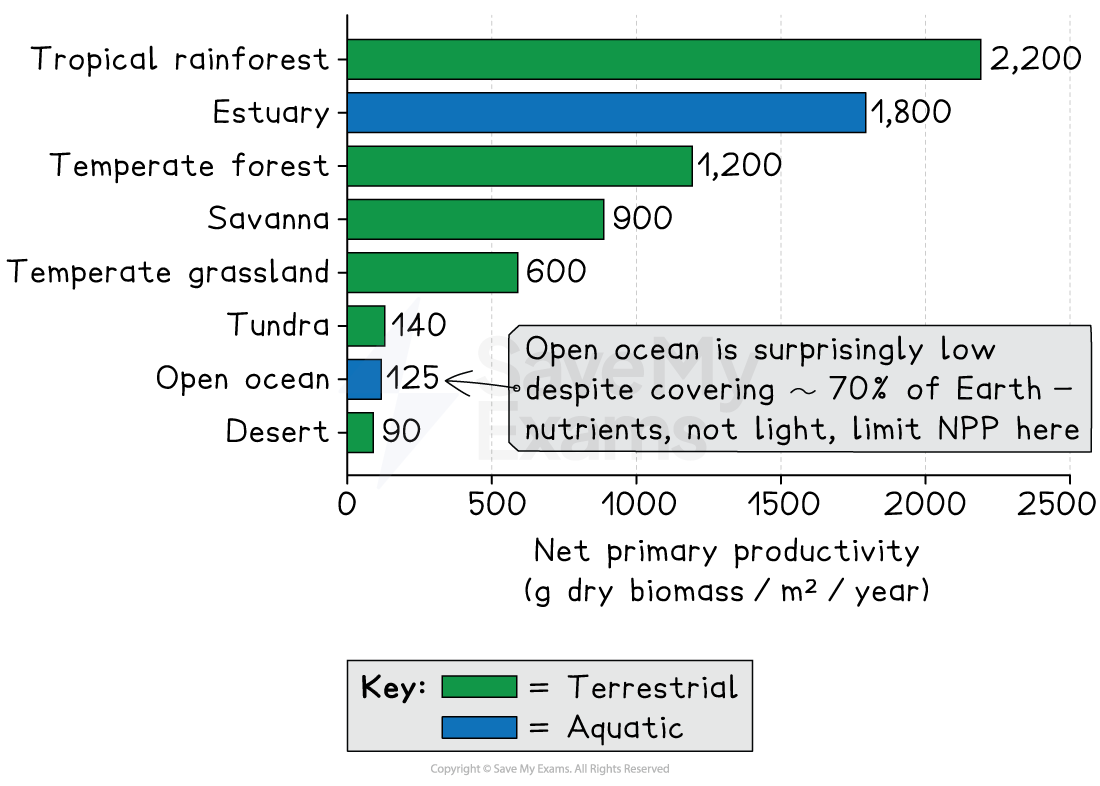
Study Figure 1, which shows net primary productivity (NPP) for different biomes.

Bar chart comparing net primary productivity: tropical rainforest highest, then estuary, temperate forest, savanna, grassland; tundra, open ocean and desert lowest.
Figure 1 - Net Primary Productivity in different biomes

Suggest one reason why net primary productivity is highest in tropical regions.

5
3 marks

Study Figure 1, which shows information about carbon stored in soils.

Figure 1: Soil carbon

Fact

Detail

Share of global carbon held as dead organic matter in soils

~20–30%

Global soil carbon lost since 1850

40–90 billion tonnes (Gt)

Main cause of loss

cultivation and disturbance of soils

Where carbon is concentrated

mainly in the surface soil layer

Suggest one reason why cultivating land reduces the amount of carbon stored in soil.

1
Sme Calculator
6 marks

Explain the geological processes that influence the levels of carbon in the atmosphere.

2
8 marks

Explain the role of photosynthesis in the ocean on the carbon cycle.

3
6 marks

Explain how oceans regulate the composition of the atmosphere.

4
6 marks

Explain how carbon becomes locked into long-term geological stores.

5
6 marks

Explain how the natural greenhouse effect helps to regulate the Earth's temperature.

6
8 marks

Explain how the oceans sequester and store carbon.

7
8 marks

Explain how the burning of fossil fuels has altered the natural carbon cycle.

1
Sme Calculator
12 marks

Study Figure 4b

fig-4b-qp-9geo-01-june-2018-edexcel-a-level-geo

Figure 4b

The global carbon cycle

Assess the role of oceans in regulating the carbon cycle.

2
12 marks

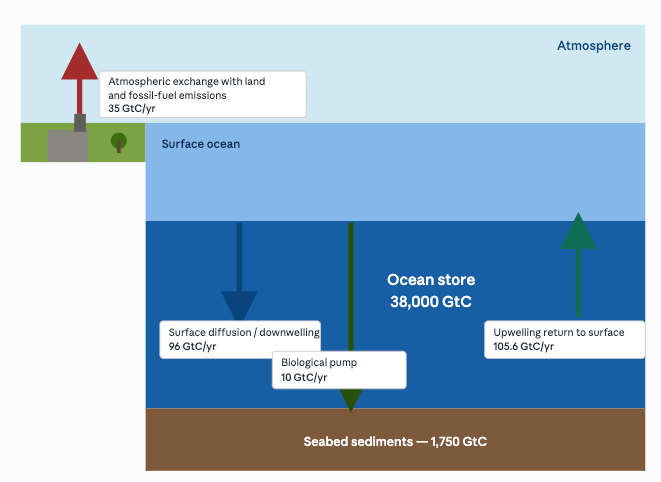
Study Figure 1, a diagram of the global carbon cycle showing the main ocean fluxes.

Diagram of the ocean carbon cycle showing atmospheric emissions, surface ocean, deep ocean store, seabed sediments, and labelled carbon fluxes with values
Figure 1 - Carbon stores

Assess the role of the oceans in regulating the carbon cycle.

3
12 marks

Assess the extent to which the carbon cycle can still be considered a balanced system.

4
20 marks

The processes of the carbon cycle operate at longer, slower (geological) and shorter, faster (biological) timescales. Evaluate the view that human activities are having a greater impact on the shorter-term biological processes than on the longer-term geological processes.