Conflict Dynamics (DP IB Global Politics: HL): Revision Note
Galtung's conflict triangle
Norwegian sociologist Johan Galtung devised a model to explain violence and conflict
Conflict is not simply war - it can manifest at many levels of global politics
Direct violence
Physical or verbal harm that is deliberately and visibly carried out by one person or group against another
Structural violence
Harm caused not by a specific individual but by the way society is organised, where unjust political, economic or social systems prevent people from meeting their basic needs
Cultural Violence
Aspects of culture, such as religion, ideology, language or art, that are used to justify or legitimise direct or structural violence, making harm seem acceptable or natural
The conflict triangle
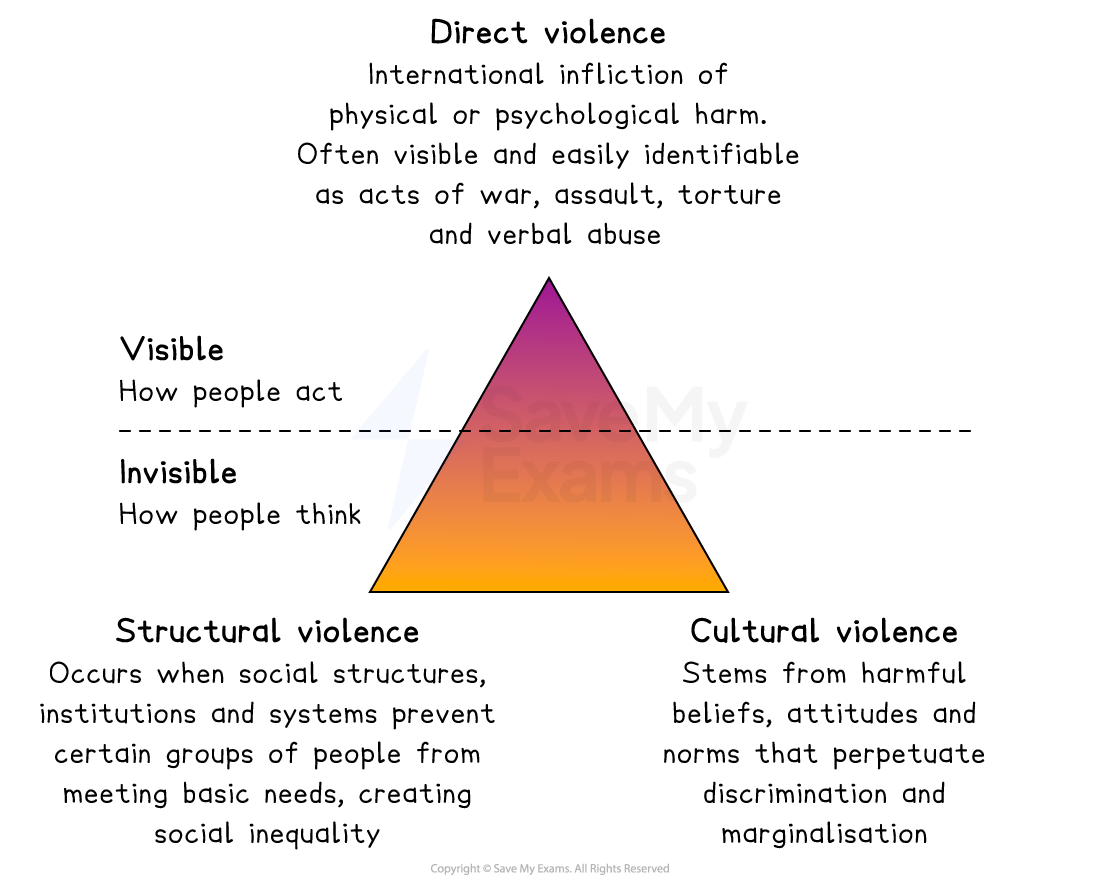
Galtung argues that deeper, hidden causes support visible violence
In the real world this manifests itself in many ways
In communities with high levels of domestic violence there will more likely be negative attitudes and beliefs about women
In states where racial groups are targeted for violence, there exists systemic discrimination in the justice system
Position, interests, needs (PIN)
The human needs theory of conflict maintains that human beings require certain things if society is to maintain peace
Position, needs, interests (PIN) is a conflict resolution framework which goes beyond the surface of conflict for parties involved
To successfully resolve conflict
The claims and demands of all parties must be considered
This is a starting point because only focusing on positions will not normally resolve a conflict
The aim of any conflict resolution is to go deeper into why the parties hold the positions they do
By identifying interests, it can be easier to find common ground and alternative solutions to conflict
Needs are fundamental and non-negotiable
Both parties must understand the needs of each other
The PIN model
The PIN model attempts to get below the surface of conflict
Interests and needs can be identified (and sometimes recognised as shared), thereby making negotiation more meaningful
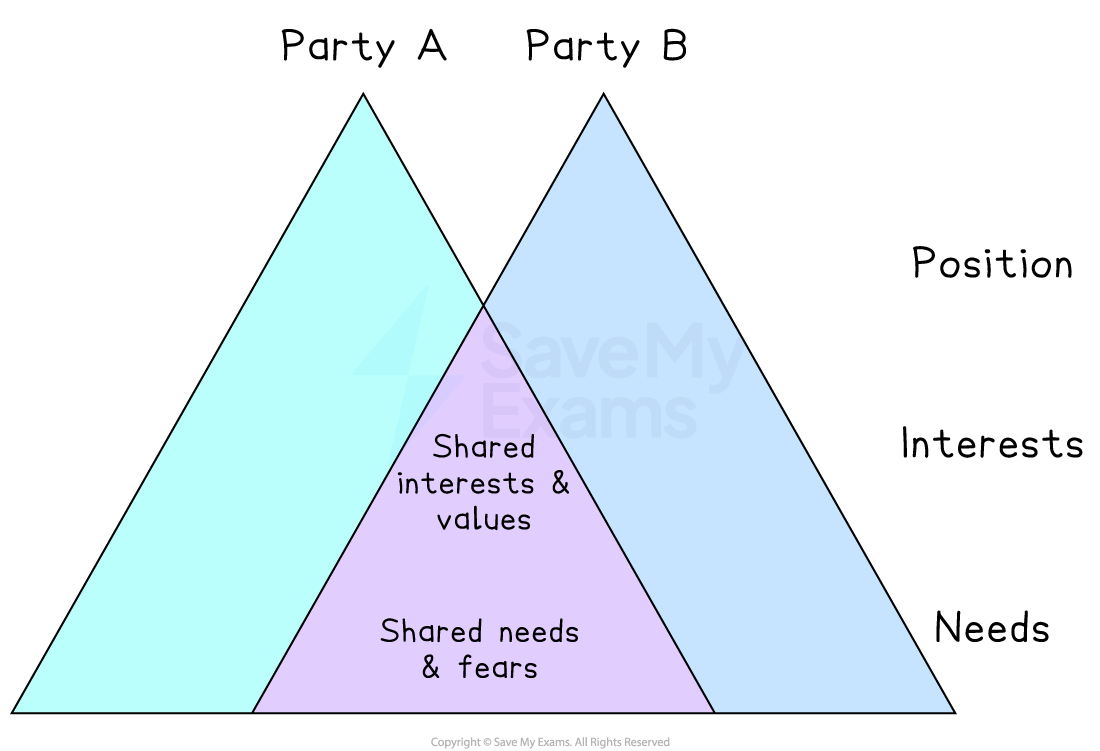
The three levels, from top to bottom, are:
Positions (top — narrow overlap)
What each party publicly demands or declares they want
These are often stated as firm, non-negotiable stances
Because the triangles barely touch at the top, positions tend to seem incompatible - this is where conflict is most visible
Interests (middle — more overlap)
The underlying reasons behind each party's position — why they want what they say they want
There is often more common ground here than the stated positions suggest
Example: two countries might both claim disputed land (positions differ), but both actually want security and economic stability (shared interests)
Needs (bottom — greatest overlap)
The deepest level - fundamental human needs and fears (safety, identity, belonging, recognition)
These are the most widely shared across conflicting parties
Resolving conflict is most durable when it addresses needs, not just positions
Cycles of conflict
Cycles of conflict are recurring patterns of tension, escalation, crisis and conflict
Occur in personal conflicts to global conflicts
Often liked to violence against marginalised and vulnerable people
Conflicts are not easily resolved
It is very common for them to flare up repeatedly over time because underlying causes are not resolved
There are many reasons why conflicts flare up repeatedly
Needs are unmet and fear remains
Minor incidents can trigger old resentments
Deep distrust
The cycles of abuse model
This model of cycles of abuse specifically refers to interpersonal domestic violence, but the principles apply to a variety of conflict situations
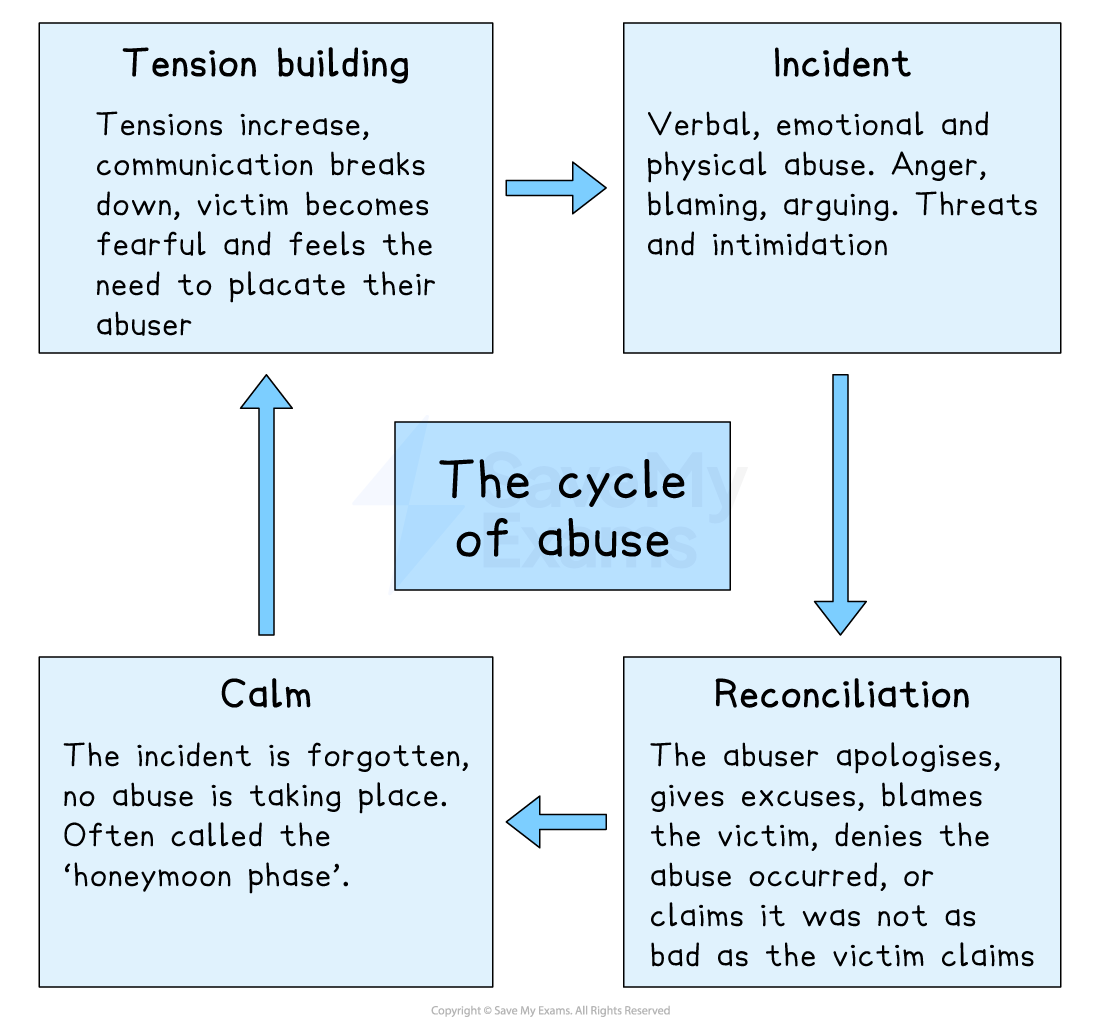
The Four Stages
Tensions Building
Stress and tension increase within the relationship
Communication begins to break down
The victim becomes fearful and anxious, often trying to manage or placate the abuser to avoid triggering an incident
The victim may feel like they are "walking on eggshells"
Incident
An episode of actual abuse occurs
This can take many forms: verbal, emotional, physical or financial
Includes behaviours like anger, blaming, arguing, threats and intimidation
Reconciliation
The abuser apologises (or makes excuses)
Common tactics include blaming the victim, denying the abuse happened or minimising it
May involve affection, gifts, or promises to change — sometimes called 'love bombing'
Calm
The incident is forgotten (or suppressed)
Life appears to return to normal - this is often called the 'honeymoon phase'
The victim may feel hopeful that the abuse has stopped for good
Over time, this phase typically gets shorter, and the cycle begins again
Understanding the cycle of conflict is essential for successful conflict resolution to take place

Unlock more, it's free!
Join the 100,000+ Students that ❤️ Save My Exams
the (exam) results speak for themselves:

Was this revision note helpful?
