Just War Theory (DP IB Global Politics: HL): Revision Note

What is just war theory?
Just war theory is a framework used to judge whether going to war, and how war is fought, can ever be morally justified
It rests on a central tension: war causes immense harm, yet sometimes using force may be the only way to prevent greater injustice
Just war theory tries to set out the conditions under which the use of force becomes acceptable
It has two core dimensions
Jus ad bellum ("justice in going to war") - the criteria that must be met before a state can justifiably enter a conflict
Jus in bello ("justice in the conduct of war") - the rules that must be followed once fighting has begun
Origins of just war theory
Just war thinking dates back to St Augustine (4th–5th century AD), who argued that Christians could use violence in defence of others
Over time, the theory moved beyond its Christian roots and became a cornerstone of international humanitarian law, including the Geneva Conventions
Jus ad bellum
Jus ad bellum sets out the conditions a state must meet before entering armed conflict can be considered morally justified
The six key criteria
Just cause
There must be a genuine and serious reason to go to war
Self-defence is the clearest example: if a state is attacked, or faces an imminent attack, conflict is widely considered justified
The UN Charter endorses this principle, recognising a state's right to defend itself
Legitimate authority
Only a recognised, lawful actor - typically a head of state or government - has the authority to declare war
Unofficial or illegitimate groups cannot meet this condition
Right intention
The aim must be to achieve justice, not to pursue self-interest
Entering a war to seize resources, expand territory or gain political advantage is never morally justified, even if other criteria are met
Probability of success
If a state has no realistic chance of winning, it should not enter conflict, even in self-defence
A war that cannot be won will only cause unnecessary death and suffering without achieving its goal
Last resort
All peaceful alternatives - diplomacy, sanctions, negotiation - must have been genuinely attempted and exhausted before force is used
Proportionality
The overall good achieved by going to war must outweigh the harm caused
States must weigh up the likely costs - in lives, destruction, and instability - before committing to conflict
Jus in bello
Jus in bello asks how war must be fought once it has begun
Even a just war can be waged unjustly - jus in bello sets out the moral boundaries that apply to all parties, regardless of who started the conflict
Today, these principles are embedded in international humanitarian law, most notably the Geneva Conventions, which attempt to translate jus in bello into legally-binding obligations
Key principles
Distinction
Combatants must always distinguish between military targets and civilians
Deliberately targeting civilians is never permitted
Proportionality
Force used must be proportionate to the military objective
Excessive force that causes unnecessary death or destruction cannot be justified, even against legitimate targets
Military necessity
Only force that is genuinely necessary to achieve a military aim is permissible
Gratuitous violence or destruction serves no legitimate purpose
Humane treatment
Prisoners of war must be treated humanely at all times
Torture, abuse, and degrading treatment are prohibited
Protection of non-combatants
Medical personnel, aid workers and those caring for the wounded must never be targeted
Their ability to operate must be protected.
Jus in bello in practice
Almost every modern conflict reveals the gap between the ideals of jus in bello and the reality of the battlefield.
Civilian casualties - in many cases deliberately caused - are a feature of contemporary warfare
The ratio of civilian to combatant deaths remains a contested and troubling statistic
Critics argue that jus in bello has become more aspiration than constraint
Case Study
The Syrian Civil War (2011–present)
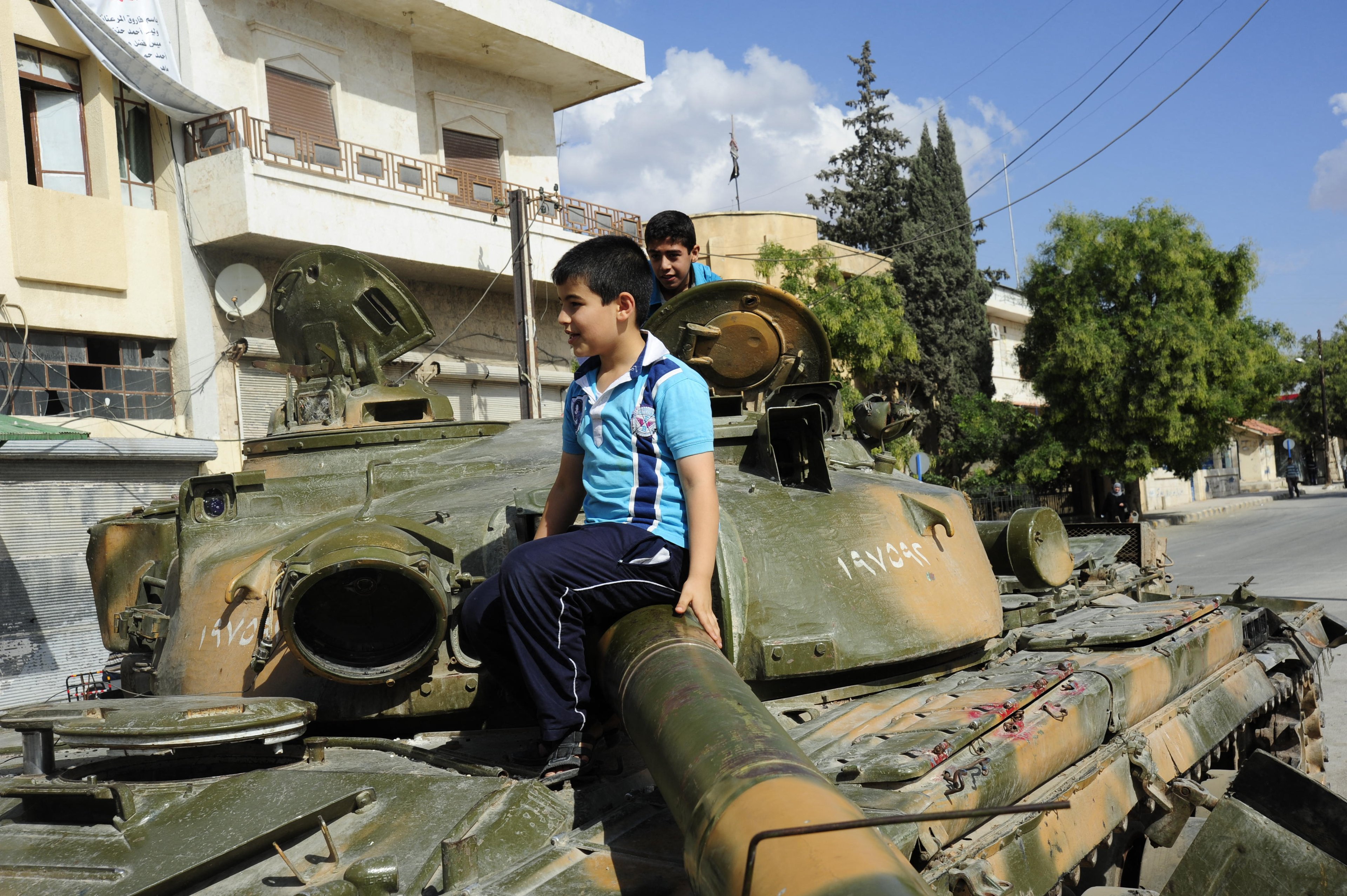
The Syrian Civil War began in 2011 when the Assad government violently suppressed pro-democracy protests. It escalated into a multi-sided conflict involving rebel groups, ISIS, Kurdish forces and foreign powers
It has become one of the most documented cases of jus in bello violations in modern history
Violations of jus in bello
Distinction
The Assad government's use of barrel bombs caused mass civilian casualties in cities, including Aleppo
Their use in civilian areas is widely considered a deliberate violation of distinction
The UN Commission of Inquiry concluded these attacks constituted war crimes
Proportionality
Government forces besieged opposition-held areas, including East Aleppo (2016) and Eastern Ghouta (2018), cutting off food, water, and medical supplies
Using starvation as a weapon of war is explicitly prohibited under international humanitarian law
Military necessity
In 2013, sarin killed an estimated 1,400 civilians in Ghouta - the deadliest chemical weapons attack since the 1980s
Chemical weapons cannot distinguish between combatants and civilians, making their use an absolute violation of jus in bello.
Humane treatment of prisoners
In 2014, a military photographer smuggled out 55,000 photographs documenting the bodies of around 11,000 detainees who had died in Assad government prisons, showing systematic torture and execution
Protection of medical personnel
The WHO documented over 600 attacks on healthcare facilities between 2011 and 2023, the majority attributed to Syrian government and Russian forces
The enforcement gap
Russia's veto on the UN Security Council has repeatedly blocked referrals to the International Criminal Court, limiting accountability despite overwhelming evidence of violations
Criticisms
Jus ad bellum says if a state believes it is going to be attacked, it has the right to attack first
Some consider this to be vague and easily manipulated
Realists argue that morality has no place in warfare and idealist principles such as the just war theory are pointless in real-world situations
Pacifists argue that there can never be a moral justification for violent conflict
Some argue that just war theory only addresses the actions of the state using conventional warfare
Modern warfare is far more complicated with multiple actors and scenarios not imagined in 13th-century Italy
Cultural relativists are cautious of European idea of morality dominating global norms surrounding conflict
They see it as another example of these states exerting their dominance

Unlock more, it's free!
Join the 100,000+ Students that ❤️ Save My Exams
the (exam) results speak for themselves:

Was this revision note helpful?
