Economic Factors Impacting Pathways to Development (DP IB Global Politics: HL): Revision Note

Economic factors and development
A state's economic conditions have a direct influence on its ability to pursue sustainable development
Key economic factors include:
access to natural, human and man-made resources
the quality of infrastructure
the role of debt, trade and foreign direct investment (FDI)
States with strong resource bases, well-developed infrastructure and access to fair trade and investment are generally better placed to develop
E
conomic factors do not operate in isolation
They interact with political, social and environmental conditions to shape the overall pathway to development
Resources
Economic resources are the natural, human, and man-made assets that a state uses to produce goods and services and generate wealth
Examples of economic resources
Natural resources | Human resources | Man-made resources |
|---|---|---|
|
|
|
Natural resources must be well managed to support sustainable development
Some states have an abundance of natural resources which support economic development
These resources can be traded for goods and services from other states
Some natural resources are renewable if government policies are in place to protect them
For example, until the 1980s, Costa Rica had one of the highest deforestation rates in the world
In 1997 the government introduced a scheme to pay landowners directly to protect and restore forests, funded by a tax on fossil fuels
Forest cover has increased from around 21% in 1987 to over 50% today
Over-dependence on non-renewable natural resources to support economic development is not generally seen as sustainable
Switching to renewable energy resources is an effective route to sustainable development
Investing in human resources increases innovation and promotes sustainable economic development and includes
A skilled and well-trained workforce increases innovation and productivity
Fair labour practices and the inclusion of marginalised groups in the workforce promote equity
Infrastructure
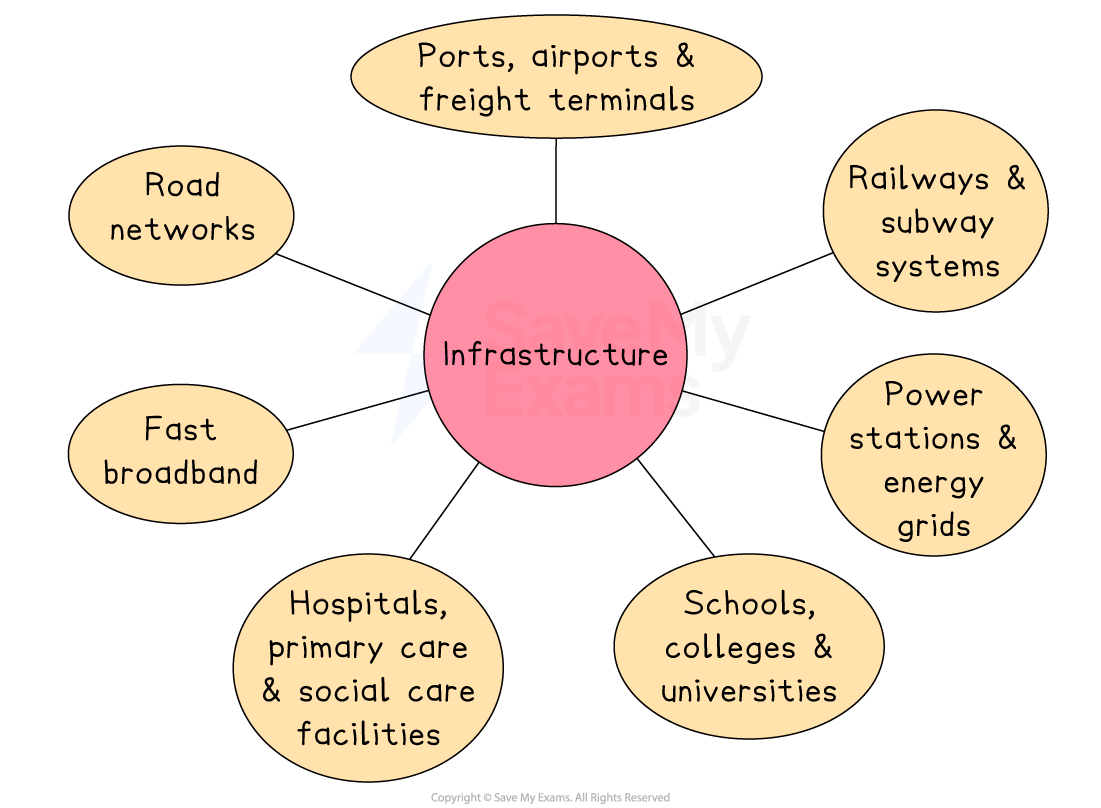
Infrastructure is the basic physical and organisational systems that a state or society needs in order to function and develop
Infrastructure that supports economic development must provide long-lasting social and economic value
Examples of infrastructure
Case Study
China's Belt and Road Initiative — development or dependency?
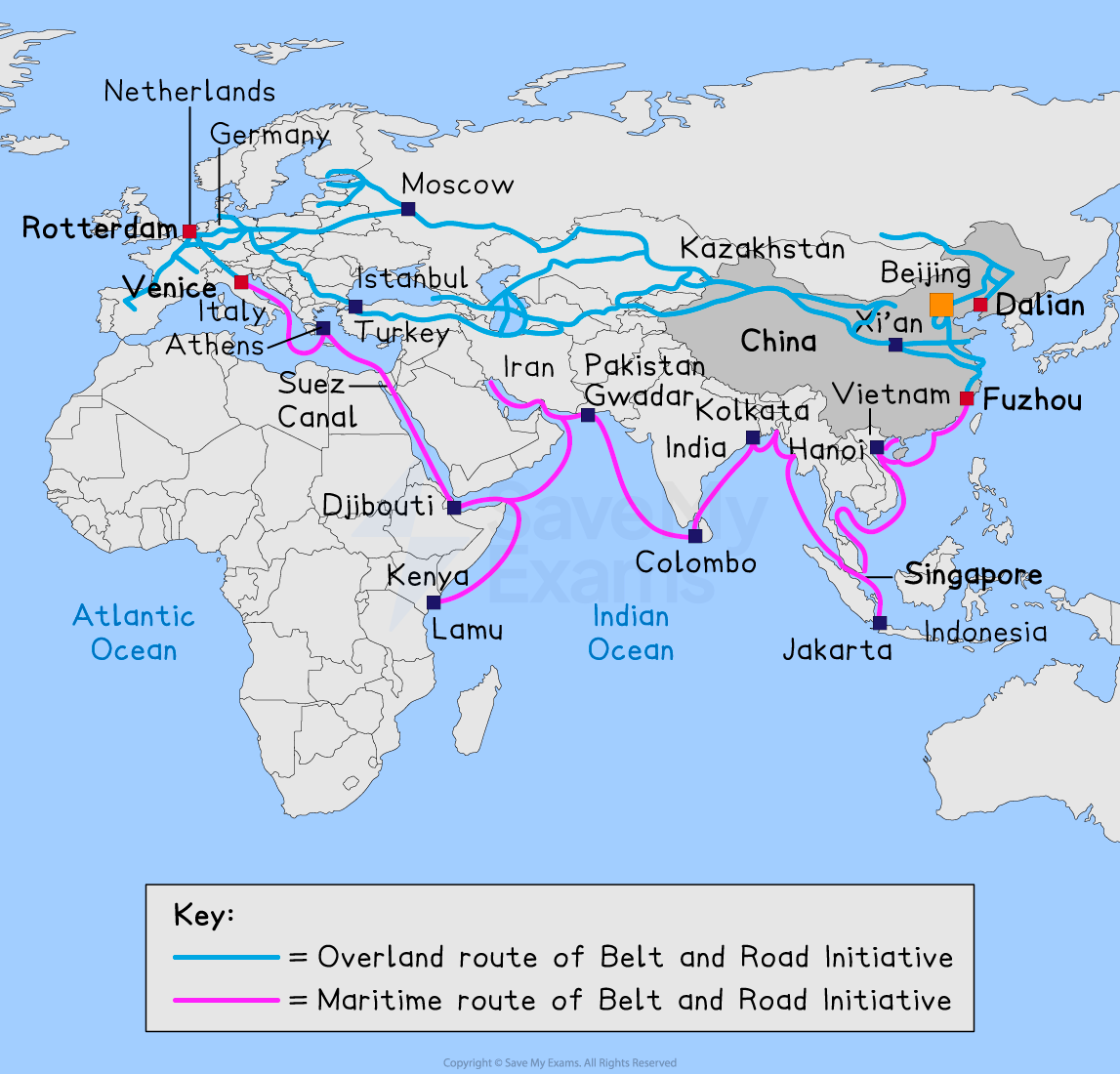
China's Belt and Road Initiative (BRI) was launched in 2013 to connect Asia, Africa and Europe through large-scale infrastructure development
It illustrates how a pathway to development can produce both significant benefits and serious risks for less economically developed states
Economic development
The BRI has funded roads, bridges, airports and ports across less economically developed states
E.g. China has financed major infrastructure projects in Cambodia
These improve connectivity, reduce transport costs and can attract further investment
Participating states have agreed to BRI funding because it offers a faster pathway to economic development than alternatives
Political and governance concerns
BRI agreements are frequently not made public, raising concerns about transparency and accountability
If a state cannot repay its debt, it risks losing control of key infrastructure, referred to as debt-trap diplomacy
This threatens state sovereignty and gives China significant political influence over less powerful states
China's perspective
China argues the BRI mirrors what Western-led institutions such as the IMF and World Bank have done for decades, providing finance in exchange for conditions
It presents the initiative as an alternative to Western-dominated development models
What this shows about development
The BRI shows that pathways to development are rarely straightforward
Economic growth can come at the cost of political development and sovereignty
No pathway to development is without political consequences
Debt, trade and foreign direct investment (FDI)
Debt
Debt is the total amount of money that a government owes to lenders, usually as a result of borrowing to fund public spending
Many developing states were encouraged by the promotion of the modernisation theory as a pathway to development.
They sought to shift their economic focus from agriculture to industrialisation
To cover the cost many obtained loans from developed countries, international banks and institutions such as the IMF
For many states repaying these loans has proved difficult
Plans to improve economic development have not worked
Corruption has meant the money was not used effectively
World economic crises, including the recent COVID-19 pandemic, have depleted already scant economic resources
According to the UN Trade and Development agency, this has led to a global debt crisis
Many less economically developed states cannot even repay the interest on loans, worsening their debt
Severe debt diminishes the possibility of future economic development
Trade
Trade is the buying and selling of goods and services between individuals, businesses or states
Trade is a key component of economic development that has taken place since the beginning of human civilisation
Benefits of trade
Stimulates economic growth and specialisation
States can focus on producing goods and services they are best at, increasing efficiency and output across the global economy
Makes goods cheaper for citizens
Competition between international producers drives prices down, increasing the purchasing power of people within a state
Facilitates the exchange of ideas, technology and efficiency
Trade relationships encourage the spread of new technologies, skills and working practices between states, supporting long-term development
Improves GDP
Export revenue increases the total value of goods and services produced within a state, directly boosting economic output
Foreign direct investment (FDI)
FDI is when an actor (a government, company or private actor) from one state obtains ownership in a company operating in another state (host)
FDI can contribute to a host state's economic development
However, some are concerned that powerful companies exploit less economically developed states
Benefits of FDI to the host state
Job creation
Foreign companies invest in local operations, creating employment and reducing unemployment in the host state
Economic growth
FDI increases productive capacity, raises GDP and can generate tax revenue for the government to invest in public services
Infrastructure development
Foreign investors often fund or improve roads, ports, energy supplies and communications networks, benefiting the wider economy
Drawbacks of FDI to the host state
Damage to local businesses
Domestic companies may be unable to compete with large, well-funded foreign firms, leading to business failures and a loss of locally owned enterprise
Profit repatriation
Profits generated in the host state are frequently sent back to the investor's home state rather than being reinvested locally
This limits the long-term economic benefit to the host state
Case Study
Vietnam — FDI and development
Vietnam has become one of the world's largest recipients of FDI
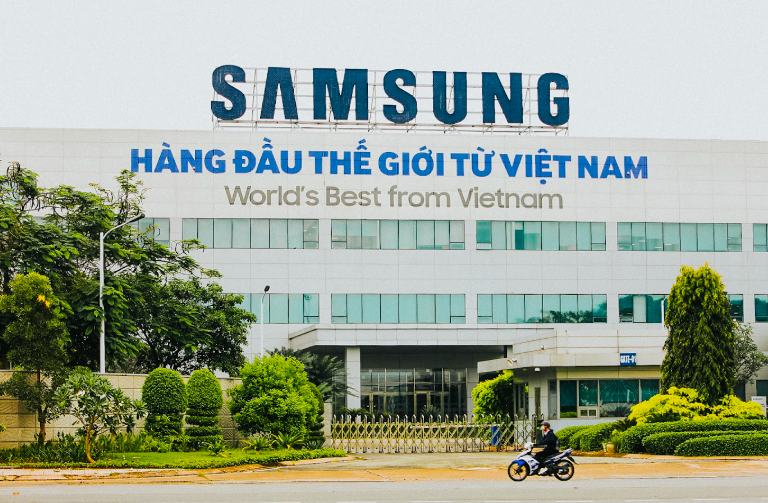
It has attracted major investment from companies, including South Korea's Samsung, which began investing in 2008
Job creation and economic growth
Samsung alone employs over 100,000 workers in Vietnam, providing stable employment and reducing unemployment
FDI has helped Vietnam develop a significant manufacturing sector, contributing to strong GDP growth averaging over 6% annually
Tax revenues from foreign companies have allowed the government to invest in infrastructure and public services
Infrastructure development
Foreign investment has supported improvements in roads, ports and energy networks, particularly in industrial zones
This infrastructure benefits not only foreign firms but the wider Vietnamese economy and population
Damage to local businesses
Vietnamese domestic firms have struggled to compete with large, well-resourced foreign companies
Local suppliers often remain at the lower end of supply chains, limiting their ability to develop independently
Profit repatriation
The majority of profits generated by foreign companies in Vietnam are returned to the investor's home state rather than reinvested locally
Samsung's Vietnamese operations generate a significant share of the company's global revenue, yet much of this wealth leaves the host state
What this shows about development
Vietnam shows that FDI can be a powerful driver of economic development, but its benefits are unevenly distributed
Host states risk becoming dependent on foreign investment without building the domestic capacity needed for long-term sustainable development

Unlock more, it's free!
Join the 100,000+ Students that ❤️ Save My Exams
the (exam) results speak for themselves:

Was this revision note helpful?