Legitimacy of Non-Violent Protests (DP IB Global Politics: HL): Revision Note

Demonstrations
Non-violent conflict can take many forms, including protests and public demonstrations
Different actors will have varying opinions as to whether they see these as acceptable or valid
Legitimacy, as a concept, must always be considered from multiple perspectives
A demonstration is a public gathering in which people express their position on a political issue
They serve two main purposes
To bring about change by influencing governments or the general public to consider a particular point of view
To build a sense of community and strength in numbers among people who share the same concerns
Demonstrations in democracies
In states where people are active contributors to government policies - generally democracies - taking part in non-violent public demonstrations is widely accepted as a right of all citizens
This is because the act of demonstrating is seen as legitimate: a free expression of opinion
This does not mean everyone agrees with what protestors are demanding, but that people support the right to express those views publicly
Growing challenge to this right
There are increasing concerns that the legitimacy of this right is being restricted, even by democratic governments, who may see large-scale protests as a threat to their authority
In the UK, the Public Order Act (2023) increased police powers to shut down protests
The government claimed to respect the legitimacy of protest, but argued that disruptive tactics and public order concerns justified the new restrictions
In the USA, protesting is a constitutional right, but it is increasingly threatened by government legislation and incidents of police violence against demonstrators
Case Study
The No Kings protests, USA (June 2025)
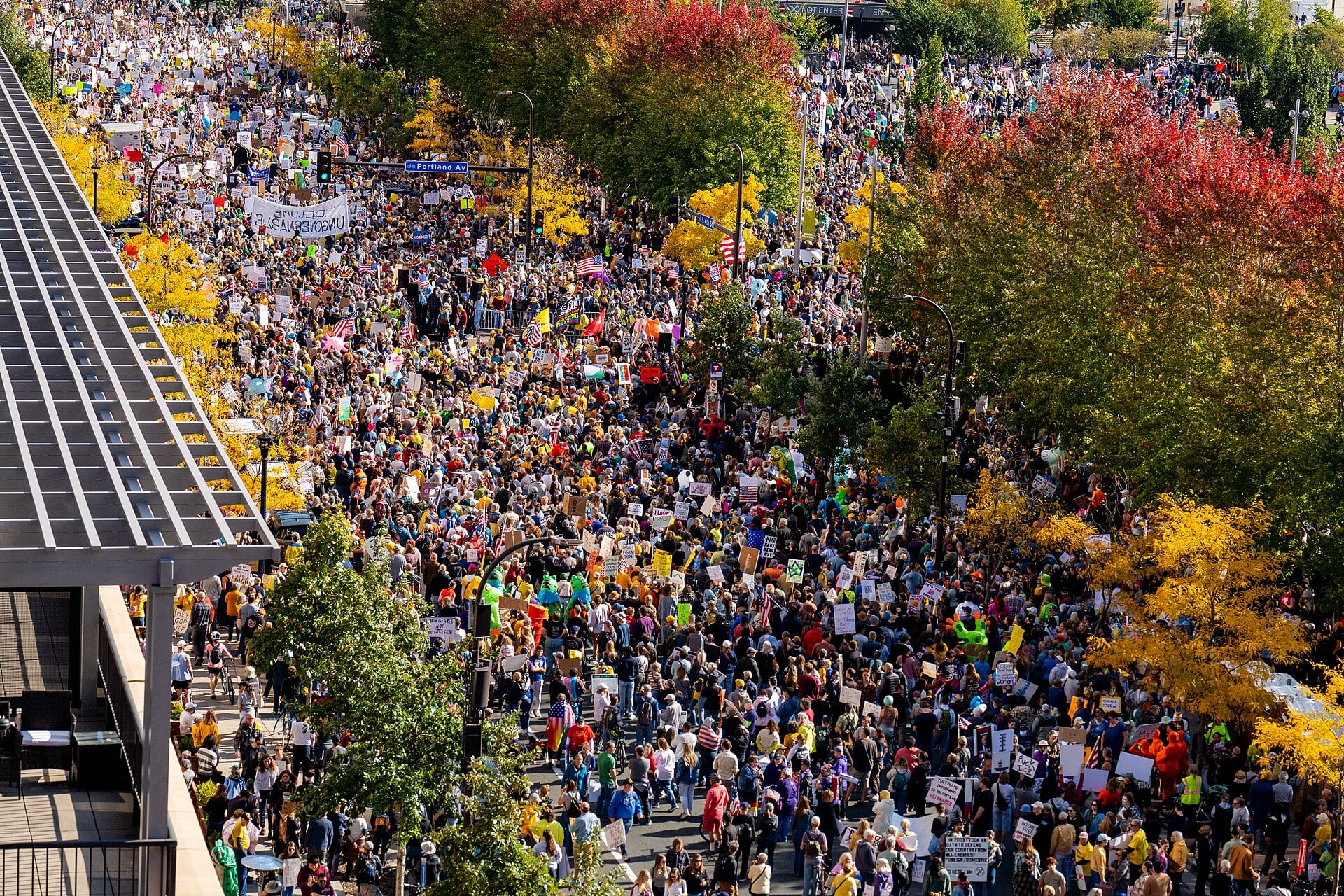
On 14 June 2025, coinciding with both Flag Day and President Trump's birthday, hundreds of thousands of people took part in coordinated No Kings protests across cities throughout the United States
Organised largely through social media, the demonstrations were a response to concerns about the Trump administration's concentration of executive power, cuts to federal agencies and what many protesters characterised as the undermining of democratic institutions
Purposes
The protests reflected both core functions of demonstration
Organisers aimed to influence public opinion and political debate, sending a visible message to the administration and to Congress
Equally, participants described the events as an opportunity to build solidarity among people alarmed by the direction of the government
Legitimacy — competing perspectives
From one perspective, the protests were a straightforward exercise of a constitutional right
The First Amendment guarantees freedom of assembly and petition
Participants framed their actions as a defence of democracy itself
From another perspective, supporters of the Trump administration questioned the legitimacy of the protests
They framed them as politically motivated disruption organised by opponents unwilling to accept the outcome of a democratic election
Significance
The No Kings protests illustrate a key tension
In a democracy, the right to protest is widely accepted in principle, yet deeply contested in practice
Who gets to define a protest as legitimate, and who has the power to restrict it, remain the central questions in contemporary democratic politics
Civil disobedience
Civil disobedience is the deliberate and non-violent refusal to obey laws or government demands as a form of peaceful protest against injustice
Some citizens believe some of the laws of the state have no legitimacy and therefore should not be followed
They do this without using violence
Whether or not acts of civil disobedience are viewed as legitimate depends on the actions taken by participants and the perspective of the person being asked
Examples of civil disobedience
Act of civil disobedience | To whom might this be legitimate? | To whom might this not be legitimate? | Example |
|---|---|---|---|
Throwing paint on an oil painting at a gallery to protest the glorification of colonialism |
|
|
|
Blockading arms factories to protest the sale of weapons to states accused of human rights violations |
|
|
|
Case Study
Extinction Rebellion bridge blockades in London (2022)
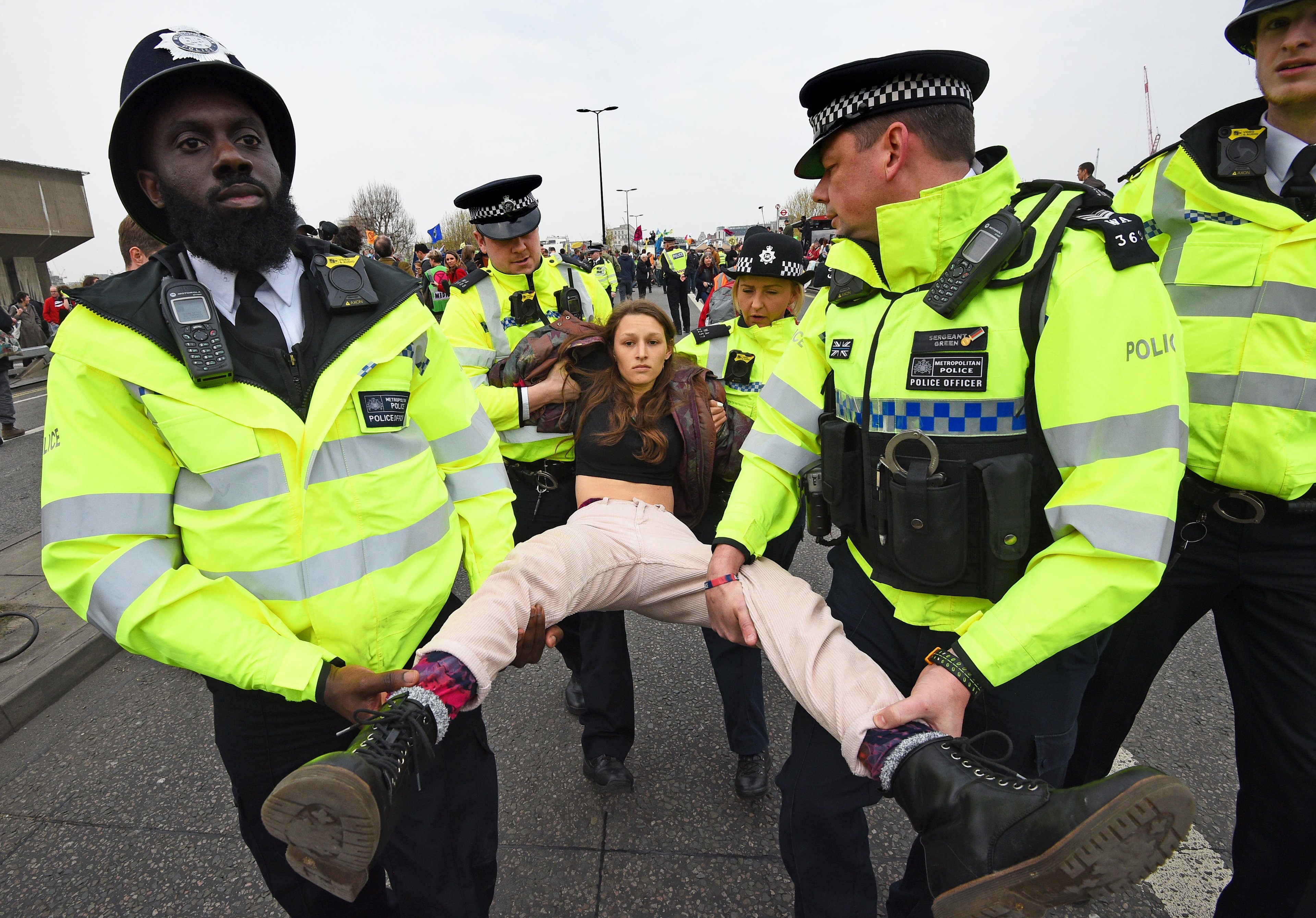
In 2022, the climate activist group Extinction Rebellion (XR) blocked key bridges across London as part of their ongoing campaign to force urgent government action on the climate crisis
Protesters physically occupied the bridges, deliberately disrupting traffic and daily life
The action was intentional, organised and non-violent
Why it qualifies as civil disobedience
XR's bridge blockades were not simply protests; they were acts of deliberate law-breaking
Blocking public roads is illegal, and participants knew they risked arrest
XR argued that this was morally justified
The scale of the climate emergency was so severe that conventional protest was insufficient
In their view, a higher moral obligation - preventing catastrophic climate change - outweighed the legal obligation to keep roads clear
Competing perspectives on legitimacy
Supporters argued the action was a legitimate and necessary response to government inaction, pointing to the scientific consensus on climate change as moral justification
Critics, including the government and many members of the public, condemned the blockades as counterproductive and undemocratic
Disrupting ordinary people's lives, blocking emergency vehicles and going beyond what a minority group has the right to impose on others
Government response
The UK government responded by strengthening police powers through the Public Order Act (2023), specifically targeting disruptive protest tactics used by groups like XR
This is itself contested - critics argue the legislation criminalises legitimate dissent
Significance
The XR bridge blockades illustrate the central tension in civil disobedience
At what point does breaking the law in pursuit of a moral cause become justified, and who gets to decide?

Unlock more, it's free!
Join the 100,000+ Students that ❤️ Save My Exams
the (exam) results speak for themselves:

Was this revision note helpful?