International Criminal Court (ICC) (DP IB Global Politics: HL): Revision Note

The Rome Statute
A criminal court is a court which puts individual people on trial for crimes
An international criminal court can try people from any state
In the 1990s two genocides took place in Rwanda and the former Yugoslavia
The international community, including states, IGOs, NGOs and many other actors, questioned how justice could be achieved so that those responsible would be punished
It was argued that political leaders, soldiers and civilians can all participate in atrocities and so all should be held accountable
The Rome Statute is an international law which came into force in 2002
It established the International Criminal Court (ICC) to hold individuals (not states) accountable for their crimes
The ICC is located in The Hague, Netherlands
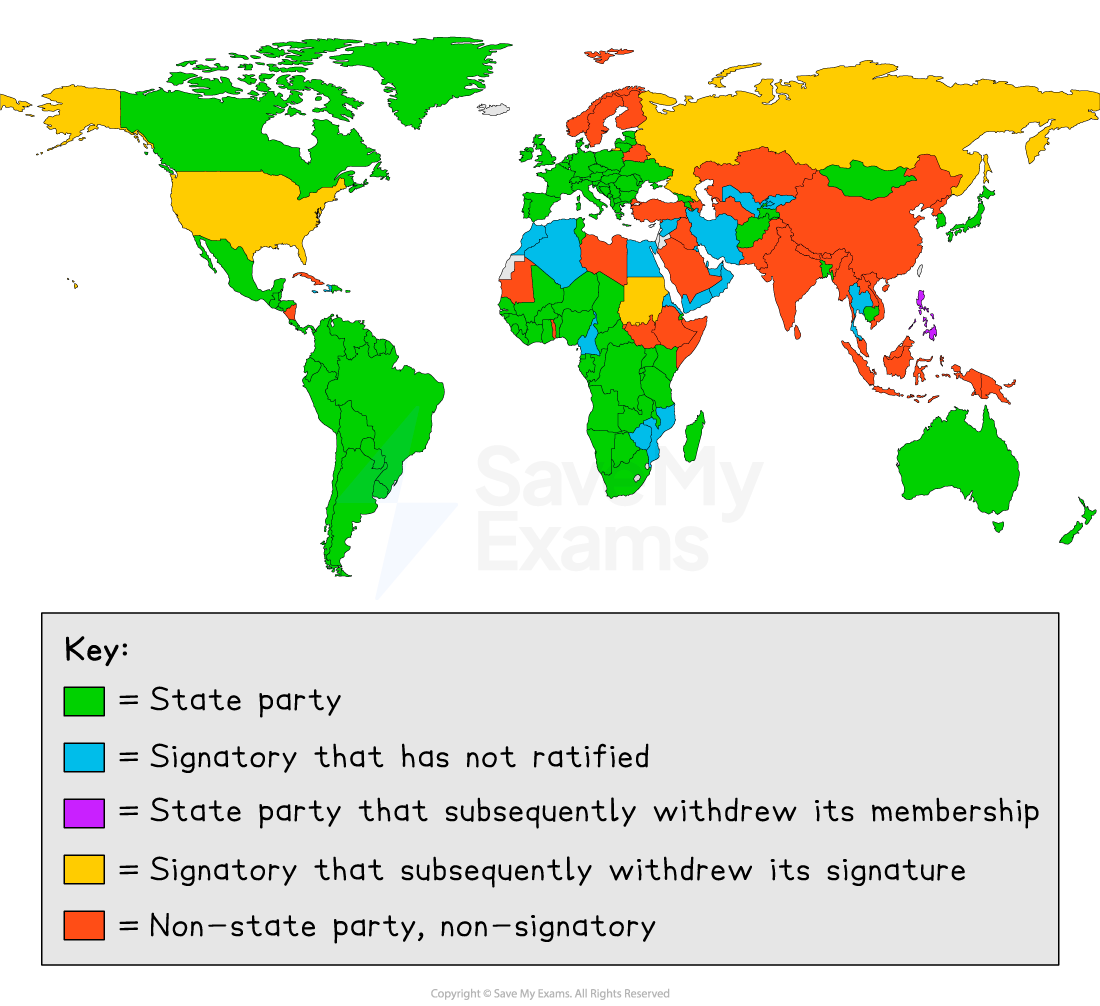
Currently 125 states fully support the Rome Statute and the ICC
Examiner Tips and Tricks
The ICC should not be confused with the International Court of Justice which is also located in The Hague
Jurisdiction and impact on justice
Jurisdiction relates to the extent of the power of the ICC and what they are able to do legally
Areas of ICC jurisdiction
The ICC has jurisdiction over two types of crimes committed after the court was established in 2002
Human rights crimes that concern the global community, such as
Genocide
Crimes against humanity
War crimes
Crimes of aggression, such as threats made and/or violence used against a state
An arrest warrant can be issued for individuals suspected to be responsible for the crimes over which the ICC has jurisdiction
States that have ratified the Rome Statute are legally required to cooperate with the court
Anyone can be prosecuted, from heads of state to ordinary civilians
However, the crime must have been committed in a state that has ratified the Rome Statute, or the suspect must have the nationality of a state that has ratified the Rome Statute
Impact on justice
The court provides an opportunity for victims, survivors and their families to take part or simply observe proceedings so that they can see that someone is held accountable
These people are also able to seek financial compensation if the suspect is found to be guilty
Communities that suffered can be given a sense of closure and peace, and reconciliation is possible
The court provides a warning to all individuals who commit horrific human rights abuses that they could be held liable
Global condemnation of the crimes provides a sense of justice
Case Study
The ICC arrest warrant for Vladimir Putin
The International Criminal Court (ICC) issued an arrest warrant for Russian President Vladimir Putin in 2023
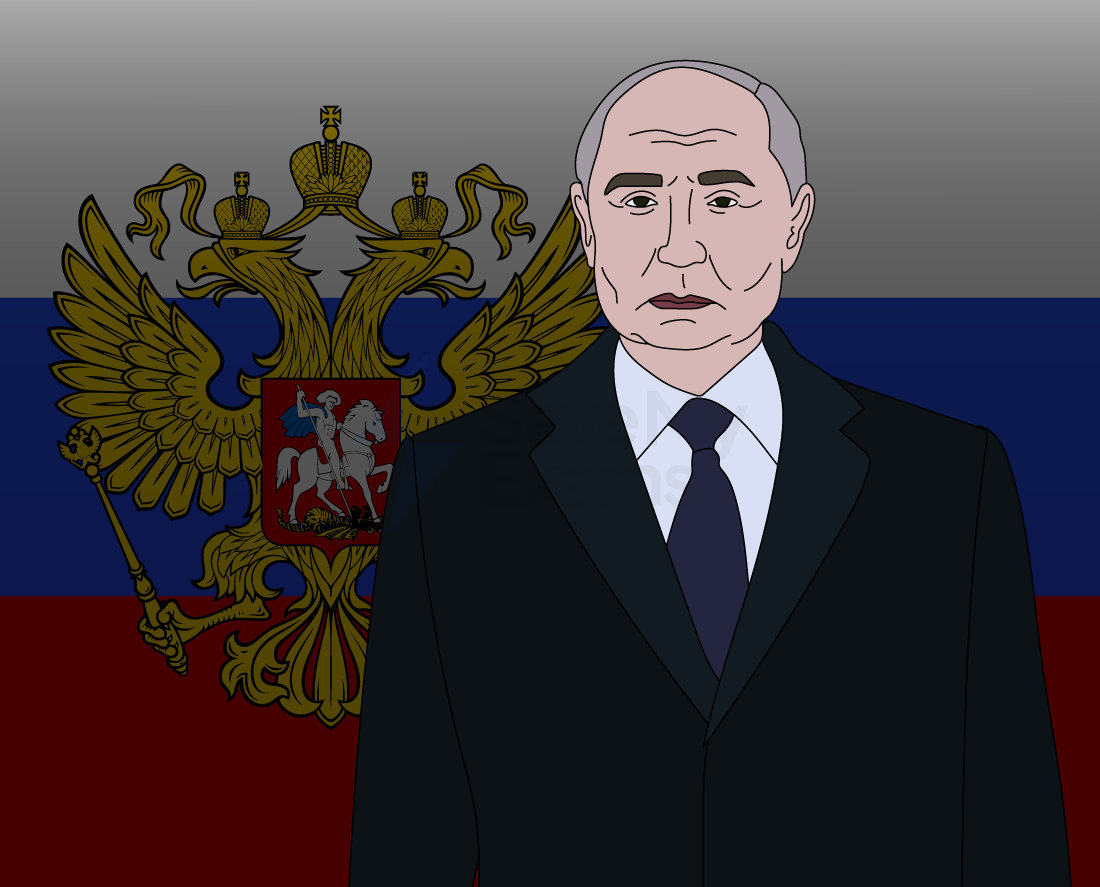
The warrant related to war crimes, specifically the unlawful deportation of Ukrainian children
Ukraine is not a full member of the ICC, but it accepted ICC jurisdiction, allowing the Court to investigate crimes on its territory
Limits of jurisdiction
Russia has not ratified the Rome Statute, so it does not recognise the ICC’s authority
The ICC cannot arrest Putin unless he travels to a member state willing to detain him
This demonstrates that jurisdiction is legally strong but practically limited
Impact on justice
The warrant sends a clear message that even powerful leaders can be held accountable
Victims and affected communities gain recognition of wrongdoing
It increases global condemnation of alleged crimes
It may support future justice, reconciliation and compensation claims
Strengths and limitations of the ICC
Feature of the ICC | Strength | Limitation |
|---|---|---|
A case can be brought in three ways (state referral, UN Security Council, ICC investigation) |
|
|
34 cases have been tried since 2002 |
|
|
Many cases involve African states |
|
|
125 states have ratified the Rome Statute |
|
|

Unlock more, it's free!
Join the 100,000+ Students that ❤️ Save My Exams
the (exam) results speak for themselves:

Was this revision note helpful?