Peacemaking (DP IB Global Politics: HL): Revision Note

Actors involved in peacemaking
Peacemaking involves trying to persuade conflicting parties to diplomatically resolve the conflict
Peacemaking should be the first step beyond simply ending the conflict and should lead to long-term change
It can be applied to violent and non-violent conflict at all levels of society
Multiple actors are involved in peacemaking, including states, IGOs and NGOs
All people directly involved in the conflict (actors and stakeholders) should have the opportunity to participate in the peacemaking process
Actors and stakeholders involved | Example of type of conflict | |
|---|---|---|
International/Regional |
| Interstate conflict |
State |
| Intrastate conflict |
Local |
| For example, a local dispute over public land use |
Negotiations and treaties
Negotiations are discussions aimed at reaching an agreement
Treaties are formally ratified agreements between states
The steps from negotiation to treaty can be challenging and may involve multiple actors
Before a conflict can formally end, negotiations must have taken place where all parties to the conflict express their views and opinions about the possibility of peace
How negotiation works
In armed conflict situations negotiations are formal meetings where conditions of peace are laid out and may include discussions about
Borders
Resource allocation
Rebuilding
Disarming
The return of prisoners of war
Compensation
This is usually demanded in interstate conflict where one state was the initial aggressor
Parties come to an agreement and this is written into a formal document
Parties in conflict then sign and ratify the agreement, which becomes known as a peace treaty
The treaty and its conditions are then implemented
Case Study
The Good Friday Agreement for Northern Ireland
Background
Northern Ireland experienced decades of violent conflict known as "The Troubles" between 1968 and 1998
The conflict was between unionists (those who wanted Northern Ireland to remain part of the United Kingdom) and republicans (those who wanted a united Ireland)
Paramilitary groups on both sides carried out bombings and assassinations; over 3,500 people were killed
The negotiation process
Formal peace talks involved multiple actors
British and Irish governments
Northern Irish political parties
The United States, represented by Senator George Mitchell
Key issues discussed included:
Power-sharing between communities
Disarmament of paramilitary groups
The release of prisoners held by both sides
Cross-border arrangements between Northern Ireland and the Republic of Ireland
The treaty and its impact
The Good Friday Agreement was signed on 10 April 1998 and approved in referendums on both sides of the border
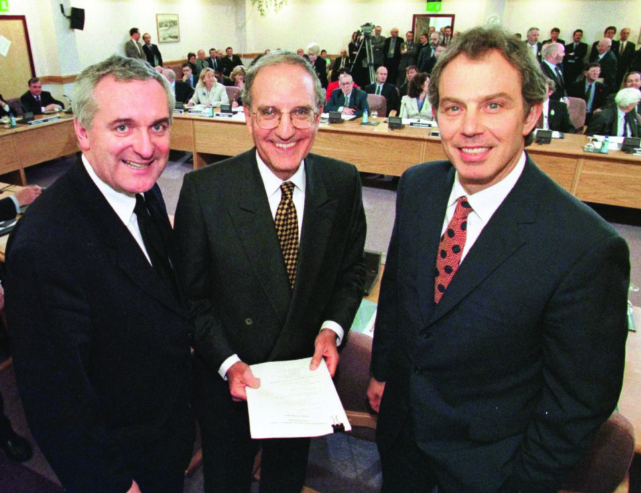
Violence reduced dramatically and a power-sharing assembly was established in Northern Ireland
It is widely regarded as one of the most successful examples of a negotiated peace treaty in modern history
Why it matters
The agreement shows that even long-running, deeply entrenched conflicts can be resolved through negotiation
It also demonstrates that lasting peace requires all parties, including former combatants, to be included in the process

Unlock more, it's free!
Join the 100,000+ Students that ❤️ Save My Exams
the (exam) results speak for themselves:

Was this revision note helpful?
