Effectiveness of Peacebuilding Efforts (DP IB Global Politics: HL): Revision Note

Western-centric approaches
Peacebuilding is about securing lasting, positive peace
Some claim that global governance institutions prioritise Western-centric ideals of lasting peace
Western-centric aspects of peacebuilding
Based on Liberal tradition originating in Western Europe
The emphasis on democracy as the best model of government
Some argue that a state moving from authoritarian rule and conflict is not in the best place to support democracy - and instability results if it is forced
Prioritising economic interdependence and globalisation
Some argue that economic globalisation mostly benefits powerful states and this is just a way for them to increase their own wealth and power
It emphasises establishing legal structures which are based on Western principles of law
Traditional, indigenous and community-based traditions of conflict resolution are not often considered
There are differing opinions as to whether this then makes peacebuilding as promoted by the UN and other influential actors effective and to what extent claims that it is Western-centric are valid
Overlap of multiple actors
There are many actors involved in peacebuilding, including IGOs, NGOs and state governments
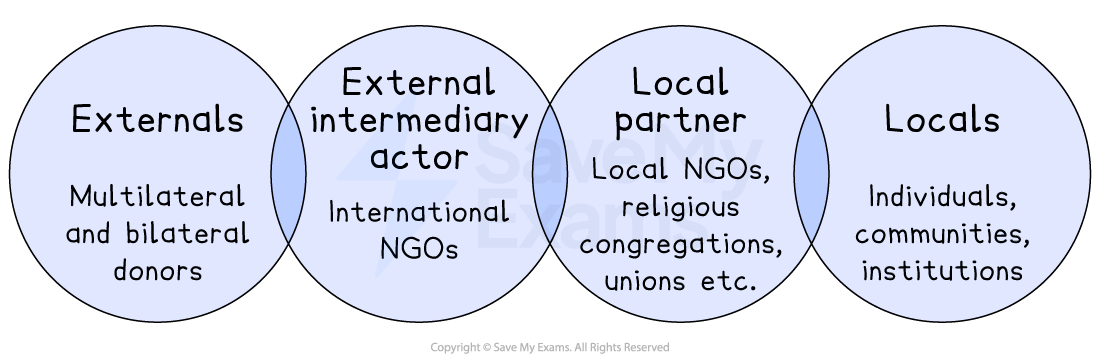
Multiple actors can have differing approaches, potentially resulting in a haphazard approach
Strategic peacebuilding paths
Peacebuilding requires attention in a variety of areas, as seen below
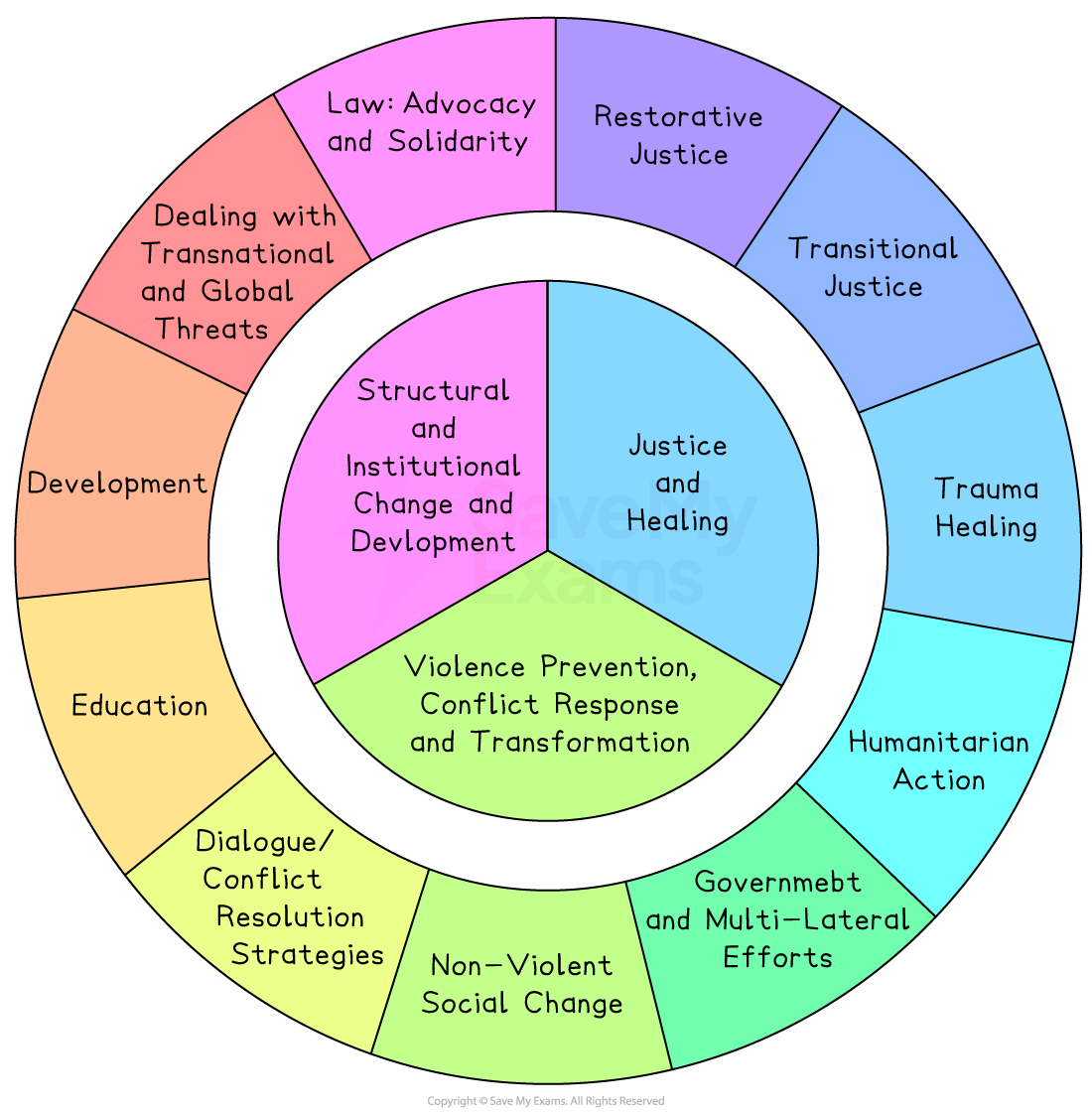
It could be argued that such a huge undertaking could not be accomplished without multiple actors
However, it can be challenging to make sure there is no duplication or conflicting approaches.
To better coordinate peacemaking efforts, the UN established a Peacebuilding Support Commission (PSC)
However, states have the power to refuse the involvement of the PSC and the Commission lacks the necessary funds and staff to effectively co-ordinate
Some argue that a top-down approach like this is not the best way to co-ordinate lasting peace and that more regional or local actors should prevent overlap
Can the effectiveness of peacebuilding efforts be measured?
Peacebuilding is a multi-faceted process and very difficult to measure
Transitioning from armed conflict to positive peace is a process that could take decades, if it is possible at all
If armed conflict starts again, it is safe to say it has failed
Measuring implies quantifiable data is used - but factors which indicate peace are not usually quantifiable
Measurements of positive peace | Challenges |
|---|---|
Determining whether the government is well-functioning and not corrupt |
|
Human rights are protected and enforced |
|
Good relations with neighbouring states |
|
A fair distribution of economic wealth |
|
Some argue that, although measuring the effectiveness of peacebuilding is challenging, this does not mean that it is not happening
Focusing on improving government, human rights, economic equality and relations with neighbours improves the lives of people and reduces the likelihood of conflict

Unlock more, it's free!
Join the 100,000+ Students that ❤️ Save My Exams
the (exam) results speak for themselves:

Was this revision note helpful?
