Governments and Their Agencies (DP IB Global Politics: HL): Revision Note

Governments and their agencies' impact on development
Government agencies are organisations created by the state to carry out specific functions or deliver public services
Government agencies involved in development can include those linked to finance, trade, health, justice and education
The relationship between government and development is complex and variable, and depends upon a range of factors
Factors affecting the relationship between government and development
Factor | Explanation | Example |
|---|---|---|
The system of government |
|
|
|
| |
Level of economic development |
|
|
|
|
Theoretical context
Realists say that all governments prioritise the approaches to development that best suit the state’s need for security and power
Liberals argue that a multifaceted approach to development leads to a stable and secure society
Government interactions with other actors and stakeholders within the state
Other actors within the state who interact with government include:
civil society, including non-governmental organisations (NGOs)
companies
political leaders
social movements
resistance movements
the media
If people and groups outside the government can influence decisions, there are more connections between different actors and levels of government
Civil society might advocate for better access to healthcare or improved educational facilities
Environmental groups may advocate for investment in wind turbines or solar energy
Political leaders from other parties may challenge the government to do more to develop society, based on their own understanding of what development means
Protest movements may advocate for justice and greater political rights
Companies may advocate for favourable treatment to improve economic growth
Case Study
Government interactions with actors and stakeholders in India
India is a democratic state where many different actors interact with the government, creating a complex network of influence at national and regional levels
These interactions show how different actors can influence decisions, leading to more connections between government and society
Interaction with other actors
Civil society and NGOs
Groups such as the Right to Food Campaign have pushed the government to improve food security programmes
Companies
Large businesses lobby for policies such as lower taxes or investment incentives to support economic growth
Political leaders
Opposition parties regularly challenge the government on issues like unemployment and education standards
Social movements
Farmers’ protests in 2020–21 pressured the government to reconsider agricultural reforms
Media
Indian media highlights social and economic issues, shaping public debate and influencing policy priorities
In single-party or autocratic states governments may still interact with other actors as necessary in order to promote their own vision of development
However, the will of the government will always dominate
Stakeholders
Stakeholders are people in a country who are affected by development decisions but do not try to influence government policies directly
In democracies governments may be keen to understand the impact on stakeholders if they hope to stay in power at the next election
The needs of marginalised or vulnerable people and groups may or may not be considered, depending on the will of the government
Government interactions with IGOs
IGOs (Intergovernmental Organisations) are organisations made up of multiple governments that work together to achieve shared goals, often on international issues like security, trade or human rights
States must, to some extent, pool their sovereignty to be a member of an IGO
Many do so because of the hope that the membership will facilitate development
Combined efforts to share expertise and devise strategies can support governments as they work on development
For example, the UN ‘s Sustainable Development Goals provide a shared framework of targets and guidance to promote economic, social and environmental development
Some IGOs, such as the World Bank, focus on poverty reduction and support state governments with development projects through loans
It lends money to and supports economic reform policies for its poorest member governments
However, the World Bank is criticised because richer countries have more voting power, meaning states like the USA, UK, Germany, Japan and France have the most influence over its decisions
Some also criticise the conditions the World Bank sets for loans, arguing they can sometimes harm sustainable development
Other IGOs specifically focus on economic development
For example, the International Maritime Organisation regulates global shipping to ensure safe, efficient trade while helping states improve their maritime standards and infrastructure
Because of state sovereignty, government interaction with IGOs can only occur if the government approves
However, all states are interested in development and very impoverished states have few other options
Government interactions with TNCs and MNCs
Government interactions with transnational corporations (TNCs) and multinational companies (MNCs) can have both positive and negative impacts on development.
Some TNCs and MNCs have more wealth than the less economically developed states with which they interact
Whether this imbalance of economic power is always a problem is debatable
However, there are some widely accepted positive and negative effects of governments working with TNCs and MNCs
Impacts for governments working with TNCs and MNCs
Positive Impact | Negative Impact |
|---|---|
|
|
Case Study
Rana Plaza Collapse, Bangladesh (2013)
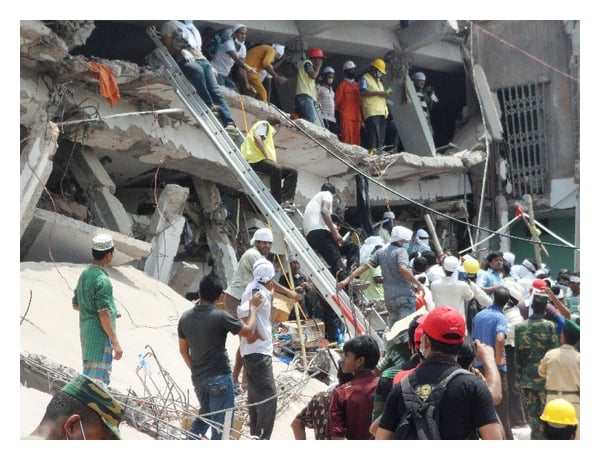
The Rana Plaza factory building in Bangladesh collapsed in April 2013, killing over 1,100 workers and injuring thousands
The building housed garment factories producing clothing for major TNCs and MNCs supplying global brands
The disaster highlights how TNC investment can support economic development, but also shows the serious risks when governments prioritise growth over regulation and worker protection
Government interaction with TNCs and MNCs
Bangladesh’s government worked closely with foreign clothing companies to promote economic growth through exports
The garment industry became a key part of the economy, showing how TNC investment can drive development
Positive impacts
Employment: The garment sector employed millions of workers, helping reduce poverty
Economic growth: Exports increased national income and government revenue through taxes
Infrastructure: Industrial development improved transport and factory networks
Negative impacts
Poor working conditions: Workers were paid very low wages and faced unsafe conditions, which contributed to the collapse
Weak regulation: The government was criticised for failing to enforce safety laws due to pressure to attract foreign investment
Corporate influence: TNCs benefited from low costs and were accused of prioritising profit over worker safety

Unlock more, it's free!
Join the 100,000+ Students that ❤️ Save My Exams
the (exam) results speak for themselves:

Was this revision note helpful?
