Peacebuilding (DP IB Global Politics: HL): Revision Note

Actors involved in peacebuilding
Peacebuilding involves long-term efforts to address underlying causes of conflict and build the conditions for lasting peace
After peacemaking and peacekeeping, it is the next stage in the process of securing lasting peace, described by Galtung as positive peace

The purpose of peacebuilding is to create a situation where the likelihood of future conflict is minimised by
Rebuilding physical, economic, political and social structures
Addressing injustices and human rights abuses
Multiple actors are involved in the process of securing lasting peace
State governments and their institutions
IGOs
Humanitarian organisations
Civil society and NGOs
Most importantly those who were directly impacted by the conflict and suffered physical and emotional harm must be supported and have their grievances addressed
The United Nations attempts to achieve this through the International Criminal Court
Truth and reconciliation commissions
Truth and reconciliation commissions (TRCs) are set up to investigate past human rights violations to uncover the truth, bring justice to victims and move forward to positive peace
They take place within states and are led by government officials
They are typically set up when a new government comes to power that was not associated with past abuses, or when a government chooses to openly address historical injustices that continue to affect society
Where a government is reluctant to act, civil society groups and communities directly affected by past abuses can pressure for a TRC to be established
How TRCs work
Evidence gathering
Researchers and investigators collect testimony, documents and other evidence about what occurred
Public hearings
Victims, witnesses and perpetrators are given the opportunity to testify openly about what happened
Final report
Findings are published and shared with the public, along with recommendations for how to deliver justice to those affected and prevent future abuses
Role in peacebuilding
TRCs play an important role in peacebuilding by formally acknowledging and validating the experiences of victims
However, a TRC alone does not guarantee reconciliation
It is the responsibility of the government to act on the recommendations made in the final report
Without meaningful follow-through, a TRC risks becoming a symbolic exercise rather than a genuine step towards justice
Case Study
Truth & Reconciliation Commission, Canada (2008–2015)
Background
From the late 19th century until the 1990s, the Canadian government operated a system of residential schools for Indigenous children
Children were forcibly removed from their families and communities and placed in these institutions, where they were forbidden from speaking their native languages or practising their cultures
Many children suffered serious physical and psychological abuse, and large numbers never returned home
The commission
The Truth and Reconciliation Commission of Canada was established in 2008 and ran until 2015
It gathered testimony from survivors, families and communities affected by the residential school system
Public hearings were held across the country, giving survivors the opportunity to share their experiences openly
Findings and recommendations
The commission's final report concluded that the residential school system amounted to cultural genocide - a deliberate attempt to destroy Indigenous culture and identity
It outlined 94 Calls to Action - specific recommendations for the Canadian government and wider society to address the legacy of the schools and work towards genuine reconciliation
Impact
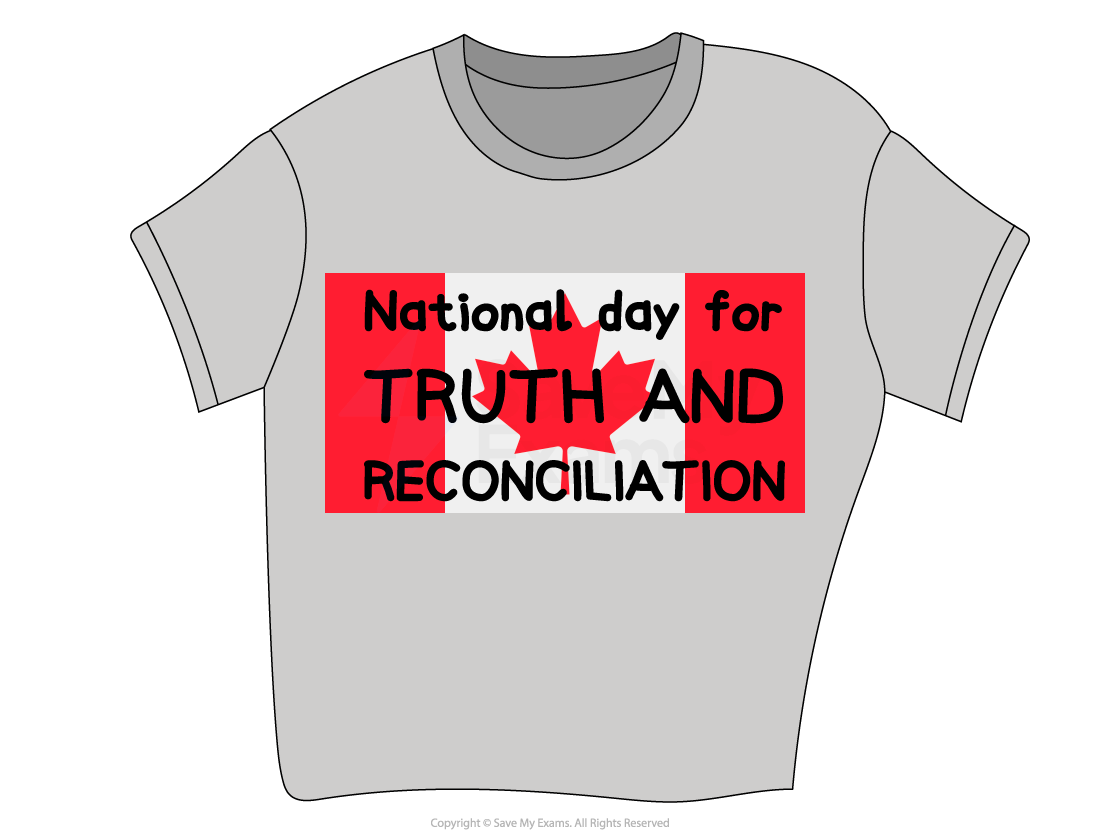
20th September has been designated as National Day for Truth and Reconciliation in Canada, recognising the experiences of survivors and those who never returned home
It is too early to fully assess whether genuine reconciliation has taken place; progress on implementing the 94 Calls to Action has been slow and inconsistent
The example illustrates that publishing a report is only the first step - lasting reconciliation requires sustained commitment from government

Unlock more, it's free!
Join the 100,000+ Students that ❤️ Save My Exams
the (exam) results speak for themselves:

Was this revision note helpful?
