Social Development (DP IB Global Politics: HL): Revision Note

Physiological needs and safety of society
Social development is the process of improving people’s quality of life, including better access to education, healthcare and equal opportunities in society
Social development is linked to human rights
Physiological needs include:
food
water
shelter
sleep
All human beings have the right to have their needs met and feel safe and secure
Maslow's hierarchy of needs
Psychologist Abraham Maslow argued that human needs can be placed in a hierarchy
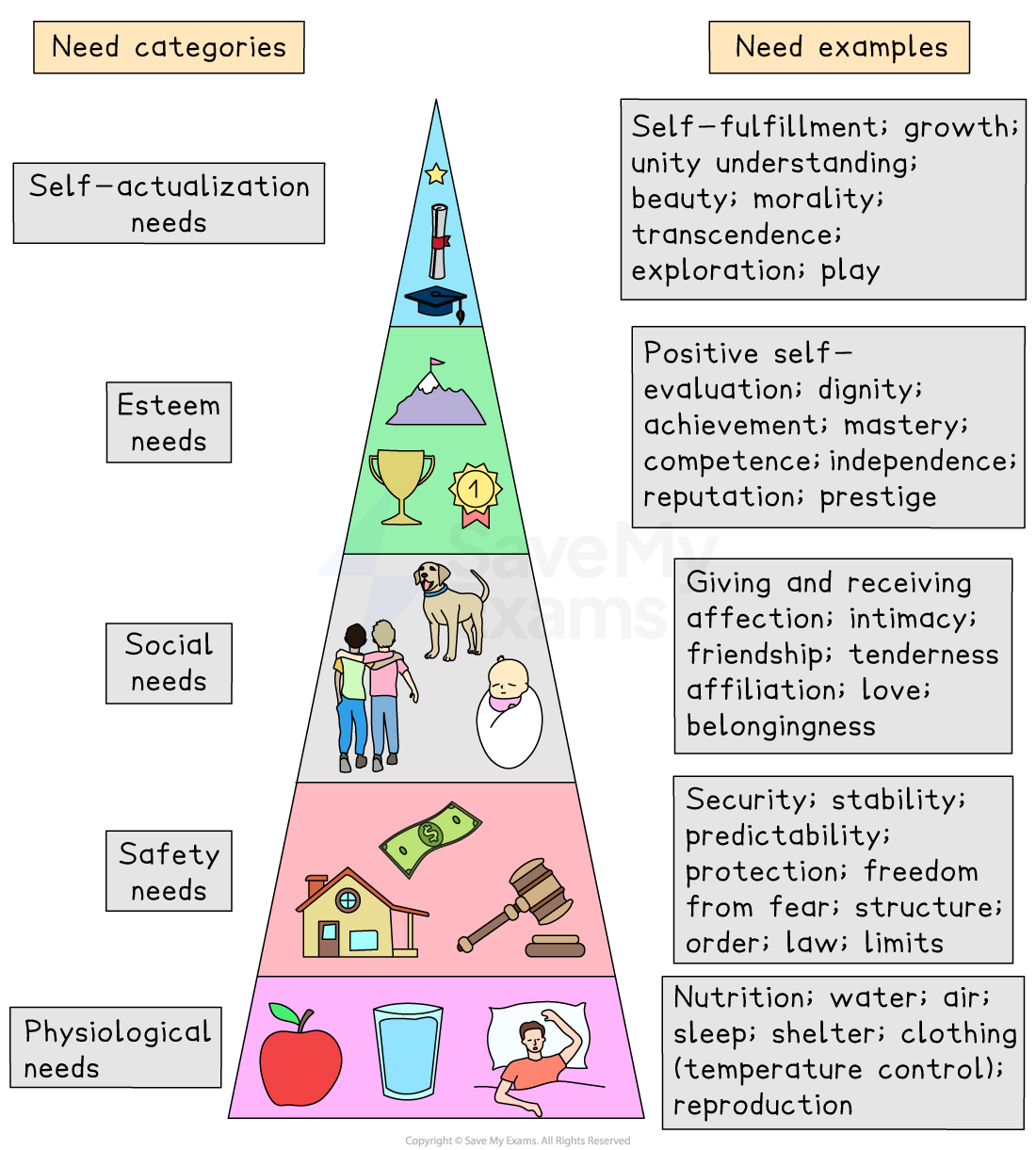
Physiological and safety needs are the foundation of all social development and without them, people cannot attain the higher levels of need
Physiological needs being met and a safe society create the right conditions for development
Societies should aspire to allow for self-actualisation, which is linked to long-lasting and stable growth
Access to public services
Social development requires that all people have equal and fair access to:
government-controlled services (e.g. sanitation, education, healthcare)
institutions (e.g. justice system, fire service, museums)
programmes (e.g. pensions, welfare, disability payments and childcare)
Access to | Aids social development because |
|---|---|
Education |
|
Justice |
|
Welfare and disability payments |
|
Case Study
Social development in Norway
Norway is widely considered one of the most socially developed countries in the world
This is largely due to its strong commitment to ensuring equal access to public services, institutions and welfare programmes
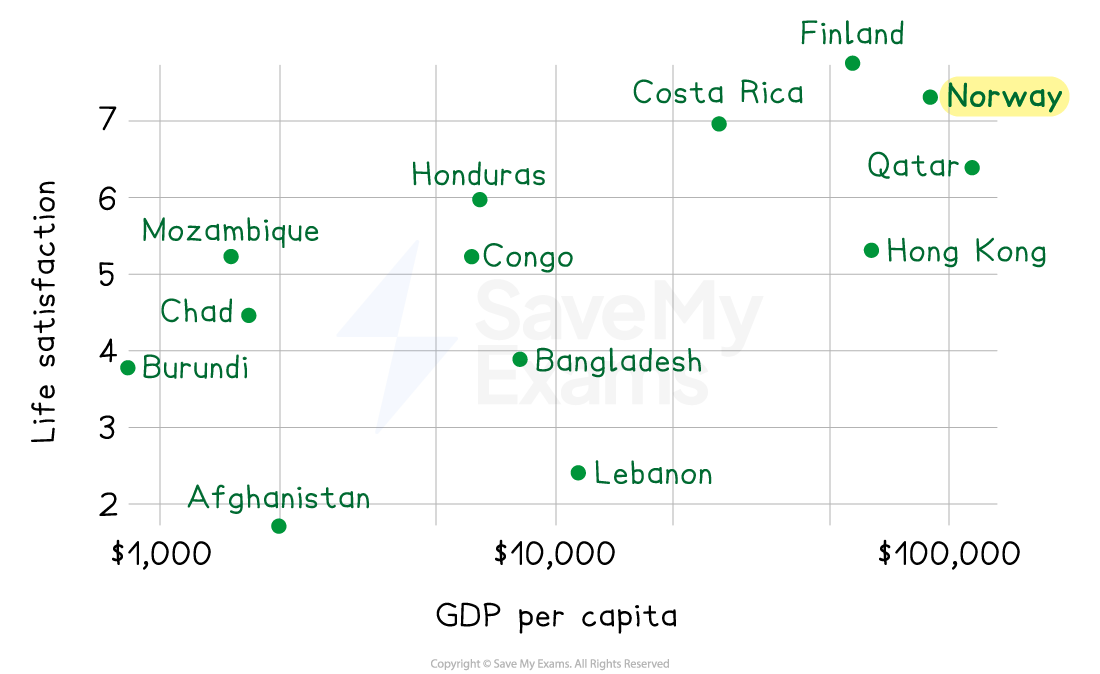
Norway also rates highly for happiness of its citizens
Access to education
Norway provides free and high-quality education to all citizens
This creates a highly skilled, educated workforce, supporting economic growth, political participation and overall social development
Access to justice
Citizens in Norway have strong access to an independent and fair justice system
This ensures that disputes can be resolved fairly, increasing trust in institutions and strengthening social stability
Welfare and social security
Norway has an extensive welfare system, including unemployment benefits, pensions, disability support and parental leave
These programmes ensure that people’s basic needs are met, even during difficult times
Access to public services and institutions
The government provides widespread access to healthcare, sanitation, emergency services and cultural institutions
This promotes equality and ensures that all citizens can participate fully in society
Significance
Norway shows that when people have equal and fair access to services, justice and welfare, it leads to high levels of social stability, equality and development.

Unlock more, it's free!
Join the 100,000+ Students that ❤️ Save My Exams
the (exam) results speak for themselves:

Was this revision note helpful?
