Ending Armed Conflict (DP IB Global Politics: HL): Revision Note

Military victory
A military victory is the achievement of a state or armed group's objectives through the use of armed force, typically resulting in the defeat or surrender of the opposing side
It is known as negative peace
It is when one party claims victory and the other admits defeat
Victory ends an opponent's ability to resist
Military victory is a problematic concept
The nature of conflict has changed and intrastate conflict has become much more common than interstate conflict
Violent nonstate actors are less likely to operate using conventional warfare so assessing a military victory is challenging
Historically, military victory was the way armed conflicts ended
Modern warfare is more challenging due to changing technologies and the variety of non-state actors threatening the sovereignty of the state
Most modern theorists agree that armed conflicts cannot be ended by military victory alone because the underlying causes of the conflict must be addressed
Imposed settlement
An imposed settlement is a resolution to a conflict that is forced upon one or more parties by an external power or authority, rather than being agreed to freely through negotiation
The stronger party in the conflict may attempt to force other(s) to surrender and accept conditions to end the conflict
A third party may attempt to force all parties to end the armed conflict and impose conditions
The stronger party imposes settlement
As conflict evolves sometimes one party emerges as stronger and better able to endure the financial and military costs of the conflict
The stronger party offers the chance to end the conflict
Any imposed settlement comes with terms and conditions
If these terms are acceptable to the weaker parties they will accept and there is a good chance of the imposed settlement being successful
Sometimes these terms are unacceptable, but the weaker parties feel they have no other choice making the likelihood of renewed armed conflict higher
Case Study
Imposed settlement in Nagorno-Karabakh
Nagorno-Karabakh is a mountainous region internationally recognised as part of Azerbaijan but historically home to a large ethnic Armenian population
A long-running dispute over control of the region led to war between Armenia and Azerbaijan, with a ceasefire in 1994 leaving Armenia in control of the territory
The imposed settlement
In 2020, Azerbaijan launched a military offensive and recaptured significant territory, forcing Armenia to accept a ceasefire agreement on Azerbaijan's terms
The settlement required Armenia to surrender territories in and around Nagorno-Karabakh
Russia supported Azerbaijan in brokering the agreement and deployed peacekeepers to the region, illustrating the role of external powers in shaping the outcome of modern conflicts
Consequences
In 2023, Azerbaijan launched a further military offensive and took full control of the region
Almost the entire ethnic Armenian population of approximately 100,000 people fled to Armenia, raising serious concerns about forced displacement
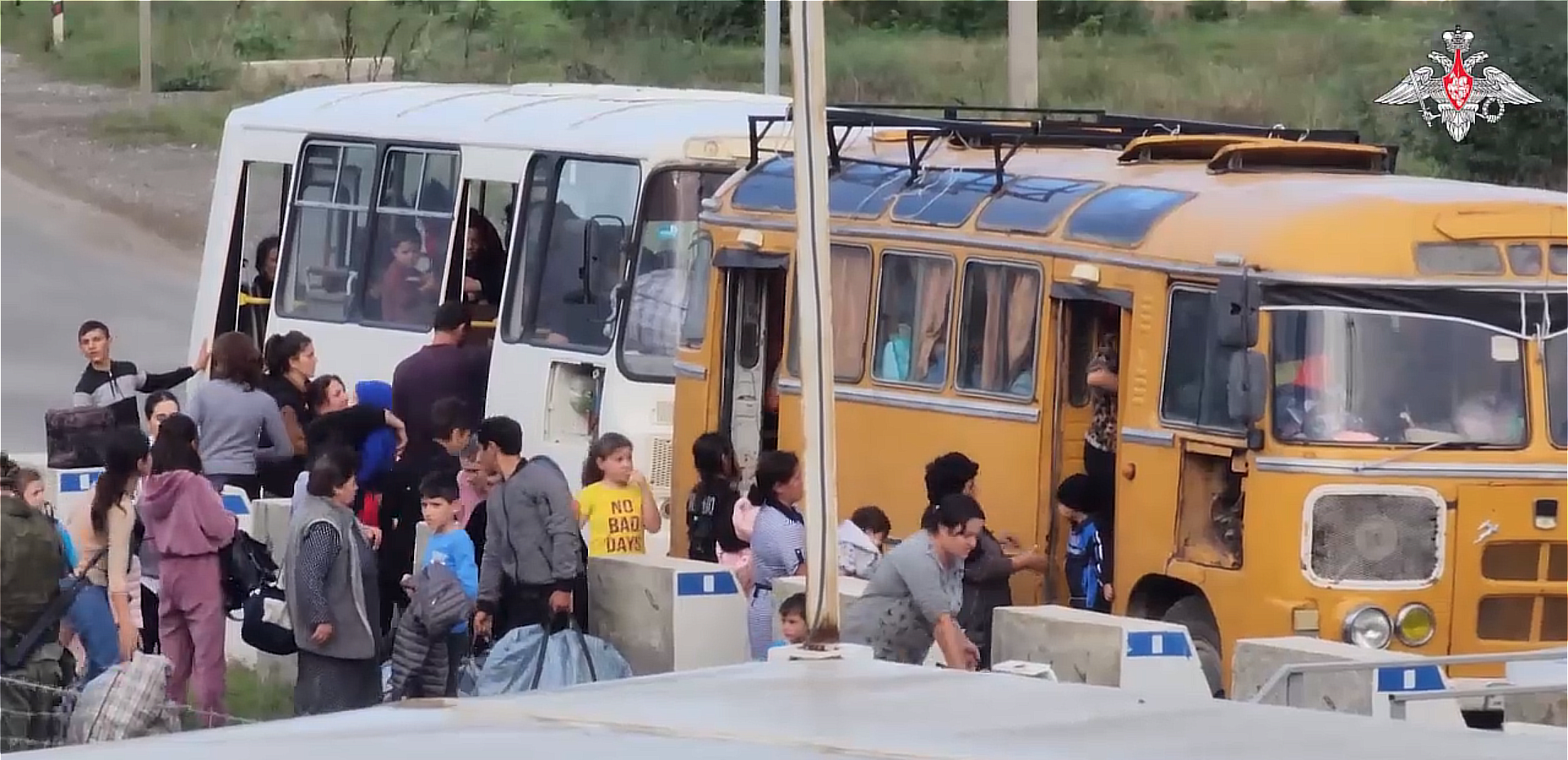
By Mil.ru (opens in a new tab), CC BY 4.0
Cross-border attacks have continued since the 2020 agreement
A formal peace deal between Armenia and Azerbaijan has yet to be signed
Why it matters
The Nagorno-Karabakh case shows that an imposed settlement may end active fighting without bringing lasting peace
It also demonstrates how the involvement of external powers such as Russia can shape the terms of a settlement in ways that serve their own strategic interests
A third party imposes a settlement
A third-party imposed settlement occurs when an external actor intervenes to bring a conflict to an end
Third parties are typically state actors or intergovernmental organisations (IGOs)
Imposing a settlement requires all parties to cease military action, which may not reflect a genuine agreement between those involved
Case Study
The Dayton Agreement, Bosnia (1995)
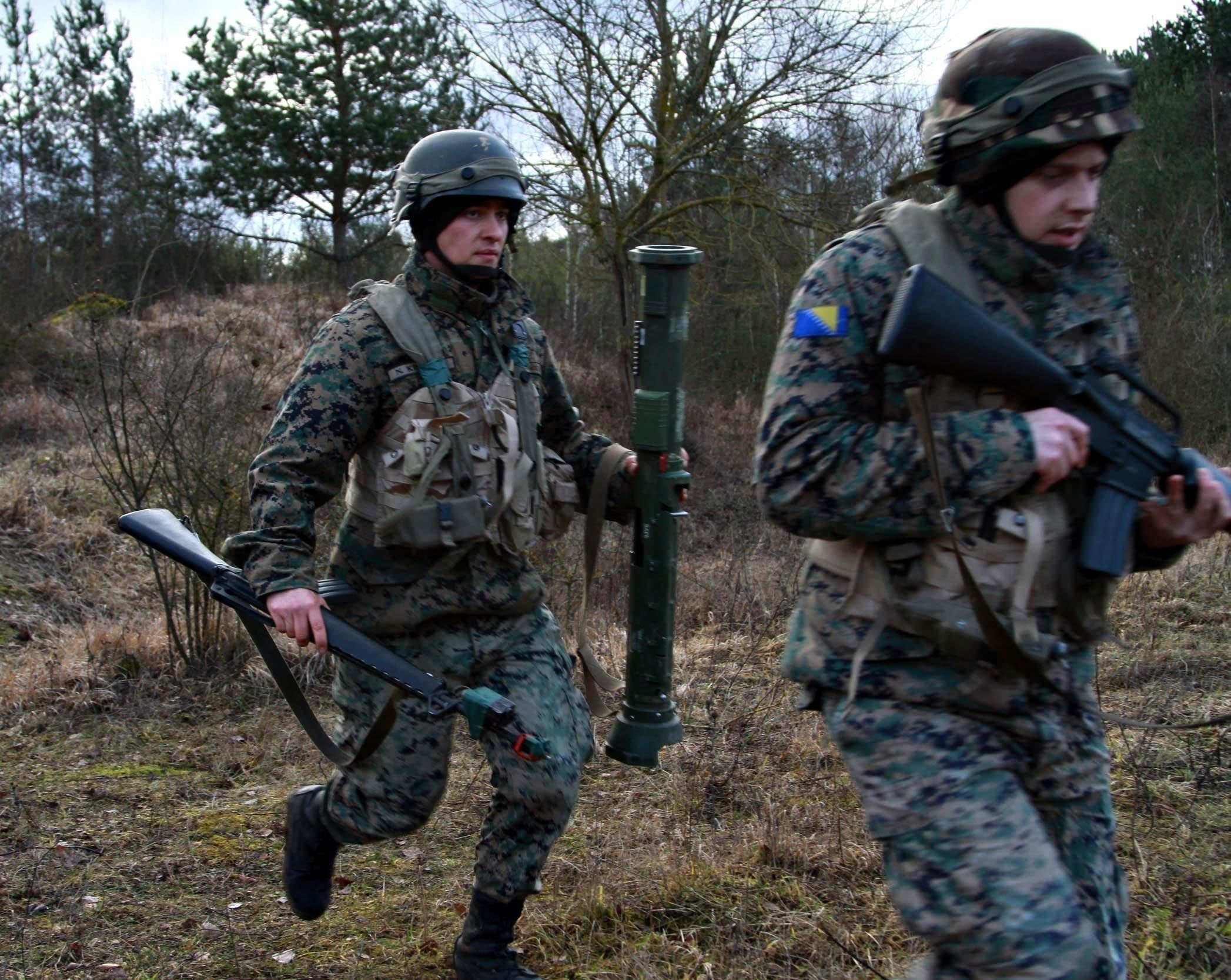
The Bosnian War (1992–1995) was an intrastate conflict that followed the breakup of Yugoslavia
The war involved three main groups: Bosniak (Bosnian Muslim), Bosnian Serb and Bosnian Croat forces
The conflict was characterised by extreme violence against civilians, including ethnic cleansing and mass atrocities such as the Srebrenica massacre of 1995, in which over 8,000 Bosniak men and boys were killed
The imposed settlement
In 1995, the leaders of Bosnia, Croatia and Serbia were brought to peace talks in Dayton, Ohio, hosted by the United States
The parties were placed under significant diplomatic and military pressure by the US and its NATO allies to accept the terms
The resulting Dayton Agreement divided Bosnia into two administrative regions: the Federation of Bosnia and Herzegovina and Republika Srpska
NATO deployed a peacekeeping force to oversee the implementation of the agreement
Why it was an imposed settlement
The terms were largely shaped by external powers, particularly the USA, rather than negotiated equally between the conflicting parties
All sides accepted the agreement under pressure, not because they were fully satisfied with the outcome
Consequences
The agreement successfully ended active fighting and has held for nearly 30 years
However, because the settlement was imposed rather than genuinely agreed, it did not fully resolve the underlying ethnic and political tensions
Political divisions between the three communities remain deep, and Bosnia continues to struggle with instability and weak governance
The word 'imposed' implies the settlement is forced rather than freely agreed
This is accurate in some cases but not all third-party interventions
E.g. In 2025, China attempted to broker an end to the intrastate conflict in Myanmar between the ruling military junta and the Myanmar National Democratic Alliance Army (MNDAA), an ethnic armed group operating near the Chinese border
China's involvement was driven partly by its own strategic interest in stability along its border with Myanmar
China's role has been more that of a mediator than a power forcing settlement terms on both sides
Ceasefires and truces
A ceasefire is a formal, legally binding agreement to end armed conflict, at least temporarily
A truce is an informal and temporary halt to fighting, usually agreed between individual commanders on the ground
Both are tools used to pause violence, but they differ in their scope, authority and purpose
Ceasefires | Truces |
|---|---|
|
|

Unlock more, it's free!
Join the 100,000+ Students that ❤️ Save My Exams
the (exam) results speak for themselves:

Was this revision note helpful?
