Legitimacy of Violent Protests (DP IB Global Politics: HL): Revision Note

Guerrilla warfare
Guerrilla warfare includes violent methods used by non-state actors against representatives of the state government and infrastructure
Violent resistance groups want to remove the government from power and are willing to use violence to do so
As state militaries are generally powerful (the conflict is asymmetrical), non-state actors cannot be successful unless they fight in unconventional ways
Guerilla warfare often takes place in rural locations where combatants are more familiar with terrain than government forces
Tactics used in guerrilla warfare
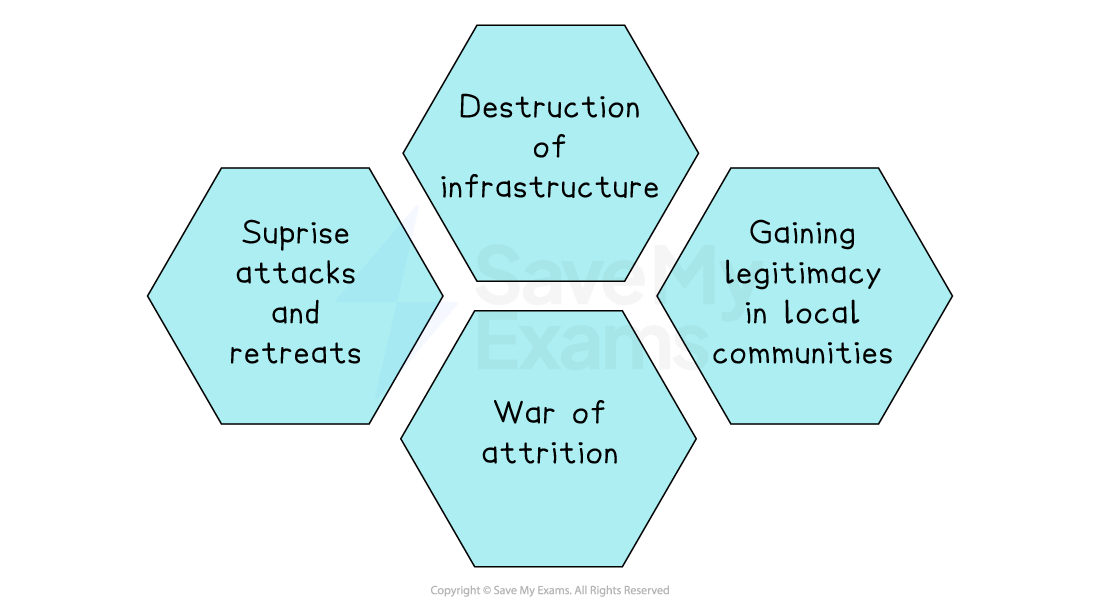
Surprise attacks and retreats
Guerrilla fighters avoid large, open battles where they would be easily defeated by a more powerful enemy
Instead, they strike quickly and unexpectedly - ambushing convoys, attacking isolated outposts, or targeting key personnel - before withdrawing rapidly into terrain they know well, such as forests, mountains or urban areas
This hit-and-run approach allows a smaller, less well-equipped force to cause significant damage while minimising its own losses
Destruction of infrastructure
Guerrilla groups deliberately target symbols and tools of state power, such as bridges, roads, communication networks and police stations
This serves two purposes
It weakens the enemy's ability to move troops and supplies
It demonstrates that the government cannot protect its own territory - undermining its authority and credibility in the eyes of the population
War of attrition
Rather than seeking a decisive military victory, guerrilla warfare is designed to wear the enemy down over time
By keeping attacks unpredictable and spread out over months or years, guerrilla fighters exhaust the enemy's resources, morale and public support
The goal is not to win every battle, but to make the cost of continuing the conflict too high for the opposing side
Gaining legitimacy in local communities
Guerrilla movements depend on the support of local people to survive
Without a permanent base, they rely on communities to provide food, shelter, intelligence and new recruits
To secure this support, they often present themselves as protectors of local interests - against a corrupt government or foreign occupier
This social legitimacy allows them to remain hidden from authorities and continue operating even when under pressure
Guerrilla warfare and legitimacy
Global norms surrounding sovereignty argue that the government of the state is the only actor able to use force legitimately
For many the use of violence to achieve political change is never acceptable and guerrilla warfare is never seen as a legitimate
Others may argue that it is legitimate when trying to end well-armed oppressive government
Terrorism
Terrorism is the use of violence or threats of violence against civilians or governments by non-state groups to create fear and achieve political,
ideological or religious goals
Terrorists want to inflict terror on state government representatives and ordinary people
They often use guerrilla tactics
Some argue that the terrorism label is sometimes applied unfairly to groups trying to bring about necessary change
The aims of terrorism
To disrupt, demoralise and create fear in order to defeat a more powerful opponent
To gain attention with large-scale violent events such as assassinations and bombings to further a political viewpoint
To overthrow the government, advance a particular religion or promote a particular political ideology
The aims of terrorism are often vague or unrealistic - this is one reason it is rarely successful in achieving its aims
Terrorism and legitimacy
Terrorism lacks legitimacy with most actors and stakeholders, particularly as innocent people are often the targets
Because of this, ordinary people are not usually persuaded to change their position on political issues because of terrorism
This general lack of legitimacy links to a lack of success
Many believe acts of terrorism are simply demonstrations of violence and power which bring some sense of importance to those who practise it
Some do, however, believe that the use of violence is sometimes the only way to draw attention to a particular issue
However, the motives of these people and their mental stability is often questioned
Case Study
Magdeburg Christmas Market Attack, Germany (December 2024)
On 20 December 2024, a man drove an SUV into a crowded Christmas market in Magdeburg, Germany, killing 6 people and injuring around 300 others
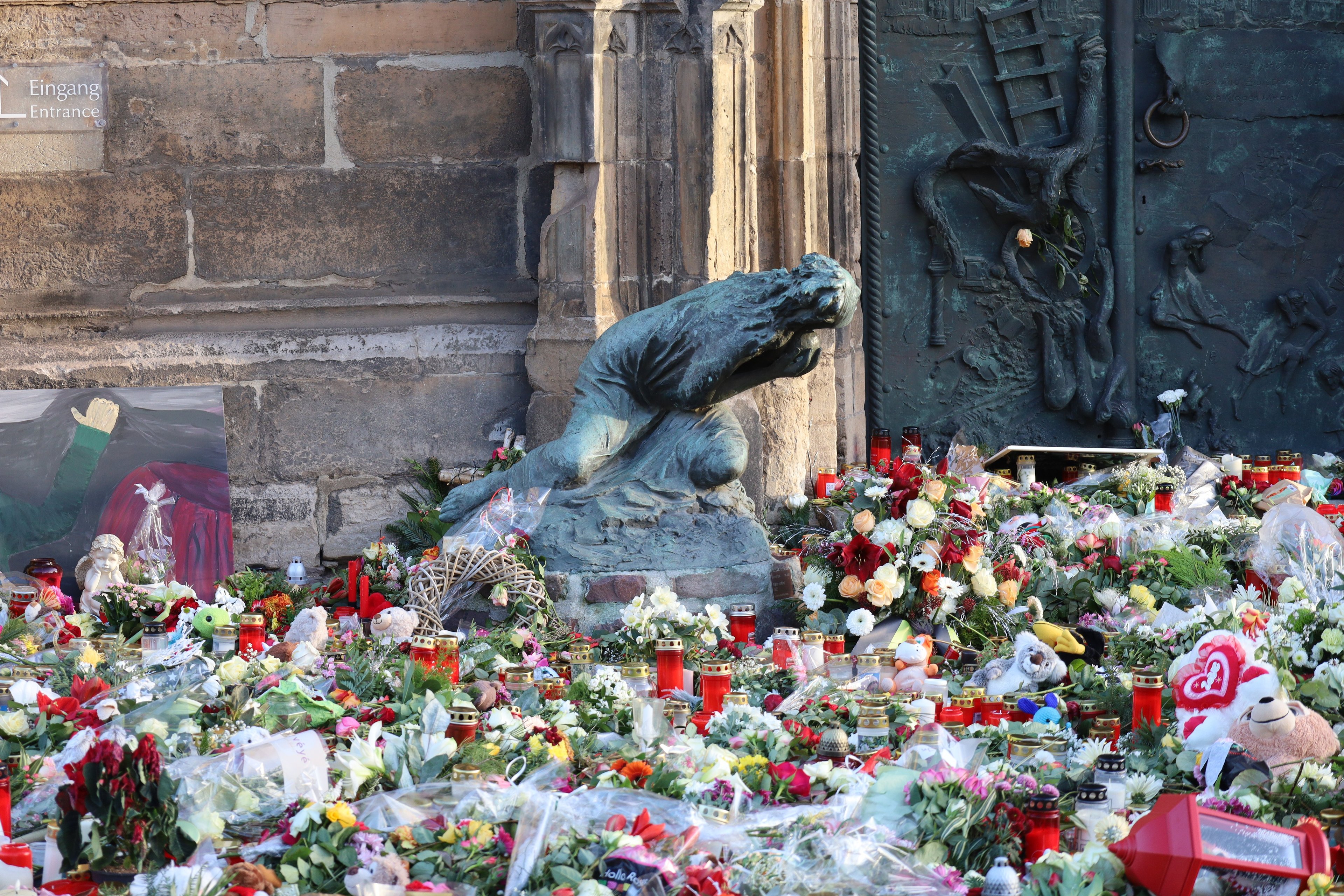
By Roy Zuo - Own work, CC BY-SA 4.0
The attacker, Taleb Al-Abdulmohsen, was a Saudi-born psychiatrist who had lived in Germany for many years and was arrested at the scene
The attacker's ideology
Al-Abdulmohsen's motives were complex and ideologically incoherent
He held far-right, anti-Islam views - unusual given his Saudi background - and had expressed support for AfD (Germany's far-right party)
He claimed to be frustrated at Germany's treatment of Saudi dissidents seeking asylum
His communications prior to the attack suggested deep personal grievances alongside political ideology, and his mental stability was widely questioned
Terrorism and legitimacy
The attack was universally condemned
Targeting a crowded civilian space - a Christmas market - ensured maximum fear and casualties among ordinary people, with no realistic political objective
This reflects a key feature of terrorism
Aims were vague and unlikely to produce any meaningful outcome
This lent the attack the appearance of violence for its own sake rather than a coherent political strategy
Debates around the terrorism label
Authorities and commentators debated whether to classify the attack as terrorism or as the act of a mentally unstable lone wolf
This distinction matters
The terrorism label implies political intent and organisation, while the lone wolf framing emphasises individual pathology
Many argued both factors were present - a reminder that the boundaries of terrorism are often contested

Unlock more, it's free!
Join the 100,000+ Students that ❤️ Save My Exams
the (exam) results speak for themselves:

Was this revision note helpful?