Long-term Effects of Exercise (OCR GCSE Physical Education (PE)): Revision Note
Exam code: J587

Long-term (training) effects of exercise
Exercise is considered long-term when participants sustain regular exercise for months or even years
Taking part in regular exercise or training can lead to gradual, but significant adaptations of the body systems that are used or trained
This has the effect of increasing performance in that type of exercise or sport and can greatly improve the quality of life
There are many beneficial effects of long-term exercise on the body. These include:
Increased bone density
this means the bones are stronger which decreases the risk of injury and protection against osteoporosis
Hypertrophy of muscle & increased muscular strength
anaerobic exercises such as weight lifting can increase fast-twitch fibres resulting in an increase in muscle strength and power
Improvement in muscle endurance and resistance to fatigue
slow-twitch muscle fibres become more efficient or larger (hypertrophy) leads to increased energy production meaning that the muscles can work at a higher intensity for a longer period of time
as the body adapts, it is able to work at higher intensity for longer and improve its ability to withstand lactic acid
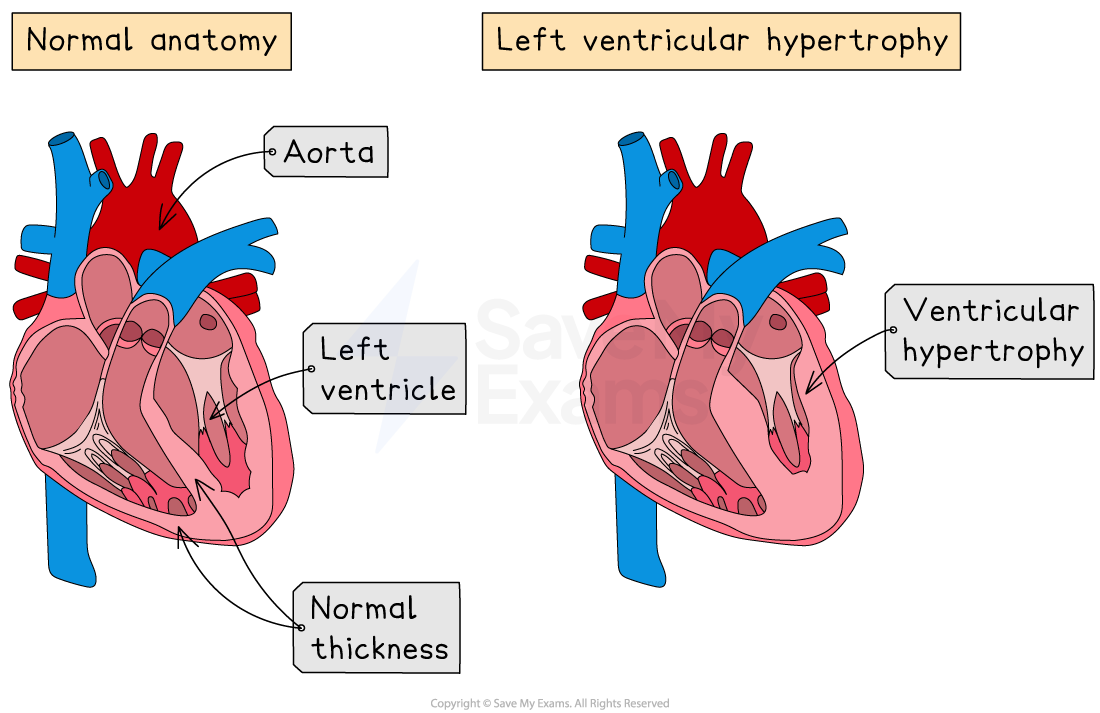
Increase in heart size
the heart is a muscle so when trained regularly it becomes bigger and stronger known as cardiac hypertrophy
the ventricle wall gets larger or thickens as a result of exercise
Decreased resting heart rate and increased resting stroke volume
as the muscle wall of the left ventricle increases in size it can eject more blood during each contraction delivering sufficient oxygen in fewer beats and with greater efficiency
bradycardia = resting HR below 60bpm
Increased cardiac output
During exercise increased stroke volume (SV) leads to an increased cardiac output and blood flow to the working muscles to deliver oxygen and remove carbon dioxide
Increased rate of recovery
Increased cardiac output (Q) means waste product such as lactic acid are removed more quickly leading to a quicker recovery
This means that the performer is ready to train again more quickly
Capillarisation
this is the process where new capillaries are formed
there is an increase in the number of capillaries surrounding the alveoli and muscles which facilitates more efficient gas exchange
Aerobic capacity
Improvement in cardiovascular endurance - this comes from slower aerobic exercises, such as swimming
Better aerobic capacity increases the intensity and duration of performance without fatigue
Respiratory muscles
increased strength of the respiratory muscles (intercostals and diaphragm)
results in stronger force of contraction leading to more efficient mechanics of breathing
Increased tidal volume (TV) and minute ventilation (VE) during exercise
this increases the volume of oxygen diffusing into the bloodstream and removal of waste products
Worked Example
Ahmed plays basketball and has tested his cardiovascular fitness in each month of training over a one year period. His results are shown in the Figure 2 below
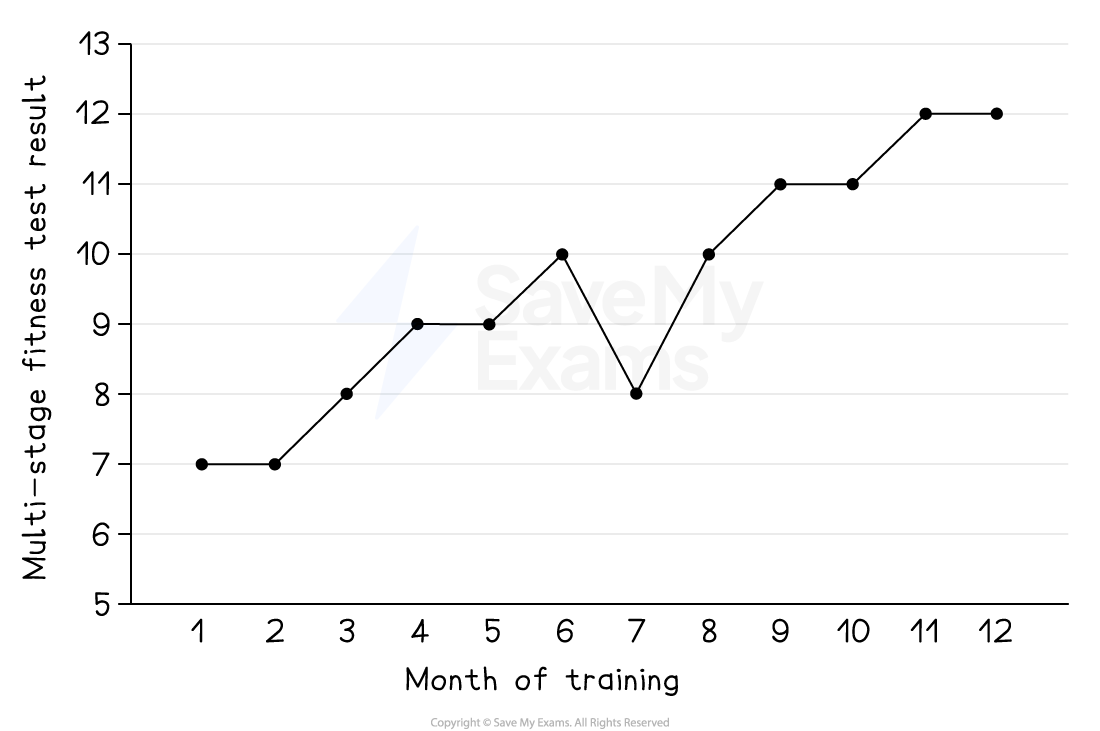
Discuss how the long term effects of exercise on cardiovascular endurance and stamina could be beneficial to Ahmed
Increase in endurance means that Ahmed is able to perform for a whole match without tiring
Stronger respiratory muscles help Ahmed to deliver more oxygen to the working muscles
A greater resistance to fatigue so Ahmed can play for longer or play harder
Increased rate of removal of lactic acid means that Ahmed can play harder for longer.
Hypertrophy of the heart means that Ahmed may be able to play basketball for more years and reduce his risk of related diseases
Give one reason why month 7 may have been lower than expected
This could be due to reversibility if he stopped training regularly each week
Ahmed could have been having an off day and wasn't feeling motivated for the test
He may have been suffering from illness, or carrying an injury
The test may have been taken too soon after his basketball match, so there was insufficient recovery time which would impact his result
Examiner Tips and Tricks
Be prepared to identify the short-term and long-term effects of exercise but also to explain your answers and link them to how they help improve the performance of a sports performer.

Unlock more, it's free!
Join the 100,000+ Students that ❤️ Save My Exams
the (exam) results speak for themselves:

Was this revision note helpful?