The Components of Fitness Cont. (OCR GCSE Physical Education (PE)): Revision Note
Exam code: J587

Power, flexibility, agility, balance & co-ordination
Power
Power is the product of strength and speed (strength x speed)
It is also referred to as explosive strength
This is particularly important in events which require quick and explosive movements
For example exercises such as boxing, throwing a discus or kicking footballs can be used to develop power
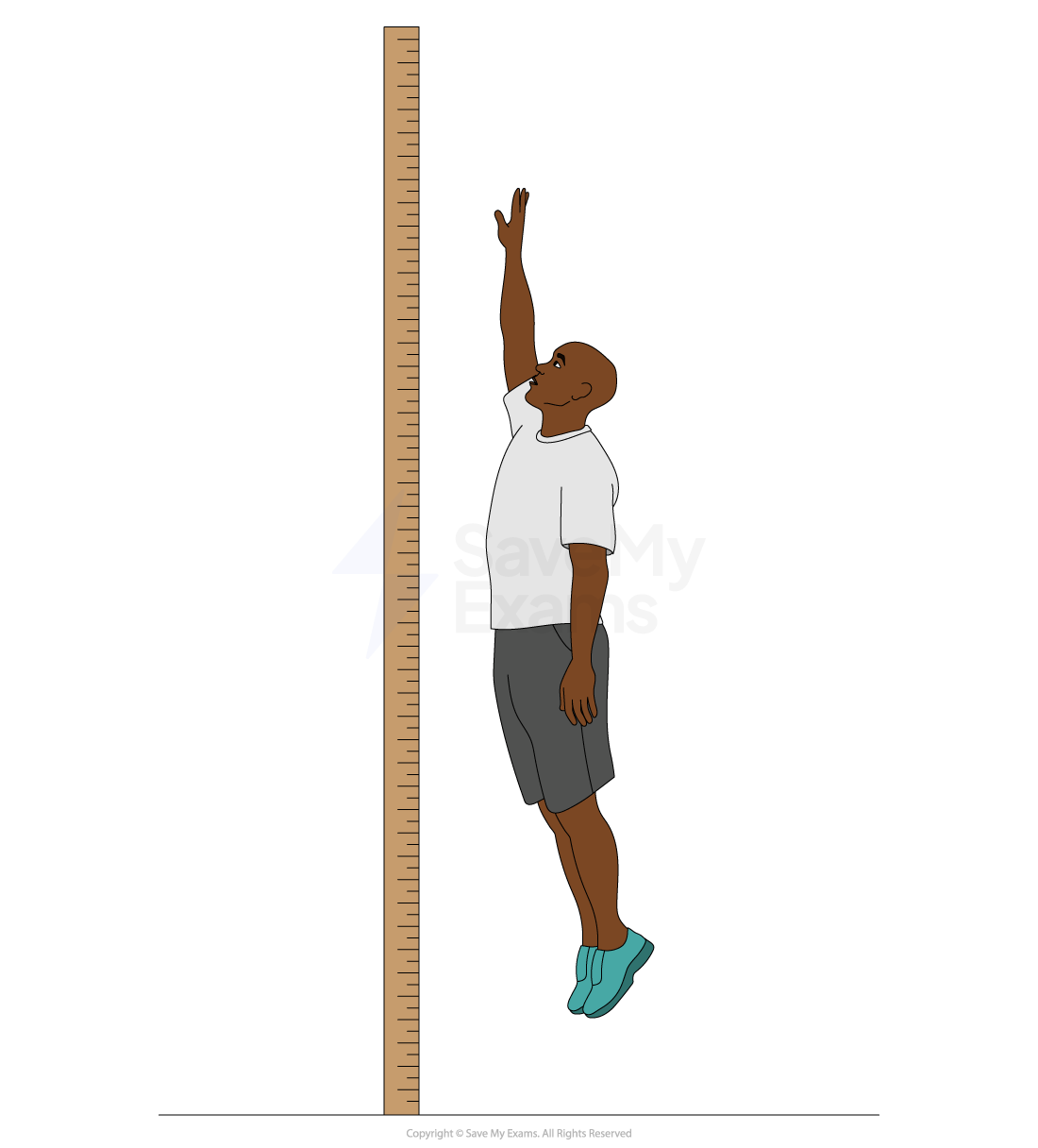
It can be measured using the vertical jump test
Vertical jump test
Commonly referred to at the 'standing jump' test
The testing protocol is as follows:
Equipment required:
A wall, a piece of chalk and a measuring tape or a Vertec
Procedure:
The performer should stand with their side against the wall
Their hand should be in a straight position above their head
They should make a mark with either the chalk on their fingertips to show the starting position on the wall or mark this on the Vertec (this is standing reach height)
When the performer is ready, they explode upward with maximal effort to jump as high as they can and create another mark on the wall when they reach their highest point
The jump height is the difference between standing height and jumping height measured in centimetres
This can then be compared against national averages
Flexibility
Flexibility is the range of motion available around a joint
Good flexibility at the joints can help increase how powerful a movement is
For example if a tennis player has increased levels of flexibility around their shoulder joint, it means they can create a greater rotation of the swing in the preparation phase of their serve
This means their serve will be more powerful and harder for their opponent to return, resulting in an advantage for the player
Additionally, the chances of sustaining injuries are reduced if an individual develops good flexibility
Stretching exercises or activities like yoga can enhance flexibility and joint mobility
It can be measured using the sit and reach test
Sit and reach test
The testing protocol is as follows:
Equipment required:
A sit and reach box on a flat, non-slip surface
Procedure:
The performer sits on the floor with their bare feet flat against the box and the legs extended straight in front, feet together
Keep the knees fully extended (not bent) throughout the test
The athlete then reaches forwards as far as possible, and pushes the slider (or ruler) along the measuring scale without bouncing or jerking
The slider records how far in centimetres they are from zero (their feet)

Agility
Agility is the ability to change direction or position of the body quickly and effectively while maintaining control and balance
Sports like football, basketball, or tennis all require good agility
It can be measured using the Illinois agility test
Illinois agility test
The testing protocol is as follows:
Equipment required:
8 cones should be used to set up the course at measured distances as shown in the diagram below (10m long × 5m wide)
A stopwatch and an assistant to time
Procedure:
The performer starts by lying face down on the floor
At the starting signal the performer jumps up and must sprint around the course, weaving around cones as quickly as possible
The time taken for the participant to complete the course and is measured in seconds

Balance
Balance is the ability to maintain centre of mass over the base of support
This could mean either when:
static - balancing whilst stationary e.g. in a headstand or holding other yoga positions
dynamic - balancing whilst moving e.g. windsurfers and skateboarders need excellent balance to continually adjust their centre of mass to stay on top of their boards as they move
Exercises such as yoga, Pilates, or specific balance drills can enhance balance
It can be measured using the Stork stand test
Stork stand test
The testing protocol is as follows:
Equipment required:
A stopwatch and an assistant
Procedure:
Start from a balanced position on two feet and place hand on hips
Place one foot on the inside of the knee of the standing leg
The participant should then raise the heel of the standing leg when stopwatch is started
Once balanced, maintain this position for as long as possible without putting the foot down or losing balance
Stop the timer when balance is lost or when the foot moves from the inside leg

Coordination
This refers to the ability to use two or more different parts of the body together, smoothly and efficiently
It relies on interaction between different parts of the body to integrate multiple movement patterns with control
Hand-eye coordination is an essential fitness component required in ball and racket sports in order to strike the ball cleanly on a consistent basis
An individual's coordination can be measured using the wall throw test
Wall throw test
The testing protocol is as follows:
Equipment:
A tennis ball, a flat wall, some marker tape, and a stopwatch
Procedure:
Mark a point or line 2 metres away from a flat wall
Start by standing facing the wall with the tennis ball in one hand (e.g. dominant hand)
Begin the test by tossing the ball against the wall using one hand and catch it in the other
Continue alternating the tossing and catching sequence between your dominant and non-dominant hands as quickly and accurately as possible for 30 seconds
Each successful catch sequence counts as 1
If the ball is dropped, the timer continues
Record the total number of successful tosses and catches completed


Unlock more, it's free!
Join the 100,000+ Students that ❤️ Save My Exams
the (exam) results speak for themselves:

Was this revision note helpful?