Structure of the Cardiovascular System (OCR GCSE Physical Education (PE)): Revision Note
Exam code: J587

Blood vessels: structure
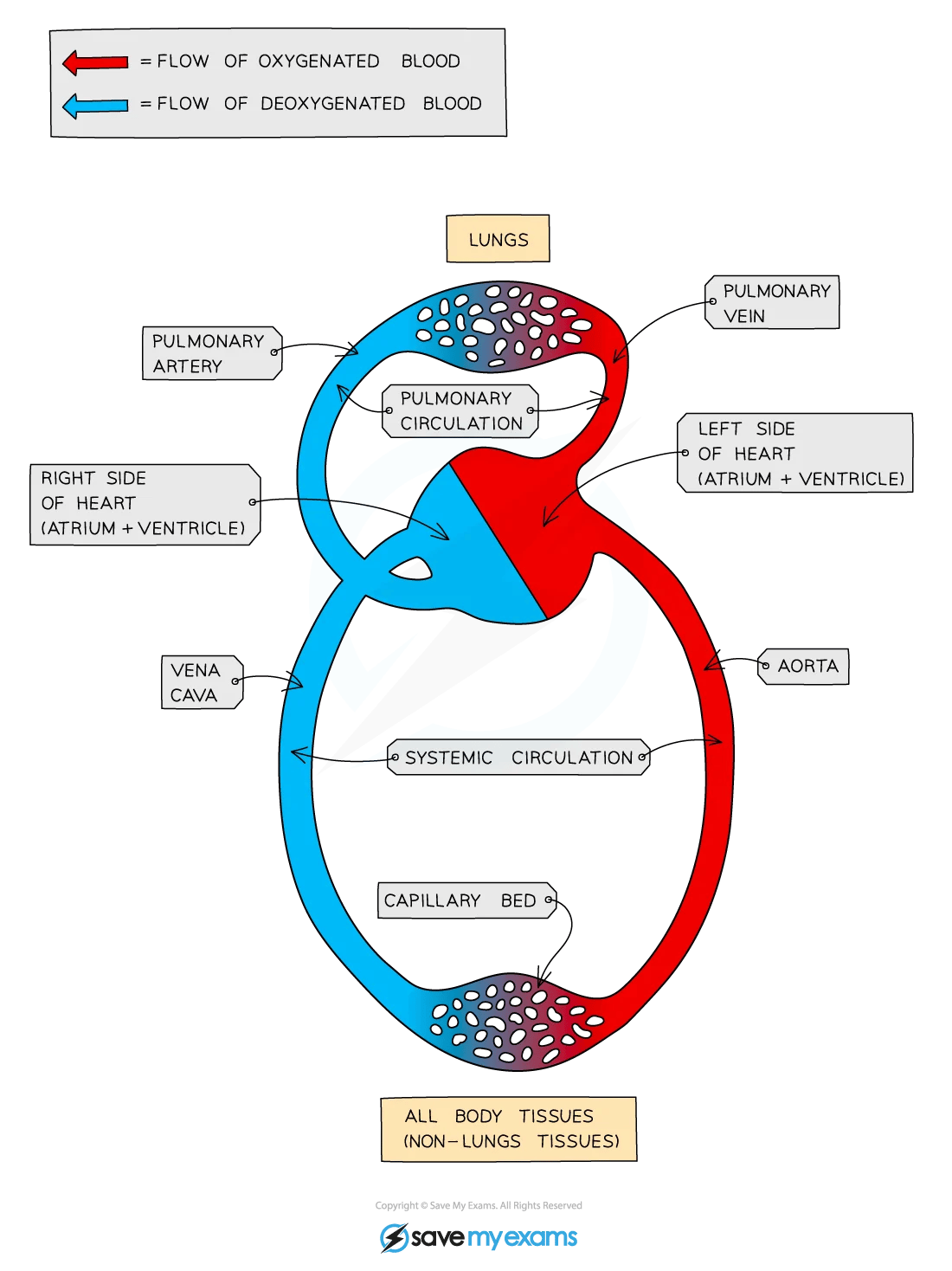
The heart is an organ that pumps blood around the body using a double circulatory system
This means it works as a dual action pump – two pumps work at the same time to pump blood in two different directions
Pulmonary circulation:
This system carries deoxygenated blood from the heart to the lungs, where it becomes oxygenated and then carries the blood back to the heart
Systemic circulation:
This system carries oxygenated blood from the heart to the respiring body tissues, where it delivers the oxygen to the cells for respiration, and then carries the deoxygenated blood back to the heart
Blood and blood vessels
Once blood leaves the heart, it is transported around the body by three different types of blood vessels
arteries
capillaries
veins
Arteries
Arteries carry blood away from the heart at high pressure
They have thick and elastic walls to withstand the high pressure of blood
A narrow lumen helps to maintain high pressure
The largest artery is the aorta which leaves the heart carries oxygenated blood to the organs and working muscles with oxygen
Capillaries
These are very small blood vessels with walls that are just one cell thick
As they are so thin this allows oxygen and nutrients to pass (diffuse) through them
Oxygen and nutrients diffuse out of capillaries to the cells
Carbon dioxide diffuses from the cells into capillaries
They have very narrow lumen
They occur in large quantities around the muscles providing a very large surface area for gas exchange
Veins
Veins carry blood towards the heart at low pressure
The walls of veins are less muscular as they do not need to withstand high blood pressure
They have a wide lumen so there is less resistance to blood flow
They contain pocket valves to prevent backflow of blood
The vena cava is the largest vein which enters the heart through the right atrium


Arteries | Veins | Capillaries | |
|---|---|---|---|
Function | Carry oxygenated blood away from the heart | Return deoxygenated blood to the heart | Exchange of nutrients and waste with surrounding tissues |
Diameter of lumen | Narrow | Wide | Very narrow |
Thickness of wall | Thick | Thin | One cell thick |
Blood pressure | High | Low | Low |
Presence of valves | No | Yes | No |

Unlock more, it's free!
Join the 100,000+ Students that ❤️ Save My Exams
the (exam) results speak for themselves:

Was this revision note helpful?