Diet & Nutrition (OCR GCSE Physical Education (PE)): Revision Note
Exam code: J587

Balanced diet
A balanced diet involves eating the right type and the right amount of nutrients that your body requires, consuming only as many calories as your body burns each day
There are several reasons why a balanced diet is important:
Carbohydrates and sugary foods provide glucose for respiration, increasing the energy available for sporting activities
Different nutrients are required for the basic metabolism (chemical reactions) in all cells - these include things like growth and water balance in cells
Consuming too much can create unused, or surplus, energy which is stored as fat. Over time and in excess this can lead to obesity
To make sure that we get the right vitamins and minerals to prevent diseases such as rickets or scurvy
A balanced diet should contain the ‘seven classes of food’ which are:
Carbohydrates
Proteins
Fats
Vitamins
Minerals
Fibre
Water (hydration)
The role of carbohydrates, fat, protein and vitamins or minerals
Every person has different requirements for their diet depending on factors such as age, gender, height and activity levels
A typical balanced diet contains roughly:
55–60% carbohydrates
25–30% fat
15–20% protein
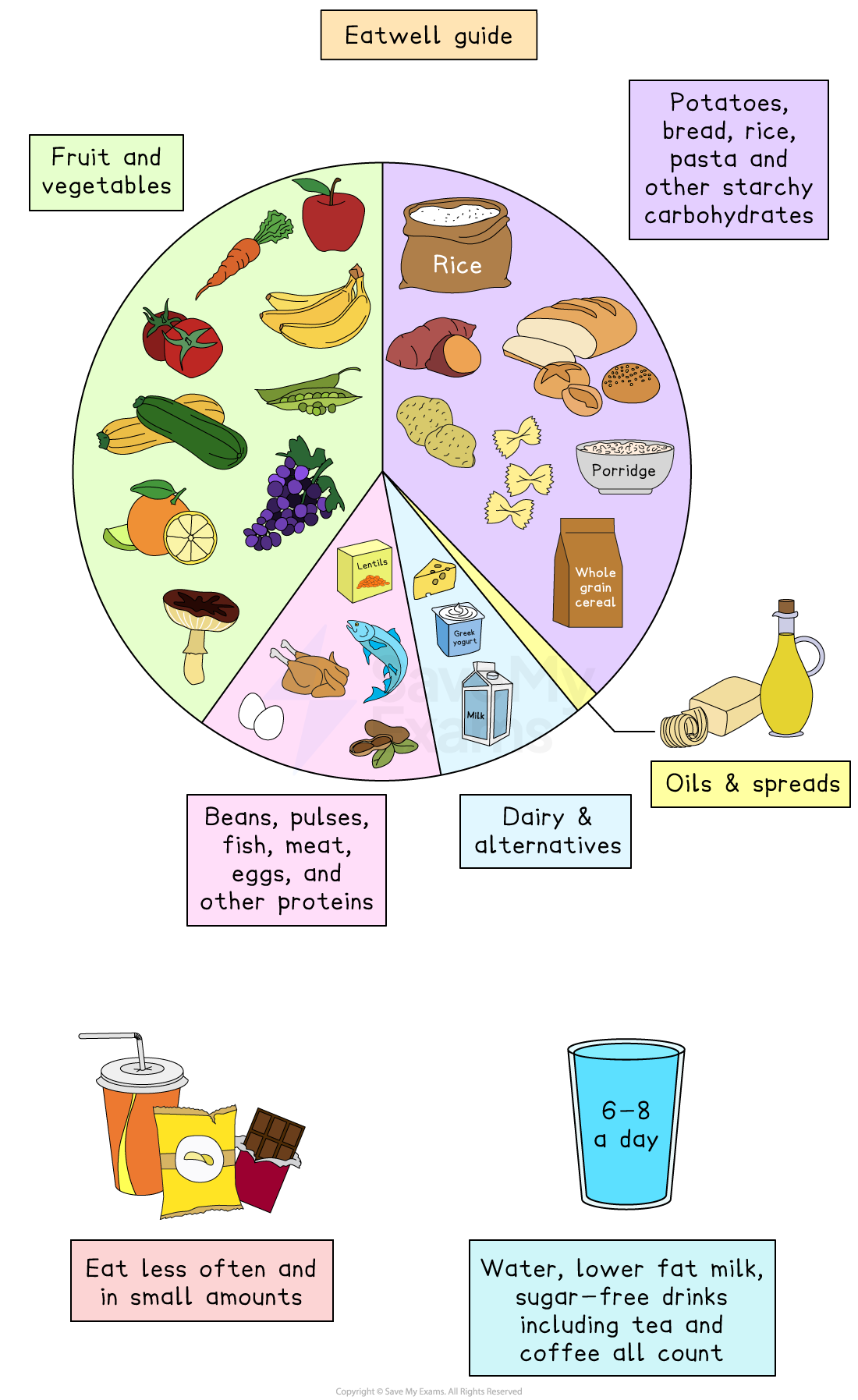
This can come from eating a variety of fruits and vegetables; bread, rice and pasta; meat, fish and eggs; and milk and dairy products.
Water is also an important part of a healthy diet
Food nutrient | Function in the body | Examples |
Carbohydrates | The main and preferred energy source for all types of exercise, of all intensities
Large carbohydrates like starch breaks down slower than simple sugars such as glucose and therefore release their energy over a longer period of time | Complex: Bread, rice, potatoes, pasta, cereals
Simple: Sugar, jam, fruit juices, honey |
Protein | Required for growth and repair of muscle tissue and developing strength
Essential for the production of haemoglobin | Meat, fish, dairy, lentils, nuts, seeds |
Fats | Provides more energy than carbohydrates but only at low intensity, for example walking or jogging Protects vital organs with additional cushioning which also provides insulation and helps control heat loss
| Saturated: Meat, cheese, cream
Unsaturated: Oily fish, nuts, margarine, olive oil |
Vitamins | Help to prevent diseases (help immunity) and assist in the production of energy
Required for blood clotting and aid tissue growth and repair e.g. healthy skin and vision
| Fruit and vegetables |
Minerals | Required for bone health and energy production | Calcium: milk, canned fish, broccoli Iron: red meat, nuts Potassium: bananas, pulses, white meat |
Fibre | Needed for the digestive system to work properly and waste to be excreted effectively
Reduces cholesterol, and limits the risk of obesity, diabetes and certain cancers | Fruit, vegetables, lentils, cereals and wholemeal grains |
Water | Essential to assist chemical reactions and help carry nutrients and remove waste products from the body
Helps to regulate body temperature | Fluids and foods |

Unlock more, it's free!
Join the 100,000+ Students that ❤️ Save My Exams
the (exam) results speak for themselves:

Was this revision note helpful?