The Pathway of Blood (OCR GCSE Physical Education (PE)): Revision Note
Exam code: J587

The cardiac cycle & the pathway of blood
The cardiac cycle describes the pathway of blood through the heart and the rest of the body
Each cardiac cycle contains one cycle of both diastole and systole:
Diastole
When the chambers of the heart relax and fill with blood
Systole
When the chambers contract and eject blood from the heart
Note that during systole the left and right-hand sides of the heart contract at the same time
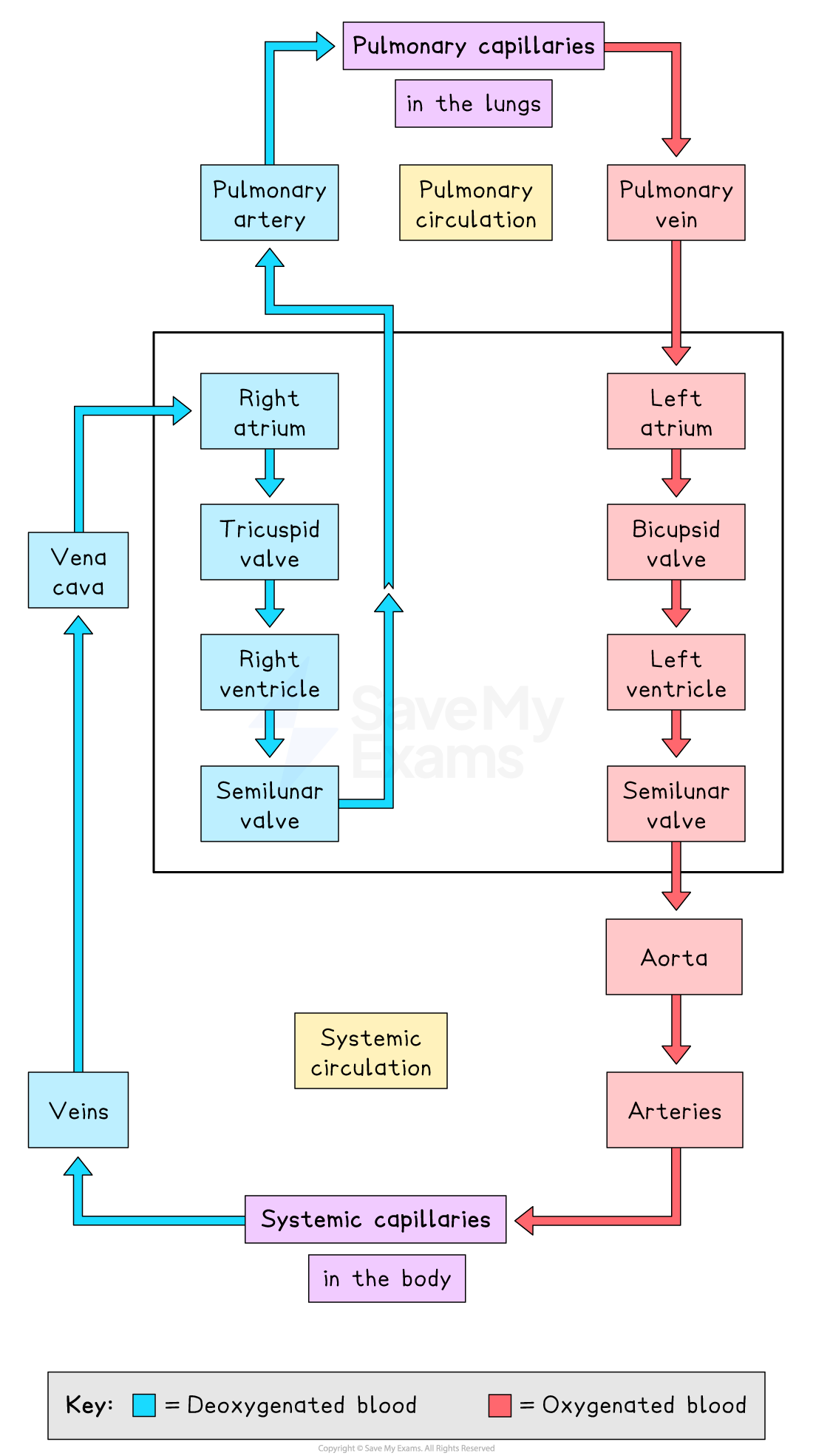
The cardiac cycle begins when deoxygenated blood flows through the vena cava and enters the right atrium
This blood has come from the body, so the oxygen has been used up by the working muscles and replaced by carbon dioxide
The right atrium contracts and the deoxygenated blood is forced through the tricuspid valve into the right ventricle
The right ventricle contracts and the blood is pushed through the semi-lunar valve into the pulmonary artery
The blood travels to the lungs and moves through the capillaries past the alveoli where gaseous exchange takes place and the blood is now oxygenated
This oxygenated blood then travels back to the heart and enters it through the pulmonary vein to the left atrium
The left atrium contracts and forces the blood through the bicuspid valve into the left ventricle
The left ventricle contracts and the blood is forced through the semi-lunar valve and out through the aorta
The walls of the left ventricle are thicker to produce a high enough pressure for the blood to travel around the whole body
The aorta delivers oxygenated blood to the body and during exercise the working muscles will use some of this oxygenated blood
Examiner Tips and Tricks
Make sure you can label a diagram of the heart including the four chambers, four main vessels and four valves. You must also be able to describe the route of blood through the heart to the body and lungs.

Unlock more, it's free!
Join the 100,000+ Students that ❤️ Save My Exams
the (exam) results speak for themselves:

Was this revision note helpful?