Levers & Movement (OCR GCSE Physical Education (PE)): Revision Note
Exam code: J587

Lever systems
Levers involve a rigid bar (bone) that pivots or rotates about a fulcrum (joint) with a load applied
Levers have three key components:
A fulcrum or pivot around which a force is exerted
In the body, this is a joint
A load being moved
In the body this relates to bodyweight and any additional load being carried.
This can also refer to a resistance e.g. moving the resistance of the water on the blade when rowing
The effort or force required to move the load
In the body, this effort is carried out by muscles when they contract
There are three classes of lever system in the body:
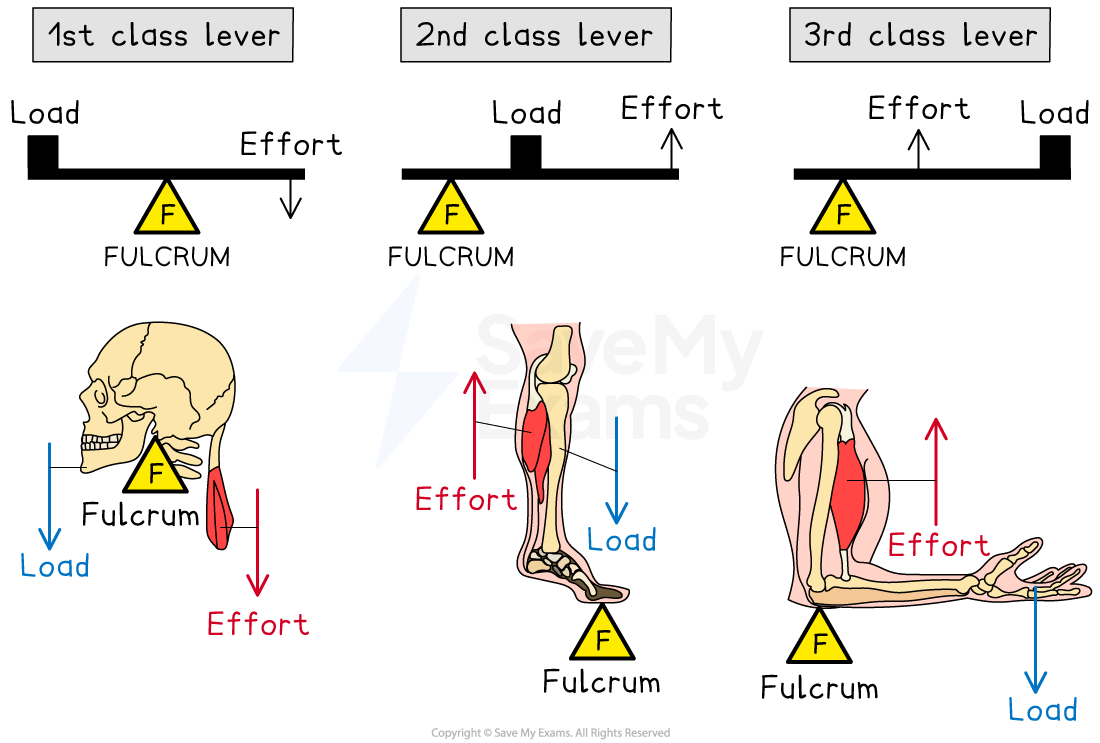
First class levers: the fulcrum is in the middle between the effort and the load
E.g. lifting the neck when heading the ball in a football match. The fulcrum is the joint between the head and neck, the neck muscles provide the effort, and the weight of the head is the load
Second class levers: the load is in the middle between the fulcrum and the effort
E.g. plantar flexion at the ankle to leave the take-off board with explosive power at long jump event. The ball of the foot is the fulcrum, the gastrocnemius muscle provides the effort and the load is the body weight of the person
Third class levers: the effort is in the middle between the load and the fulcrum
E.g. flexion of the lower arm during a bicep curl. The elbow joint is the fulcrum, the load is the hand holding the dumbbell (weight) and the effort is being applied by the biceps
Classes of lever diagram
Examiner Tips and Tricks
FLE, 123 is a useful mnemonic to remember the lever classes
A class 1 has the Fulcrum in the middle
A class 2 has the Load in the middle
A class 3 has the Effort in the middle
You need to know an example of each lever type in the human body

Unlock more, it's free!
Join the 100,000+ Students that ❤️ Save My Exams
the (exam) results speak for themselves:

Was this revision note helpful?