Guidance in Sport (OCR GCSE Physical Education (PE)): Revision Note
Exam code: J587

Types of guidance
When learning or developing skills, guidance is essential and it can come in various forms:
Visual
Verbal
Manual
Mechanical
Coaches need to identify the most appropriate type of guidance chosen in any given situation as it will depend on the experience level of the performer; beginners will need different guidance to elite performers
Visual guidance
This is when a performer can see the skill being performed or practised, e.g.
A live demonstration
A video
An image or diagram
Observing an event
Developing a mental image often lasts longer than other forms of guidance
Valuable at all stages of learning but especially important for beginners learning new skills as it is quick and concise and given them a mental picture they can copy
Can easily be combined with other forms of guidance
Elite performers may rely less on visual guidance as they are more familiar with complex spoken terminology
Elite performers may make use of visual guidance in the form of slow-motion video, or software that breaks more complex skills down into a series of still images
Verbal guidance
Verbal guidance is spoken word, and involves a performer being told how to perform a skill by a coach or teacher
Can be used immediately whilst a sporting action is being performed
When given to beginner's verbal advice is likely to be more effective when used alongside visual guidance; this is because:
Beginners may not yet have a good grasp of sport-specific language so cannot be too technical
Beginners may not be able to visualise a skill performed effectively
Elite performers are likely to make more use of verbal guidance, and may not need it to be accompanied by visual aids as they will know what skills should look like
Manual guidance
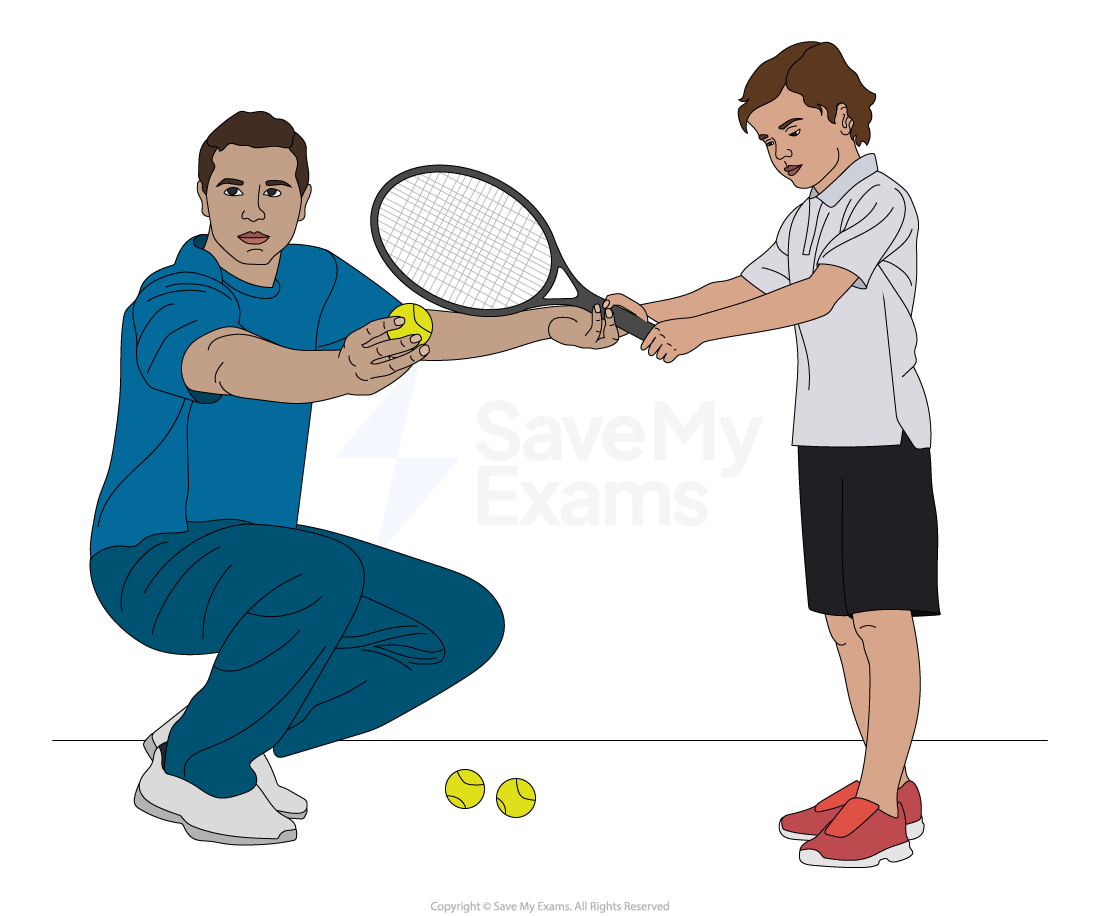
This involves a coach making physical contact with a performer by moving or supporting parts of their body when learning a skill
Useful for beginners to help them get a feel for a correct movement or position
E.g. standing behind a golfer and physically guiding their hands through a golf swing
Can reduce fear and increase safety when attempting more complex and/or dangerous skills
E.g. a coach supporting with their arms when attempting a back somersault
If can give an unrealistic feeling to the skill and when used too often performers can become over reliant on the support
Physical contact requires consent and coaches should always explain to performers when, how and why they need to provide manual guidance to avoid the performer feeling uncomfortable
Example of manual guidance diagram
Mechanical guidance
This is the use of an aid or piece of equipment to support or move a performer
It is generally used at the initial stages of learning a new skill
E.g. using a float in swimming to develop leg action and body position in front crawl or when a trampolinist is helped to somersault for the first time using a harness
As well as offering additional support and safety, it helps the learner to gain confidence
Hi-tech mechanical guidance is now more commonly used at elite levels and in modern coaching for example:
Automatic bowling machines in cricket or serving robots in tennis that can be programmed for consistent, precise, or varied ball placement to train reaction time and technique
Variable flow current pools that hold a swimmer in place, allowing coaches to focus on, and manipulate, stroke mechanics
Motorised trampoline harnesses that not only prevent falls but can be programmed to guide the gymnast through the precise rotational pathway of complex, multi-rotational, or twisting somersaults

Unlock more, it's free!
Join the 100,000+ Students that ❤️ Save My Exams
the (exam) results speak for themselves:

Was this revision note helpful?