Area Between a Curve & y-Axis (College Board AP® Calculus AB): Revision Note

Area between a curve & y-axis
How do I find an area between a curve and the y-axis?
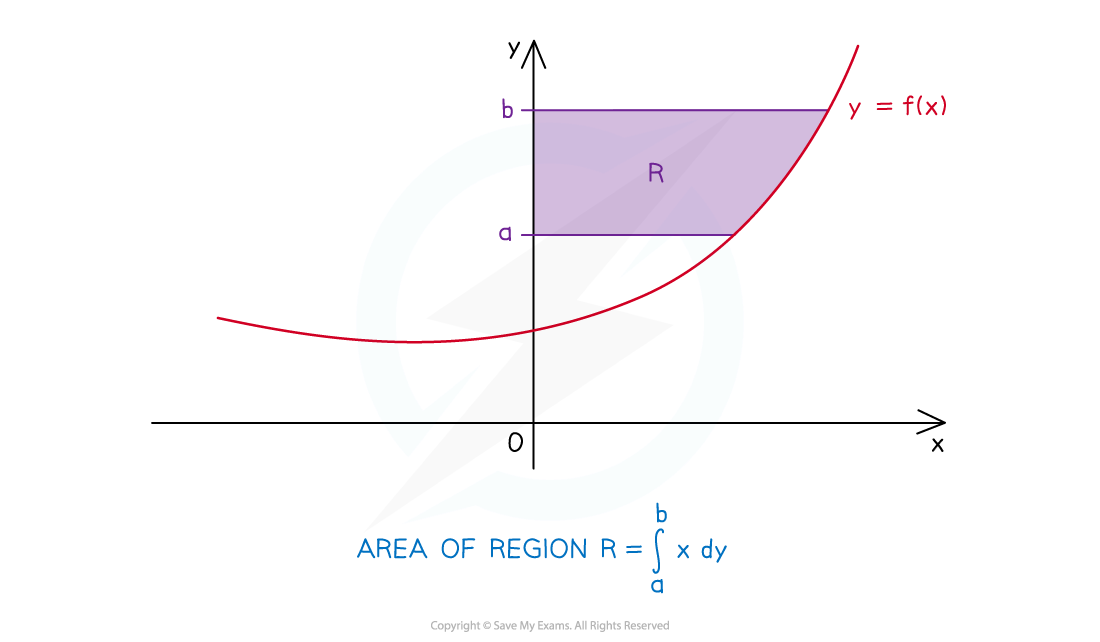
The value found when calculating a definite integral of a function with respect to between and ,
as long as between those two values
is equal to the area between the curve and the -axis between and
Notice that a function in terms of is being integrated with respect to
This means if you are given a function in terms of , i.e.
You will need to rearrange it into a function in terms of , i.e.
Examiner Tips and Tricks
In an FRQ, make sure you clearly state the integrand and the limits of integration. Make sure the variable in the differential, matches the variable in the integrand.
Worked Example
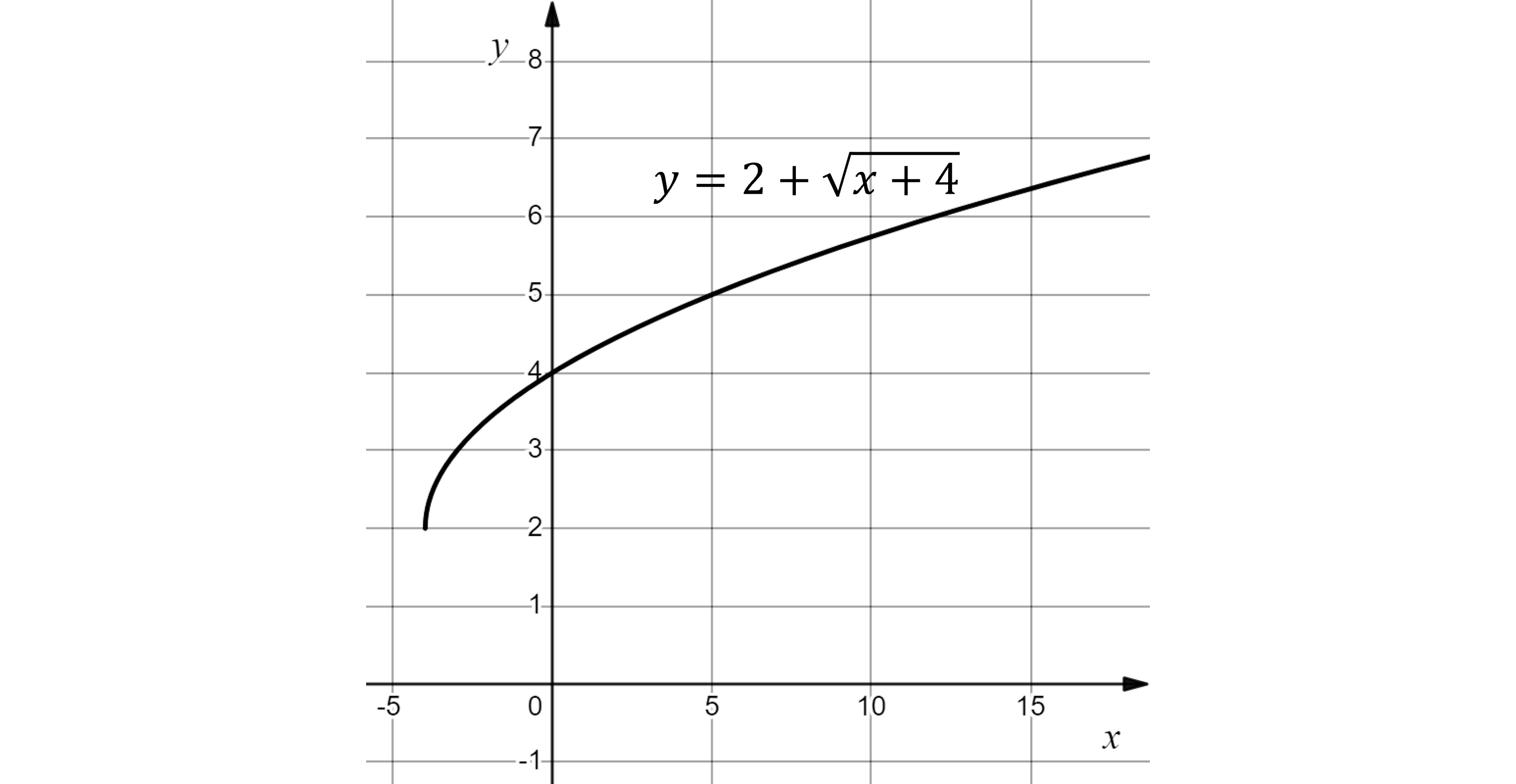
Find the area of the region enclosed by the curve with equation , the -axis, and the horizontal line . The graph of the curve is shown below.
Answer:
The curve crosses the -axis at (0, 4)
The diagram shows that the integral for the area between the curve, the -axis, and will be only positive (none of the area is to the left of the -axis)
Rearrange the equation for in terms of , to make an equation for in terms of
Integrate this with respect to between the values of 4 and 6
units squared
What if I am not told the limits of integration?
If limits of integration are not provided they will often be the -axis intercepts
Set and solve the equation to find the -axis intercepts first
Then integrate the function, written in terms of , between the two -axis intercepts
Remember that the -axis (i.e. ) may also be one of the limits
When is the area integral negative?
If the area lies to the left of the -axis the value of the definite integral will be negative
However, an area cannot be negative
The area is equal to the modulus (absolute value) of the definite integral
If the area has some parts which are to the right of the -axis, and some which are to the left of the -axis
then see the method outlined in the 'Multiple Areas' study guide
Examiner Tips and Tricks
Always check whether you need to find the value of an integral, or an area.
When areas to the left of the -axis are involved, these will be two different values.
Worked Example
Find the area of the region enclosed by the curve with equation and the -axis.
Answer:
Notice that in this question we are already given an equation for in terms of
We are not told any limits for this question, so we need to find where the -intercepts are by solving for
The -intercepts are at and , this can be used to sketch a graph
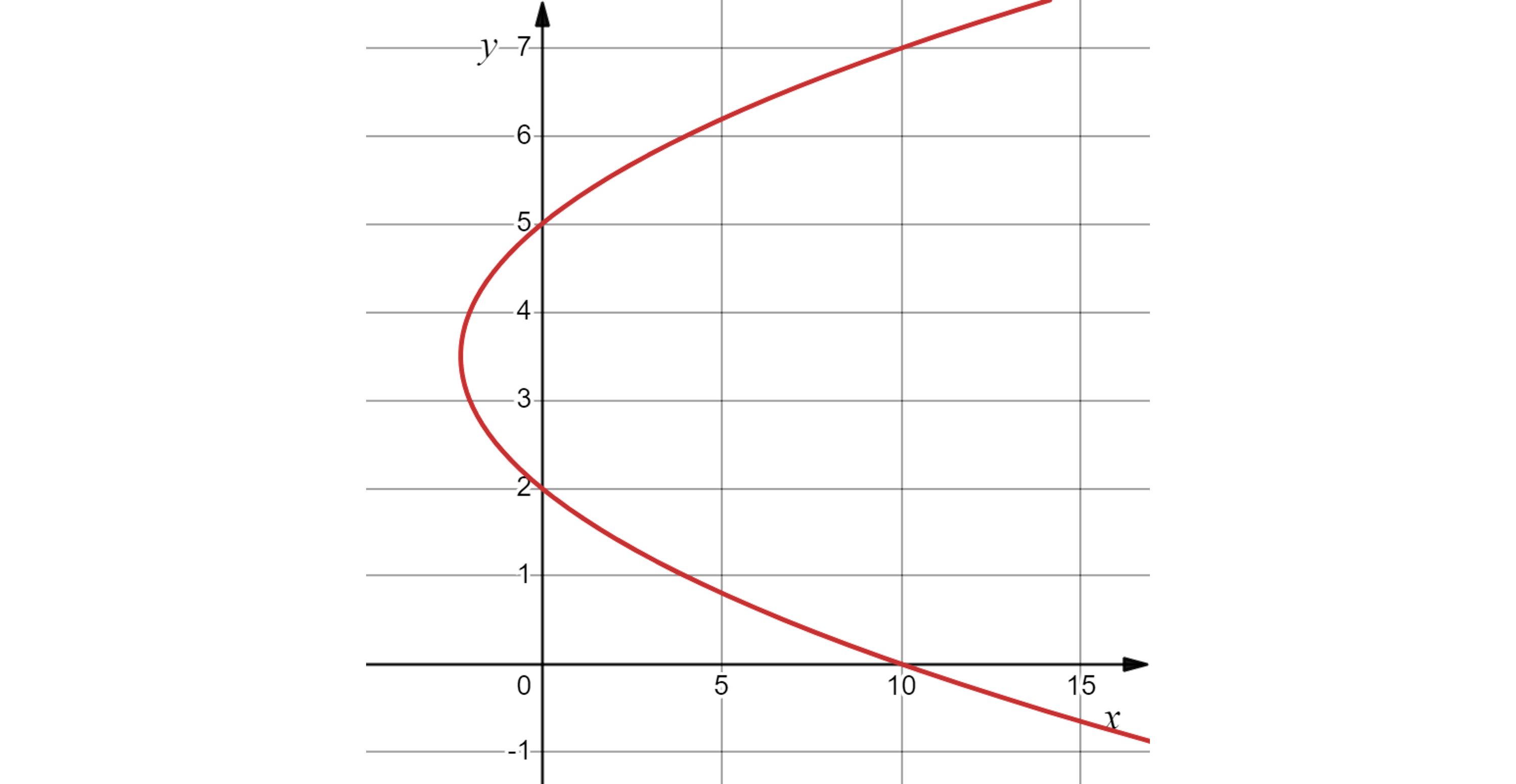
It can now be seen that the area enclosed by the curve and the -axis will be entirely on the left of the axis, and so the value of the integral will be negative
Remember to make this positive at the end, as it asks for an area
Integrate with respect to between the values of 2 and 5
The question requires an area, rather than the value of the integral, so make this positive
units squared

Unlock more, it's free!
Join the 100,000+ Students that ❤️ Save My Exams
the (exam) results speak for themselves:

Was this revision note helpful?
Build on this topic
