Graphs of Polar Functions (College Board AP® Precalculus): Study Guide

Graphs of polar functions
How is a polar function defined?
A polar function is a function of the form
The input is an angle (usually in radians)
The output is a value that represents a signed radius
Remember that 'signed radius' means can be positive or negative
The graph of a polar function consists of all the points whose polar coordinates satisfy the equation
For each input angle in the domain, the point with polar coordinates is plotted
As varies over the domain, these points trace out a curve in the polar coordinate system
E.g. consider the following table of values for the polar function
Note that when , the values go 'back to the beginning'
i.e. because and represent the same angle in a polar coordinate system
Plotting those points on a polar grid looks like this:
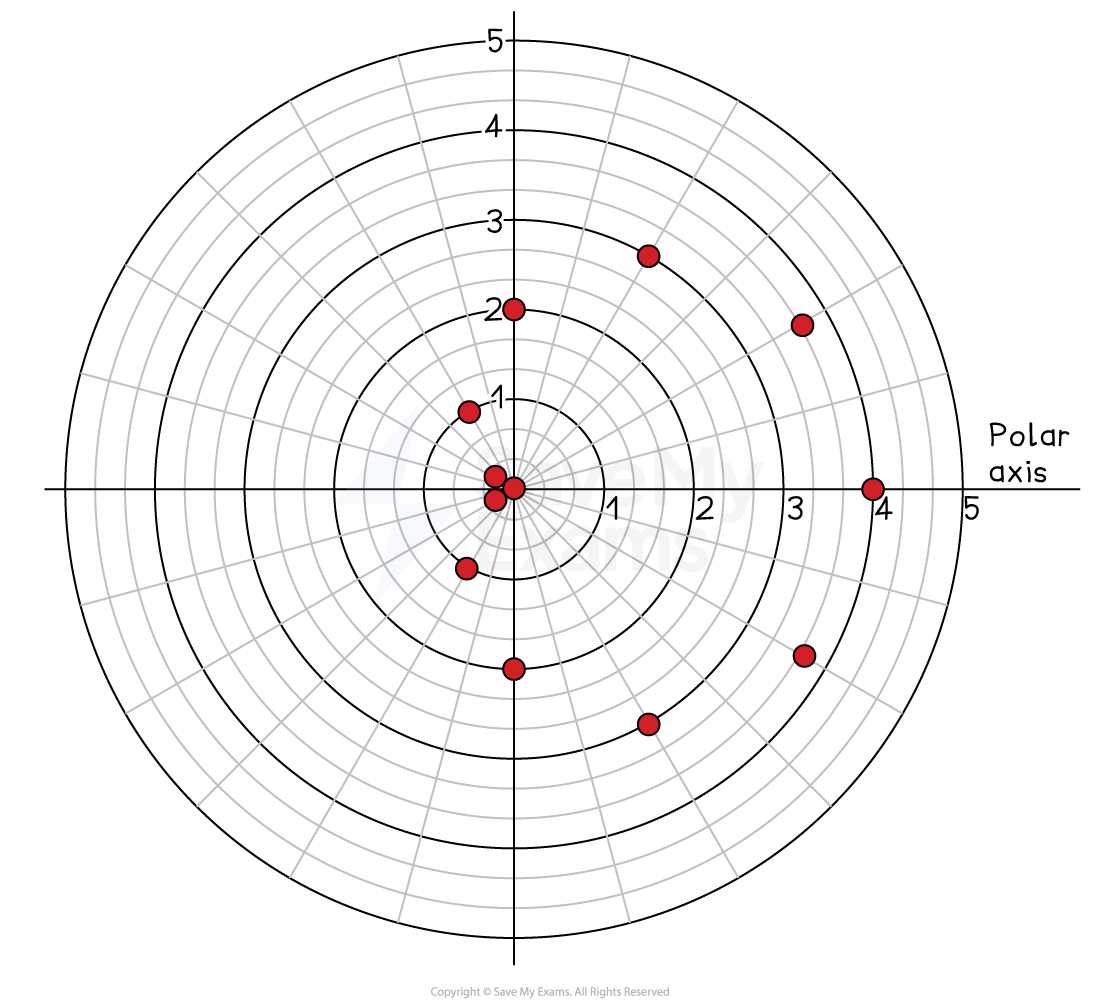
And connecting them with a smooth curve gives the graph of the polar function
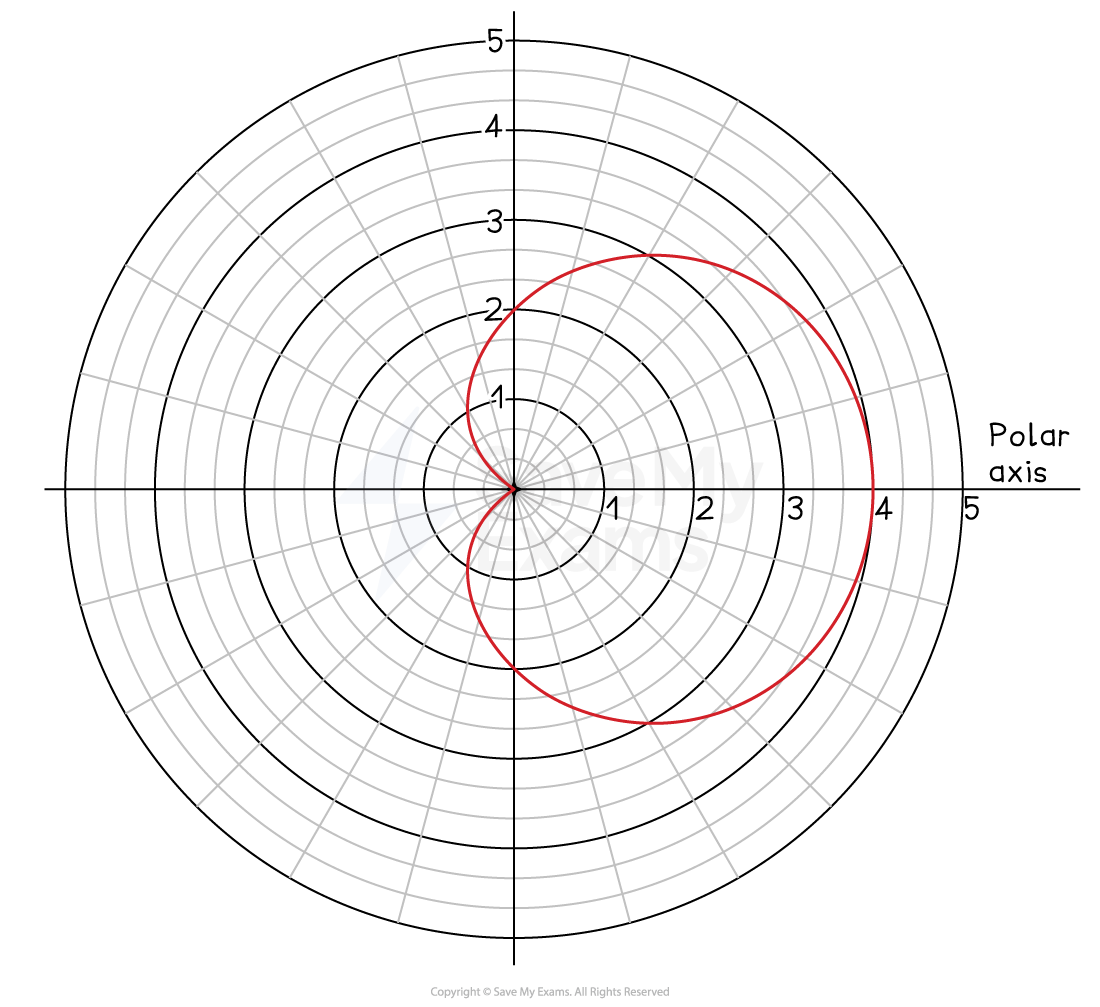
How do I interpret output values on a polar graph?
On the graph of , the behavior is different from what you are used to from a regular rectangular (Cartesian) coordinate system
Changes in the input
correspond to changes in angle measure from the positive -axis
Remember that the positive -axis is called the polar axis in the polar coordinate system
Changes in the output
correspond to changes in signed distance from the origin
along the terminal ray of that angle
Because can be negative, the output values of a polar function are signed radius values, not just distances
When , the point lies on the terminal ray of the angle
at distance from the origin
When , the point lies on the opposite ray (direction reversed)
at distance from the origin
When , the point is at the origin
This means that as changes
the point on the graph can cross through the origin whenever
and the graph can appear in a quadrant that is "opposite" to the direction of the terminal ray if becomes negative
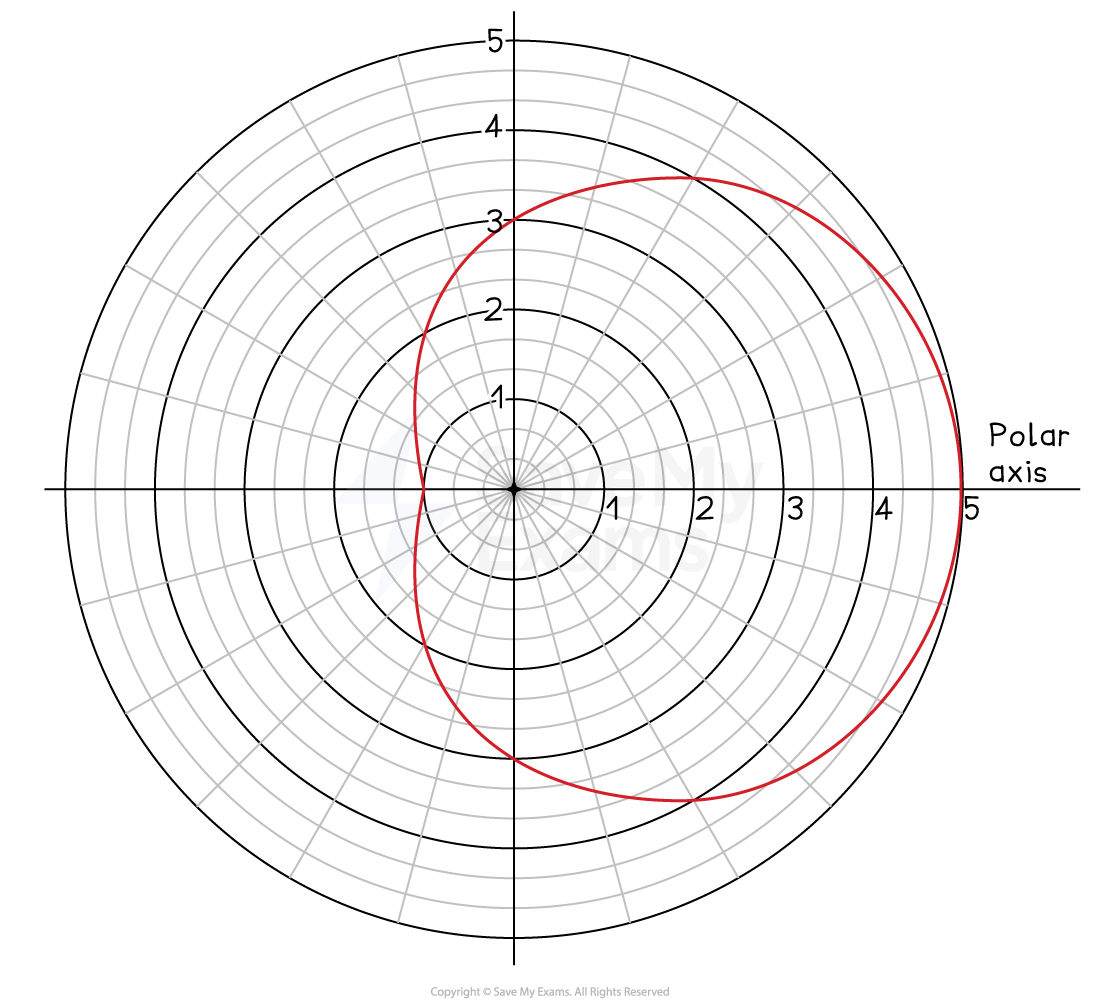
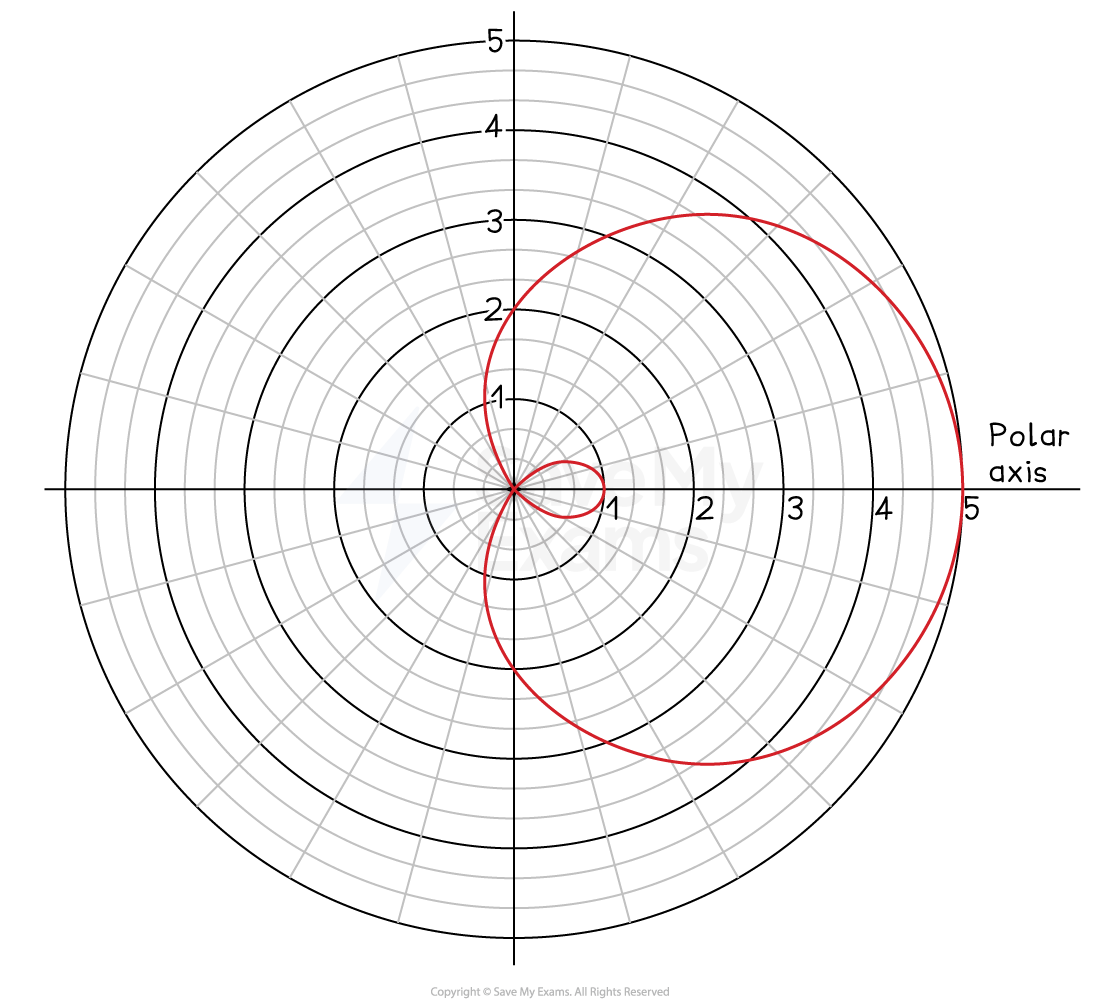
Compare the following two graphs of polar functions
In the first case, is positive for all values of
So all the points occur on their terminal rays, in the same quadrants as their terminal rays
In the second case, becomes negative when (or in the approximate range , in the second and third quadrants)
For points with those values, the points occur on the opposite rays to their terminal rays (and in the opposite quadrants to their terminal rays)
This is what creates the 'inner loop' on the graph
Examiner Tips and Tricks
On exam questions, keep an eye out for graphs showing curves with 'inner loops' like in the second graph above.
This is a clear sign that the function being graphed, , outputs negative values of for some values of
In a multiple choice question this may allow you immediately to rule out certain of the answer options
It is also possible for the output of a polar function to change while the distance of the point from the origin stays the same
E.g. if changes from to
the distance from the origin is in both cases
even though the output has changed
This is similar to how, in the rectangular coordinate system
a change in -value from to
does not change the distance from the -axis
How can the domain of a polar function be restricted?
A polar function is often given with a specified domain
e.g.
For polar functions that appear in your exam, the full graph of the function will generally be traced out over the domain
If the domain is restricted to a smaller interval
only the portion of the graph corresponding to angles in that interval remains
To identify what portion remains
Find the endpoints of the restricted domain
These give the starting and ending points of the curve
Trace out the curve between those endpoints
following the points
as increases across the interval
Pay special attention to angles
where
the curve passes through the origin at such points
and to where changes sign
the curve may jump to the opposite side of the origin at such points
The remaining portion may consist of more than one visible piece
if the curve passes through the origin within the restricted interval
Examiner Tips and Tricks
When sketching or identifying a polar graph, always make a small table of values first.
Pick several angles in the domain (e.g. )
and compute for each
Be especially careful with values of where is negative
The resulting point appears on the opposite side of the origin from the terminal ray, not on the terminal ray itself
Forgetting this is one of the most common errors in identifying polar graphs
Worked Example
A polar function is defined by . Which of the following is the graph of the polar function in the polar coordinate system for ?
(A)
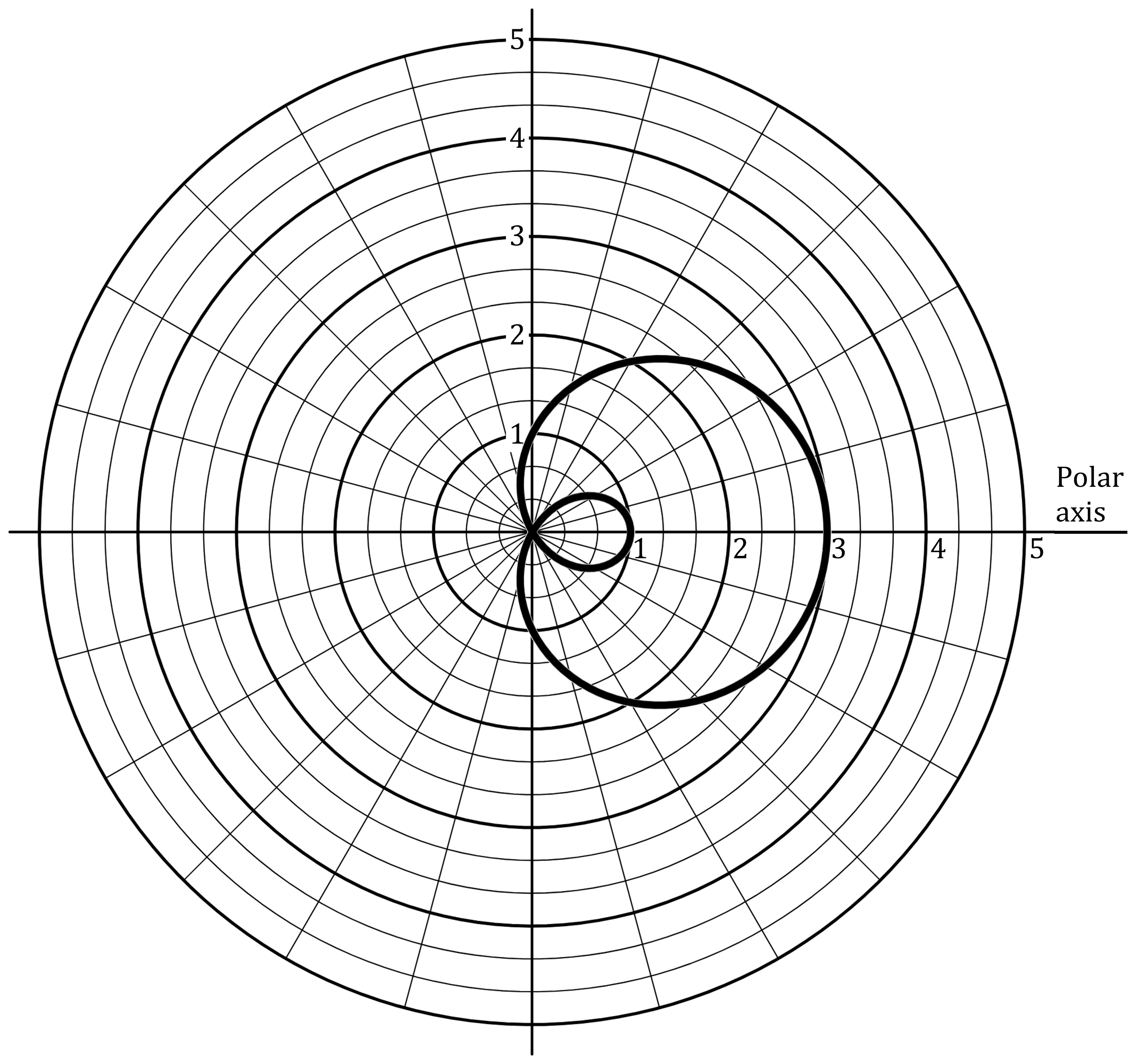
(B)
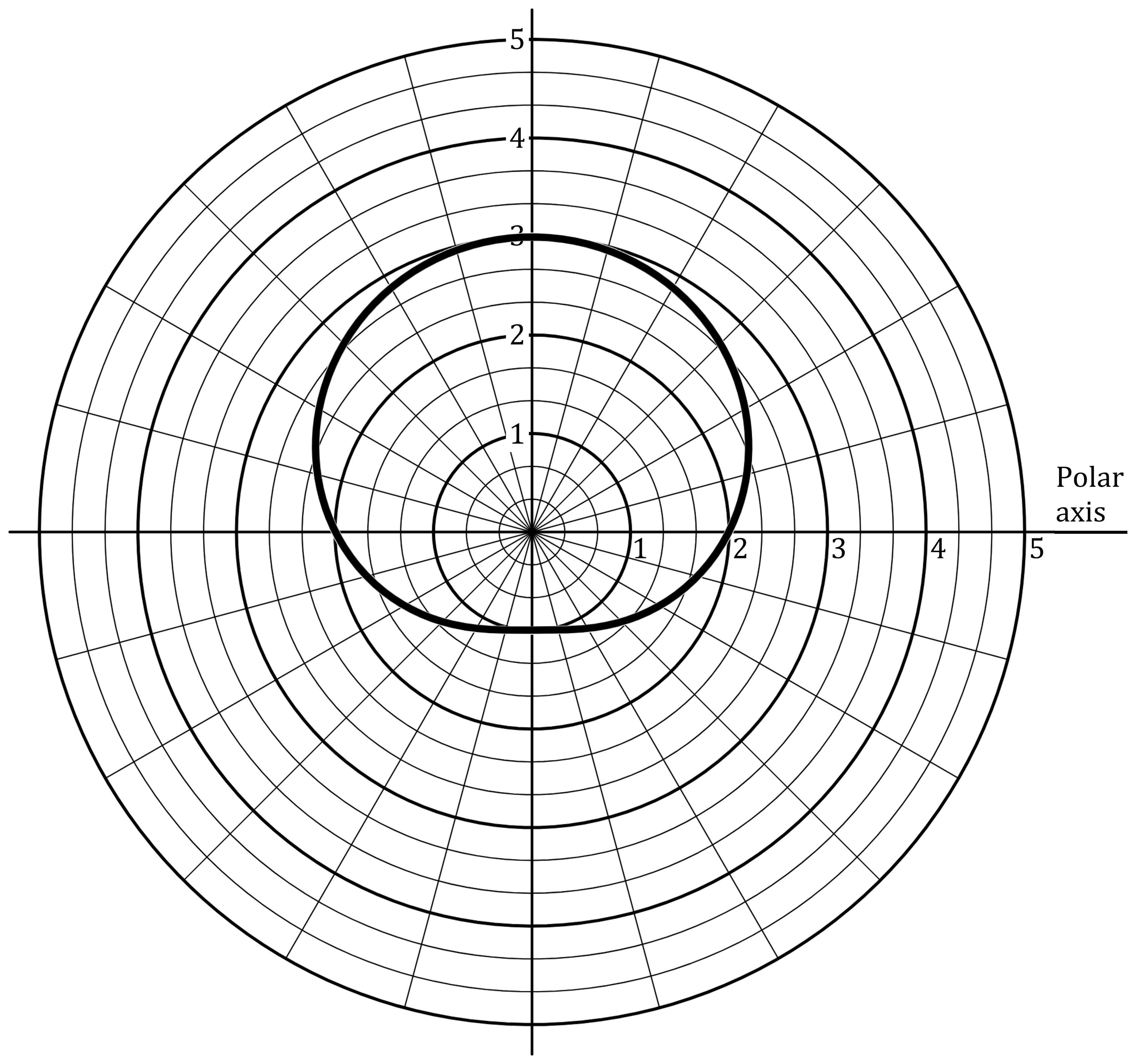
(C)
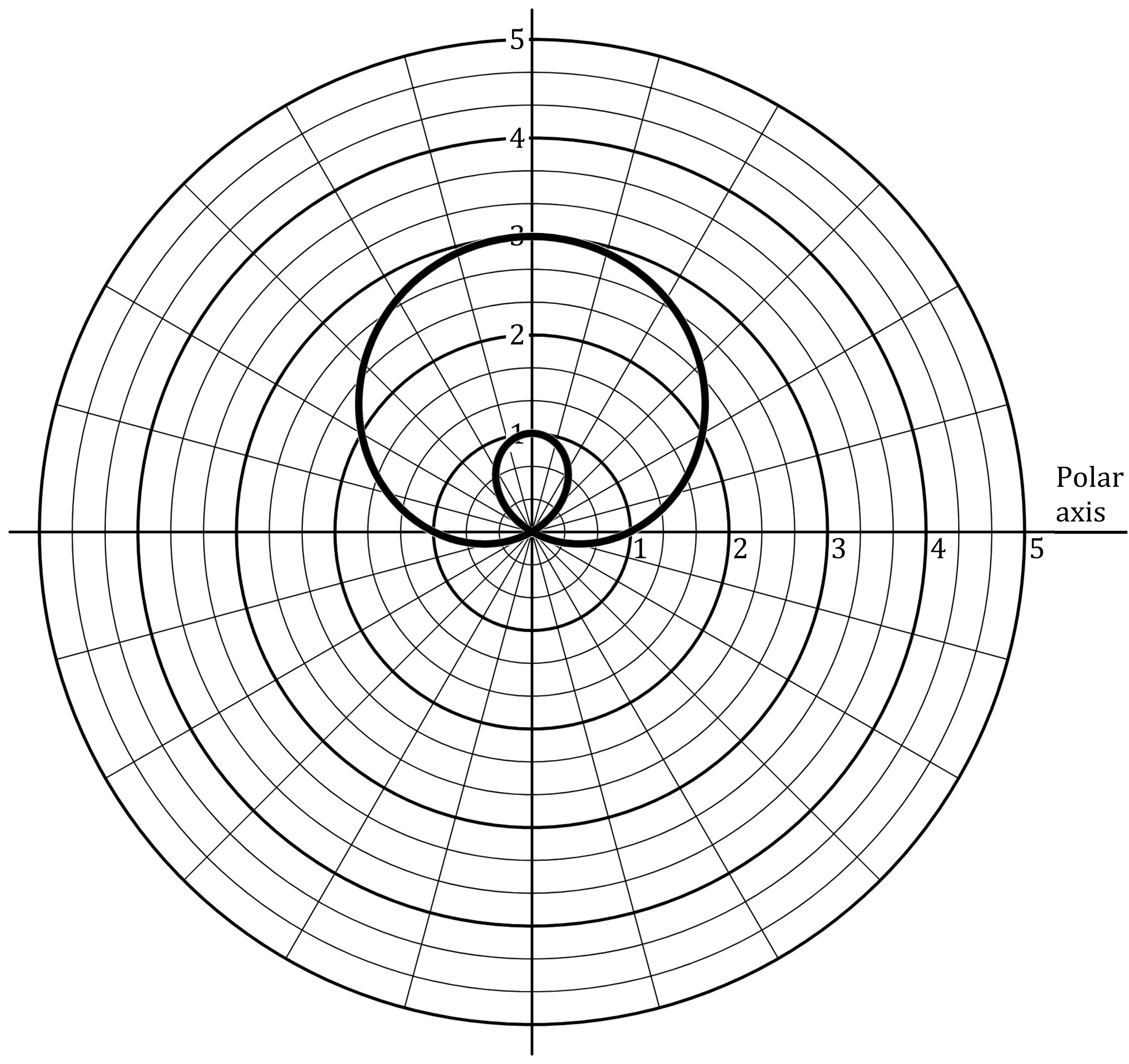
(D)
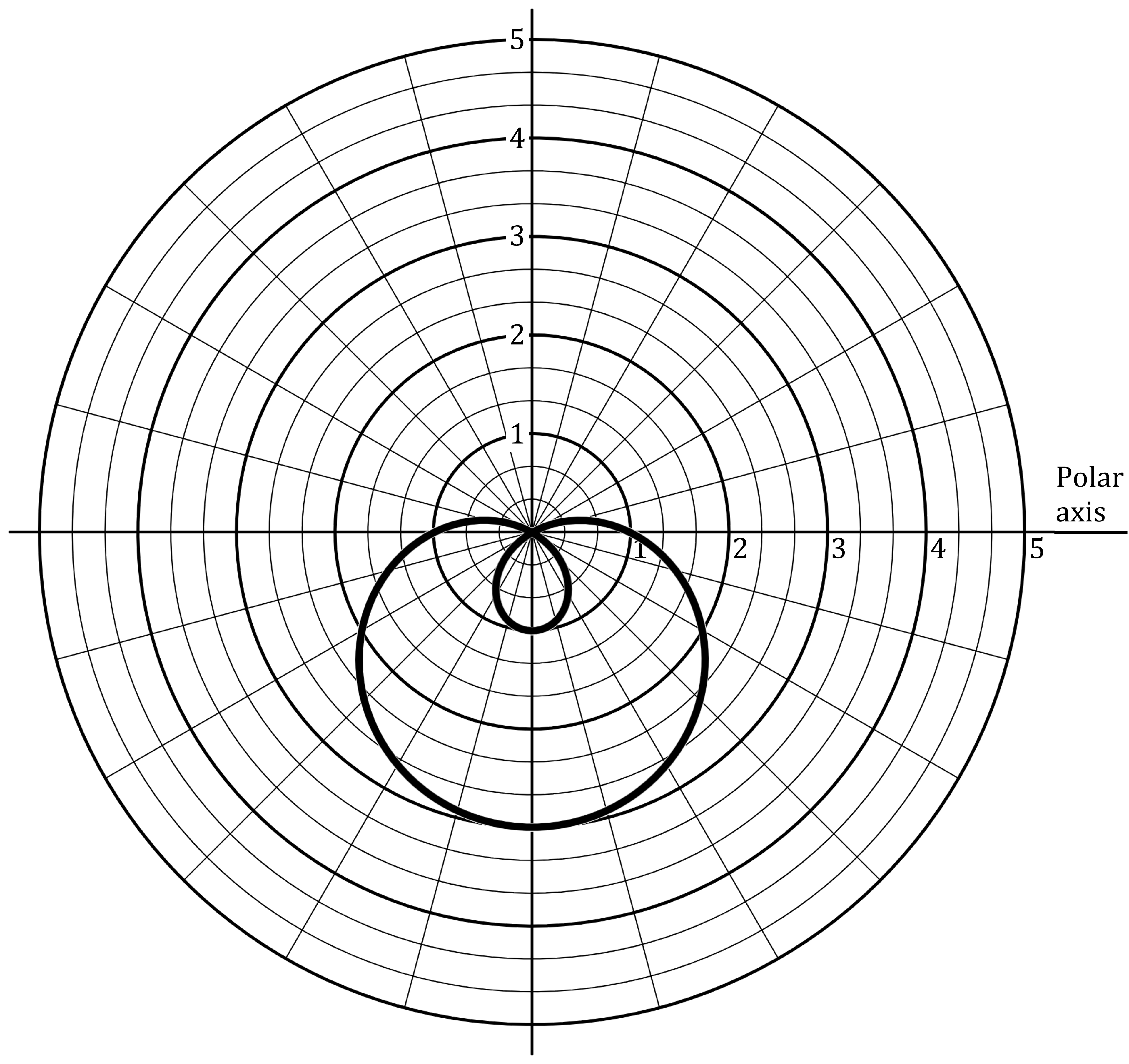
Answer:
Start examining the value of for different values of
When
This rules out option (B), which doesn't go through
Note as well that the inner loop on the option (A) graph does not make it immediately clear whether the point at on the polar axis actually corresponds to
It could also come from with a negative value
When
This rules out options (A) and (D), neither of which goes through
Option (B) goes through that point, but that option was already ruled out in the previous step
That only leaves option (C), which must be the correct answer
If in doubt you could confirm this by computing for other values of
If you did that you would find that for , which is what creates the inner loop on the graph of (C)
The correct answer is (C)
Worked Example
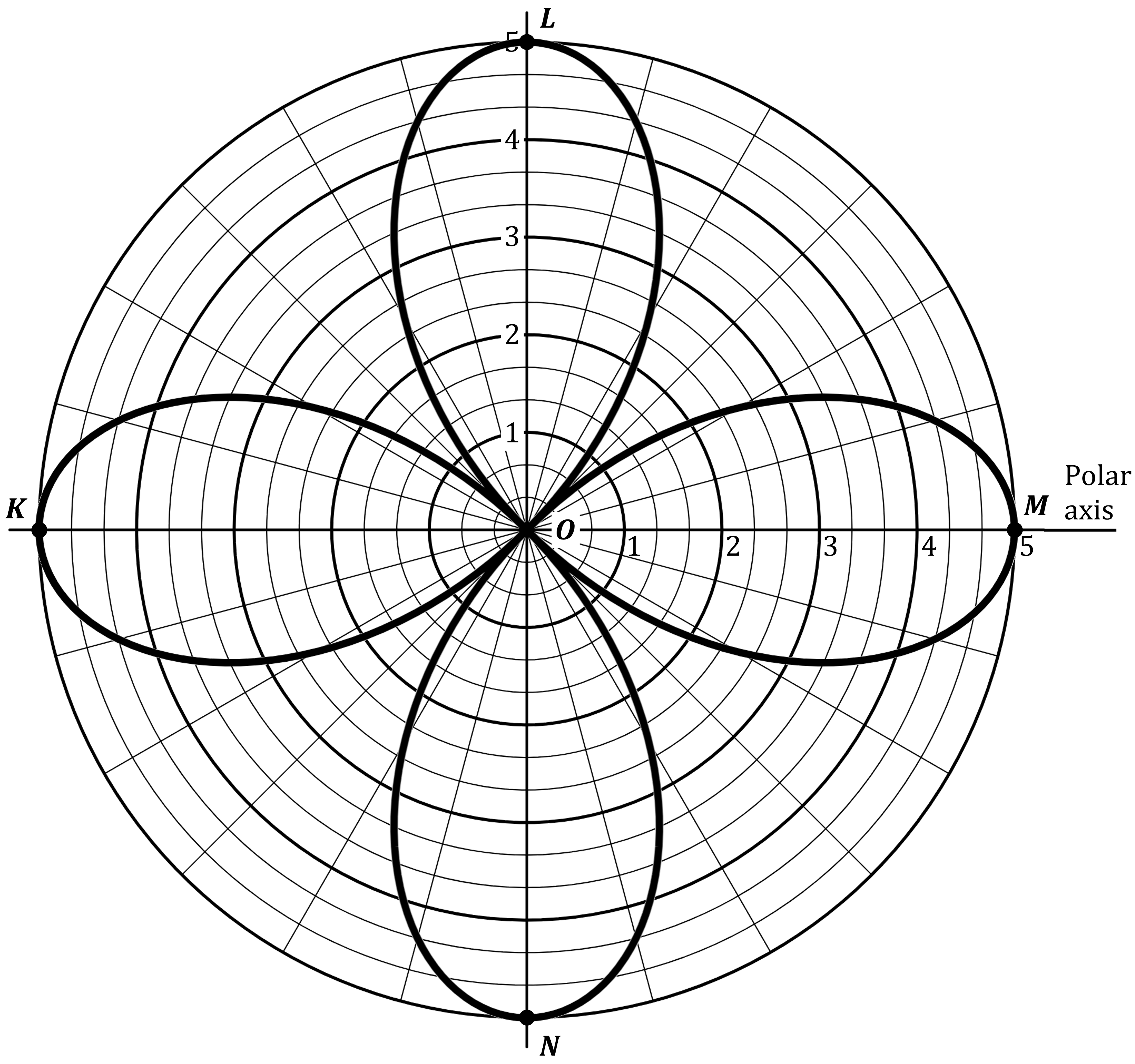
The figure shows the graph of the polar function , where , in the polar coordinate system for . There are five points labeled , and , where is the origin. If the domain of is restricted to , the portion of the given graph that remains consists of two pieces. One of those pieces is the portion of the graph in Quadrant III from to . Which of the following describes the other remaining piece?
(A) The portion of the graph in Quadrant I from to
(B) The portion of the graph in Quadrant I from to
(C) The portion of the graph in Quadrant III from to
(D) The portion of the graph in Quadrant IV from to
Answer:
Note at the start that the terminal rays for are all in Quadrant III
So points corresponding to those values can only lie in Quadrant III (if values of are positive) or Quadrant I (if values of are negative)
This instantly rules out answer option (D)
Trace the values of across the restricted domain
At
The terminal ray for points left from the origin (in the opposite direction to the polar axis)
and because is positive, the point lies on that ray at a distance of 5 from the origin
This is point
Note that
At
This is point at the origin
Note that , and cosine has a period of
so is also equal to
So going between and traces out "the portion of the graph in Quadrant III from to " that is mentioned in the question:
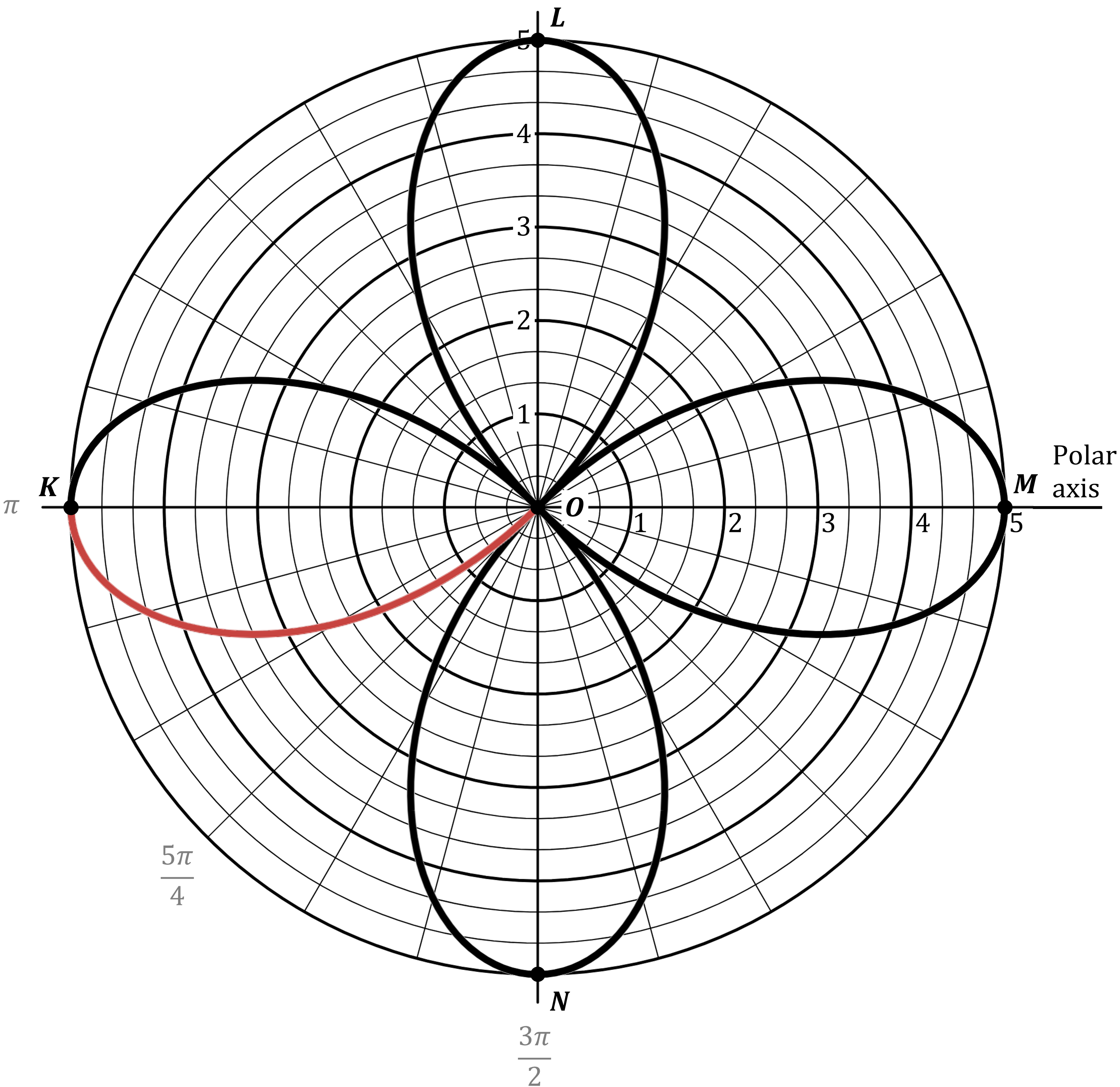
For the portion of the graph between and there are only two possibilities:
If is positive then this portion of the graph will be in Quadrant III, tracing out the portion of the graph between and
If is negative then this portion of the graph will be in Quadrant I (in the 'slice' of Quadrant I opposite the slice in Quadrant III between and ), tracing out the portion of the graph between and
At
The terminal ray for points down from the origin
However is negative, so the point lies on the ray opposite to that ray (i.e., up from the origin) at a distance of 5 from the origin
This is point
Note that , and cosine has a period of
so is also equal to
This means that the second of the two possibilities mentioned above is the correct one
(A) The portion of the graph in Quadrant I from to

Unlock more, it's free!
Join the 100,000+ Students that ❤️ Save My Exams
the (exam) results speak for themselves:

Was this revision note helpful?
Build on this topic