The Berlin Crisis & A Divided Germany, 1948–49 (Edexcel IGCSE History: Paper 1: Depth Studies): Revision Note
Exam code: 4HI1

Summary
In June 1948, Stalin responded to the new Western currency, the Deutschmark, by blockading West Berlin
He achieved this by cutting off the land routes that supplied it through Soviet-controlled Germany
Instead of giving in, the Western Allies flew supplies into the city in the Berlin Airlift
This tactic succeeded, and Stalin lifted the blockade after about eleven months
Partly because of the crisis, the USA, Britain, France and other Western countries formed a new military alliance, the North Atlantic Treaty Organisation (NATO), in April 1949
Germany formally split into two separate states in 1949:
the Federal Republic of Germany (West Germany)
the German Democratic Republic (East Germany)
The Berlin Crisis was one of the most significant events of the early Cold War
It turned economic and political rivalry into a direct military stand-off for the first time since 1945
Causes, events and results of the Berlin Crisis, 1948–49
Causes of the Berlin Crisis
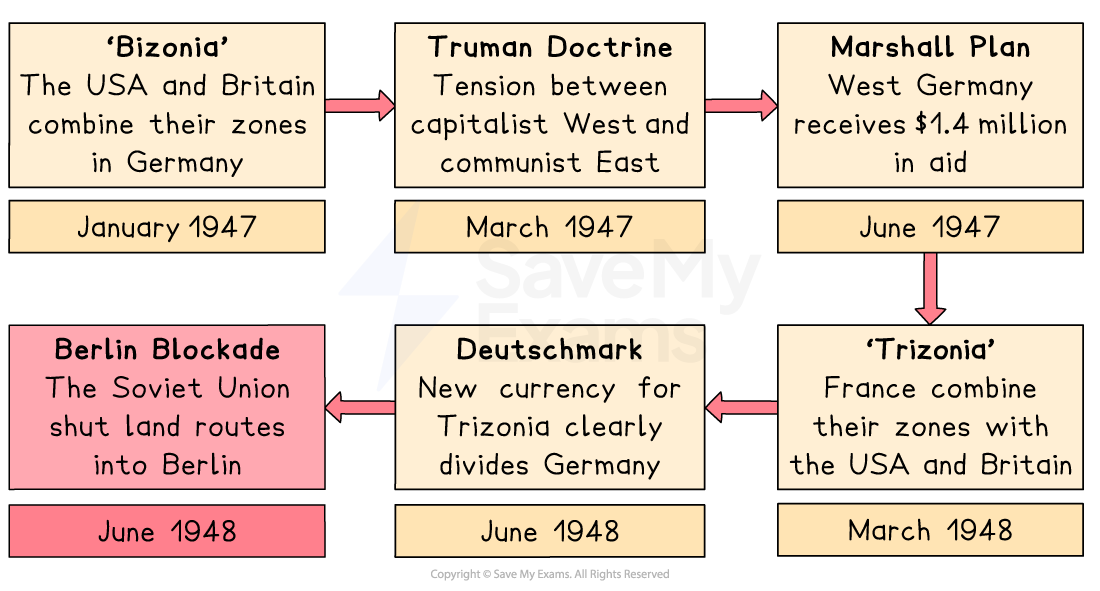
Events of the Berlin Crisis
How could the West respond to the Berlin Blockade?
The West had three options:
Withdraw from Berlin
Supply Berlin by land
Supply Berlin by air
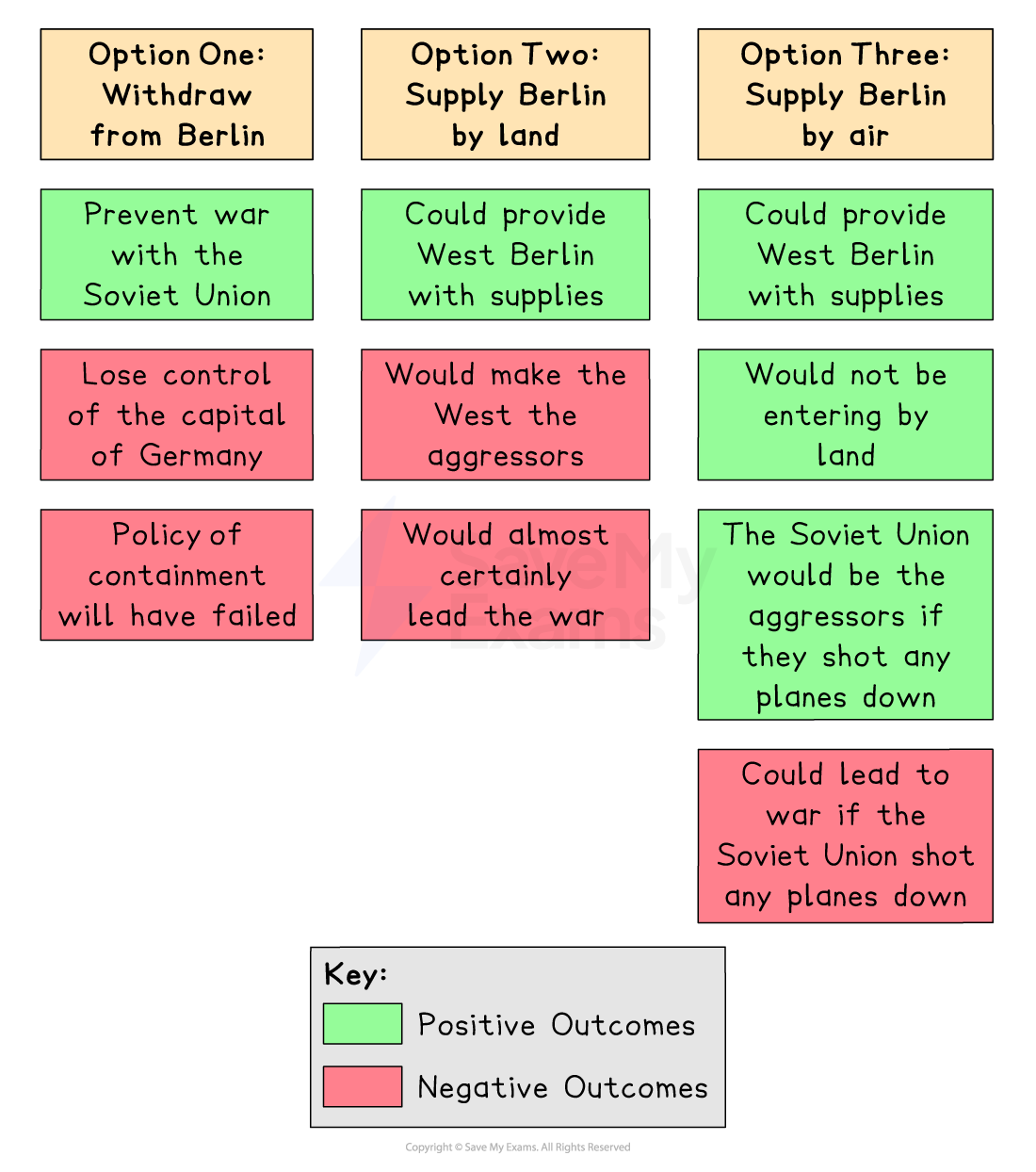
Truman was not prepared to abandon the policy of containment, especially so soon after his announcement of the Truman Doctrine
Truman and the Western Allies decided that flying supplies into West Berlin was the best way to keep the city out of Soviet hands without starting a war between the two superpowers
What followed was the Berlin Airlift
What happened during the Berlin Airlift?
From June 1948 to May 1949, the West flew supplies into West Berlin in what was known as Operation Vittles (the codename) or the Berlin Airlift

Results of the Berlin Crisis
Stalin could not stop the Berlin Airlift because shooting down aeroplanes carrying supplies would lead to war
The longer the airlift went on, the more humiliating it became for the Soviet Union
On 12 May 1949, the Soviet Union lifted the Berlin Blockade
The Western Allies continued to fly in supplies until 30 September 1949, so that West Berlin would be supplied in the event of a future blockade
The Berlin Airlift was a massive victory for the West over the East, but this created even greater tension between the two superpowers
Several key events happened partly as a result of the Berlin Crisis:
The creation of NATO
The formation of the FRG and the GDR
Examiner Tips and Tricks
Don't confuse the Berlin Crisis of 1948–49 (blockade and airlift) with the crisis of 1958–61 that led to the Berlin Wall. Examiners report students using one to answer questions about the other. Also, if the question asks about consequences, don't drift into its causes.
The creation of NATO
NATO was created in April 1949 in response to the growing tension between East and West following the end of the Second World War
The Communist takeover in Czechoslovakia (February 1948), followed by the Berlin Crisis, was the tipping point that convinced the Western powers to take a stand against the Soviet Union
What did NATO promise?
NATO was a military alliance based on collective security
An attack on one member would be treated as an attack on all
It was created to counter the presence of the huge Red Army in Eastern Europe and send a message to Stalin that the West was united and prepared for future war
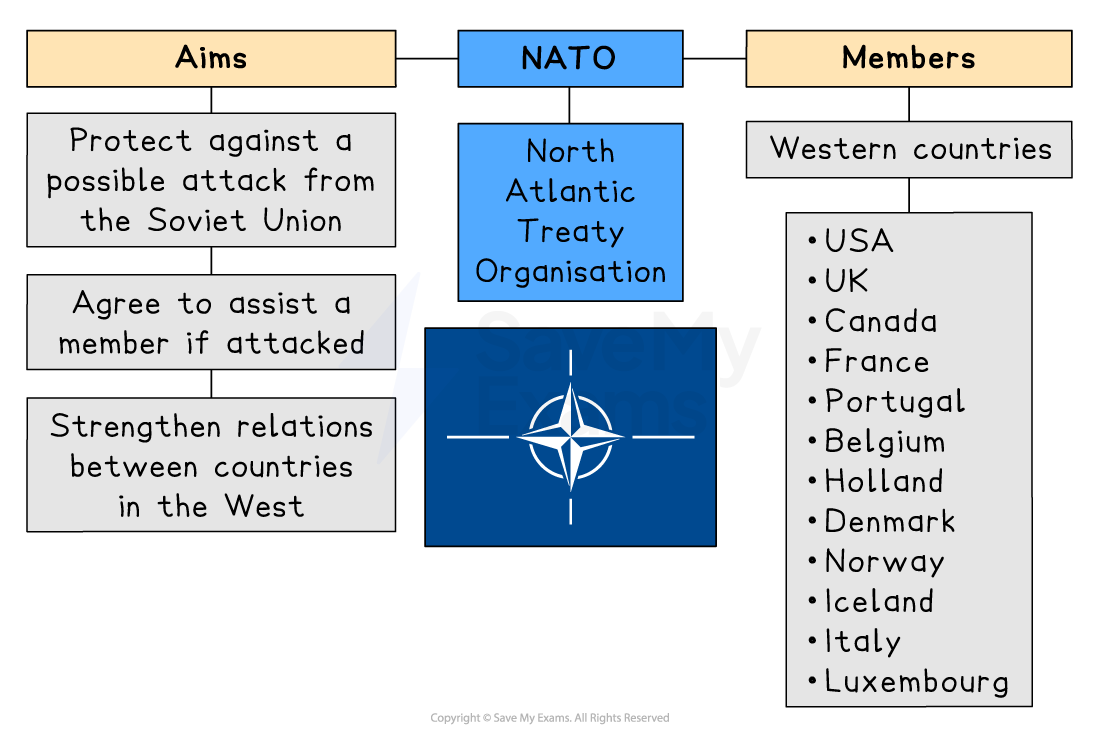
The impact of NATO
NATO marked a serious shift in US foreign policy because now they were officially prepared to use their military in Europe:
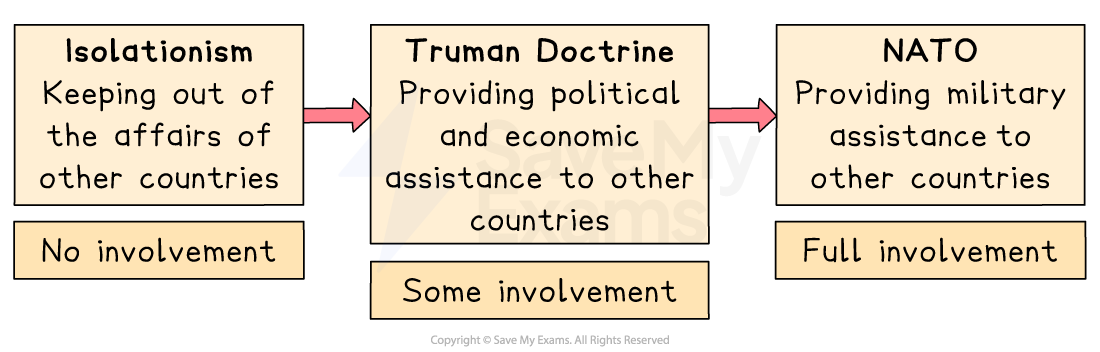
NATO further increased tensions between the USA and the Soviet Union
In August 1949, the Soviet Union successfully tested their first atomic bomb
In 1955, the Soviet Union created its own military alliance, known as the Warsaw Pact
The creation of the Federal Republic (FRG) and the Democratic Republic (GDR)
West Germany: the FRG, May 1949
After the Soviet Union lifted the Berlin Blockade, it was clear that Germany would continue to be divided
The members of Trizonia acted first and officially created the Federal Republic of Germany (FRG) in West Germany
The city of Bonn was chosen as the capital
West Berlin stayed under Western Allied control and was not part of the FRG
Stalin responded to the creation of the FRG by formally creating a new state in East Germany
East Germany: the GDR, October 1949
East Berlin remained the capital
Only the East recognised the GDR as a nation
East Germany and West Germany did not recognise each other as official states until 1972
Cold War tensions increased following the creation of both the FRG and GDR
Examiner Tips and Tricks
Students often confuse the FRG and the GDR. Mixing the two terms in an exam can limit the level your answer could achieve.
Despite its name, the "Democratic" Republic was a one-party Communist state, not a Western-style democracy.
How significant was the Berlin Crisis for superpower relations?
Evidence that the crisis was highly significant
The Berlin Crisis was the first time since 1945 that the two superpowers came close to direct military confrontation
Stalin's blockade and the Western airlift both risked accidental conflict in the air
The crisis directly led to the formation of NATO
This was the first peacetime military alliance the USA had ever joined, and it committed American troops to Europe for decades
The crisis confirmed the permanent division of Germany into two separate, opposed states
This division lasted for over 40 years
Stalin's clear failure made the Soviet Union look weak and aggressive
This was a significant propaganda defeat
Evidence that other factors were also significant
The division of Germany had already been building for over a year, through Bizonia, Trizonia and the Deutschmark
The ideological rivalry between capitalism and communism, and the Truman Doctrine's promise of containment, meant that some kind of confrontation over Europe was likely
Berlin, deep inside the Soviet zone, was where it came to a head
Policies such as the Marshall Plan, Cominform and Comecon had already divided Europe economically before the blockade began
Conclusions
The Berlin Crisis was highly significant, because it was the moment when Cold War rivalry moved from words, money and propaganda into direct action
This carried a real risk of war
However, the crisis grew directly out of the disagreements over Germany that came before it
It is best understood as the point where those existing tensions became impossible to manage peacefully
Worked Example
'The main reason why Germany was formally divided into two separate states by the end of 1949 was the Berlin Crisis (1948–49).'
How far do you agree? Explain your answer.
You may use the following in your answer:
the Berlin Blockade
the formation of NATO.
You must also use information of your own.
(16)
Partial answer:
The Berlin Crisis played a direct part in dividing Germany. Stalin's blockade was meant to force the Western powers out of Berlin and stop the creation of a separate West German state. However, the Berlin Airlift defeated the blockade instead. Once the blockade had clearly failed, the Western Allies moved quickly, and the Federal Republic of Germany was created within days of the blockade ending. This suggests that the failure of the blockade removed Stalin's last realistic chance of stopping a Western German state from being formed. As a result, the crisis was a direct cause of the final, formal split of Germany into two states.
Examiner Tips and Tricks
An answer that stays on only the two prompts is capped at 6 marks, and an answer that does not address three aspects is capped at 10 marks.
To reach Level 4 (13-16 marks), keep your line of argument consistent across the answer and use your conclusion to justify your opinion.

Unlock more, it's free!
Join the 100,000+ Students that ❤️ Save My Exams
the (exam) results speak for themselves:

Was this revision note helpful?
