The Great Depression & the Growth of Nazi Support, 1929–32 (Edexcel IGCSE History: Paper 1: Depth Studies): Revision Note
Exam code: 4HI1

Summary
Gustav Stresemann's death and the Wall Street Crash both happened within the same month (October 1929)
Together, they destroyed the stability that had kept Nazi support low
The Great Depression meant that American loans that had funded the recovery were suddenly recalled
This caused millions of Germans to be out of work and destroyed the government's ability to cope
The Nazis exploited the crisis with a mixture of:
propaganda that promised strong leadership and national renewal
SA violence that intimidated their opponents
As a result, Nazi support grew dramatically, from just 12 Reichstag seats in 1928 to 230 seats by July 1932
This made the Nazis the largest party in Germany
The impact of the Great Depression on Germany
The Wall Street Crash, 1929
During the 1920s, there had been a great deal of speculation on the New York Stock Exchange
Share prices had risen sharply
In October 1929, prices collapsed as investors lost confidence and began to sell
This destroyed many American businesses and triggered a downturn in the US economy
The effect on Germany

Who was affected in Weimar Germany?
Young people
By 1933, more than half of Germans aged 16 to 30 were unemployed
Even people with a good education, such as a university degree, could not find work
Workers
Four out of every ten factory workers could not get a job
Cuts to unemployment benefits and falling wages left many unable to afford food
Farmers
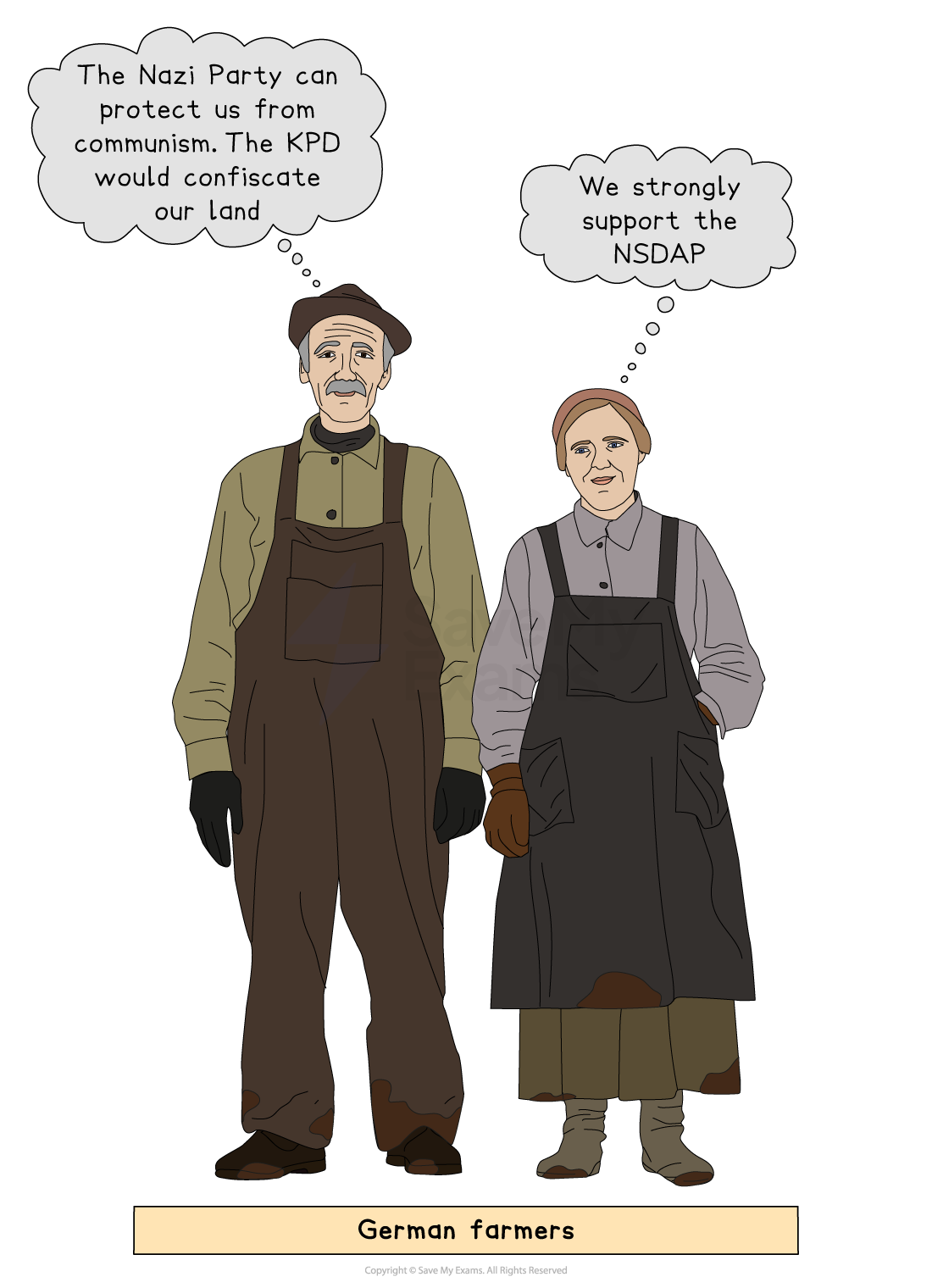
Farmers, who had already been struggling since the mid-1920s because of falling prices, fell further into debt
The Nazis used existing farmers' organisations to exploit this hardship and spread their influence
Savers
When banks collapsed in 1931, many people lost the savings they had deposited
Unemployed people soon used up whatever savings they had left
Business owners
Customers had less money to spend, partly due to unemployment and partly due to the government's tax rises
This meant businesses struggled to stay running
Nazi methods to win support
The appeal of Hitler
During the election campaigns of 1930 to 1932, the Nazis presented Hitler as the strong leader Germany needed
Posters showed him with almost superhuman strength
Rallies showed the public that he had a powerful, convincing speaking style
Joseph Goebbels ran Nazi propaganda, using simple slogans such as "Work and Bread" and, in 1932, flying Hitler to rallies across Germany
Hitler presented himself as Germany's last hope and promised a better future
He used broad pledges such as "Make Germany strong" and "Smash the chains of Versailles"
These were designed to appeal to many different groups at once
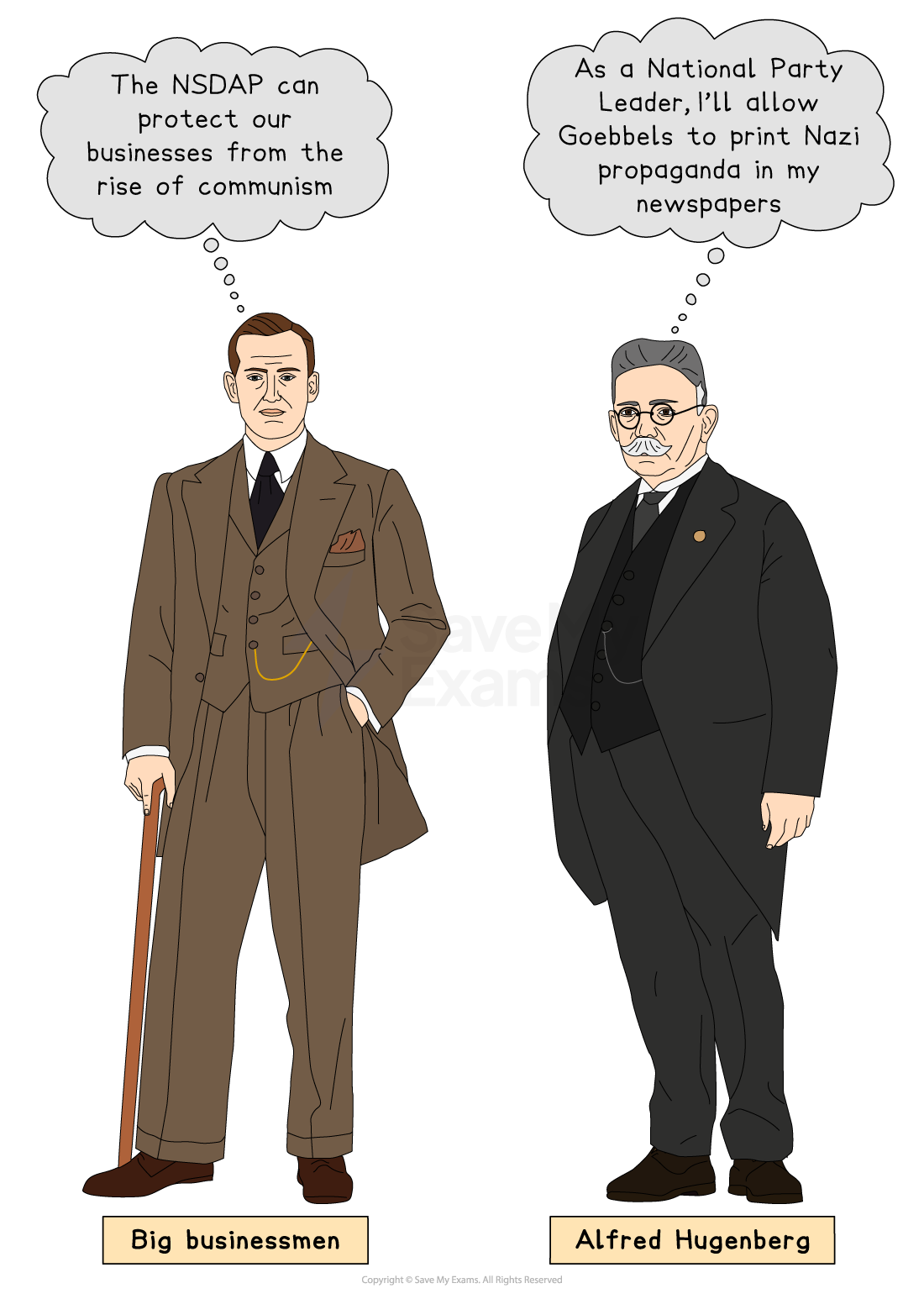
Business support
Hitler persuaded big businessmen like Thyssen and Kirdorf to fund the National Socialist German Workers' Party (NSDAP)
Working-class support
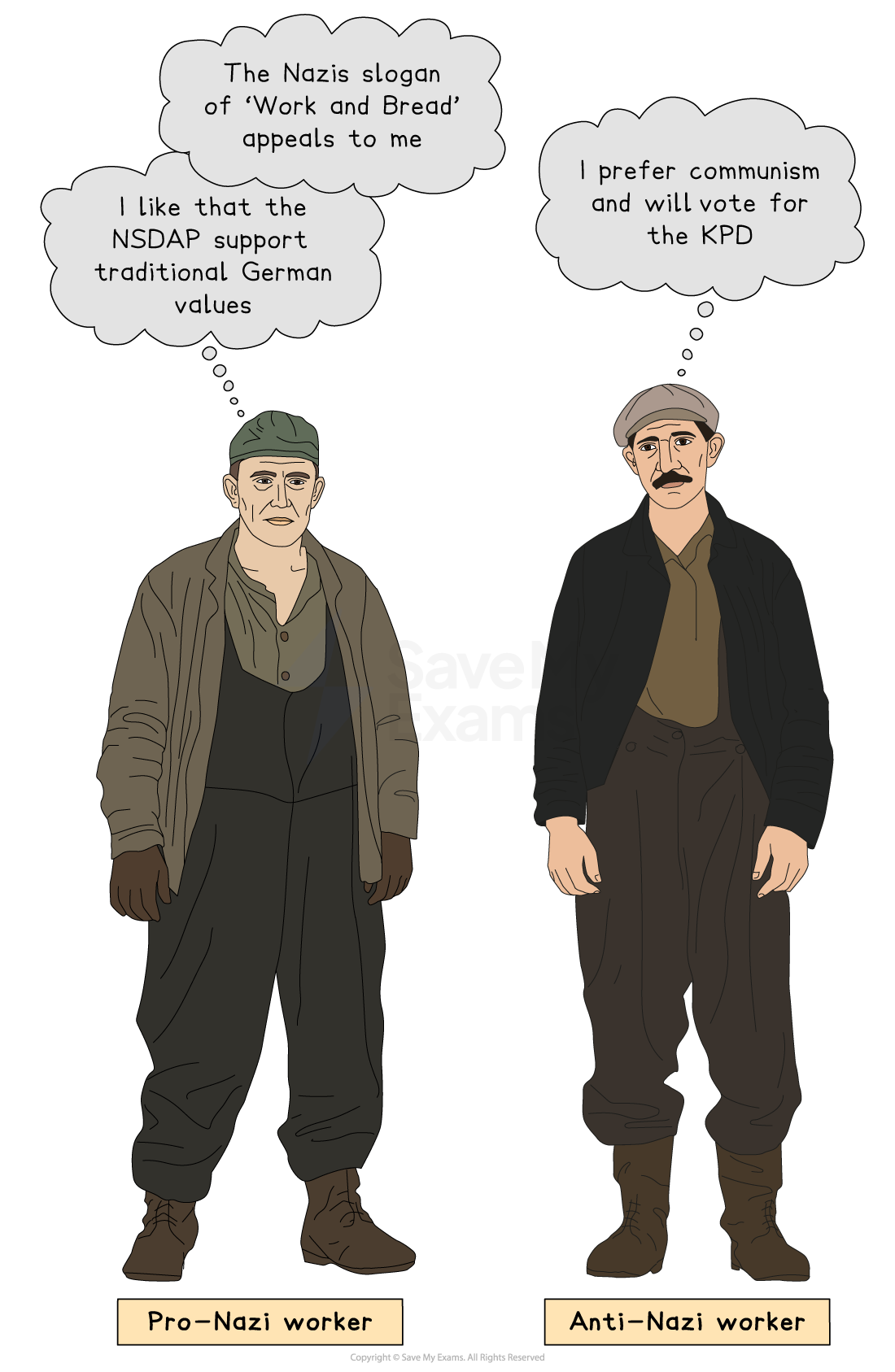
The NSDAP tried to become the party of the workers
They were named the National Socialist German Workers’ Party
Its full name included the word "Workers" to appeal to them
The NSDAP aimed many of its policies towards the working classes
These included promises to redistribute land and improve working conditions
The NSDAP had some election success with the workers but never gained the majority of the working-class vote
Middle-class support
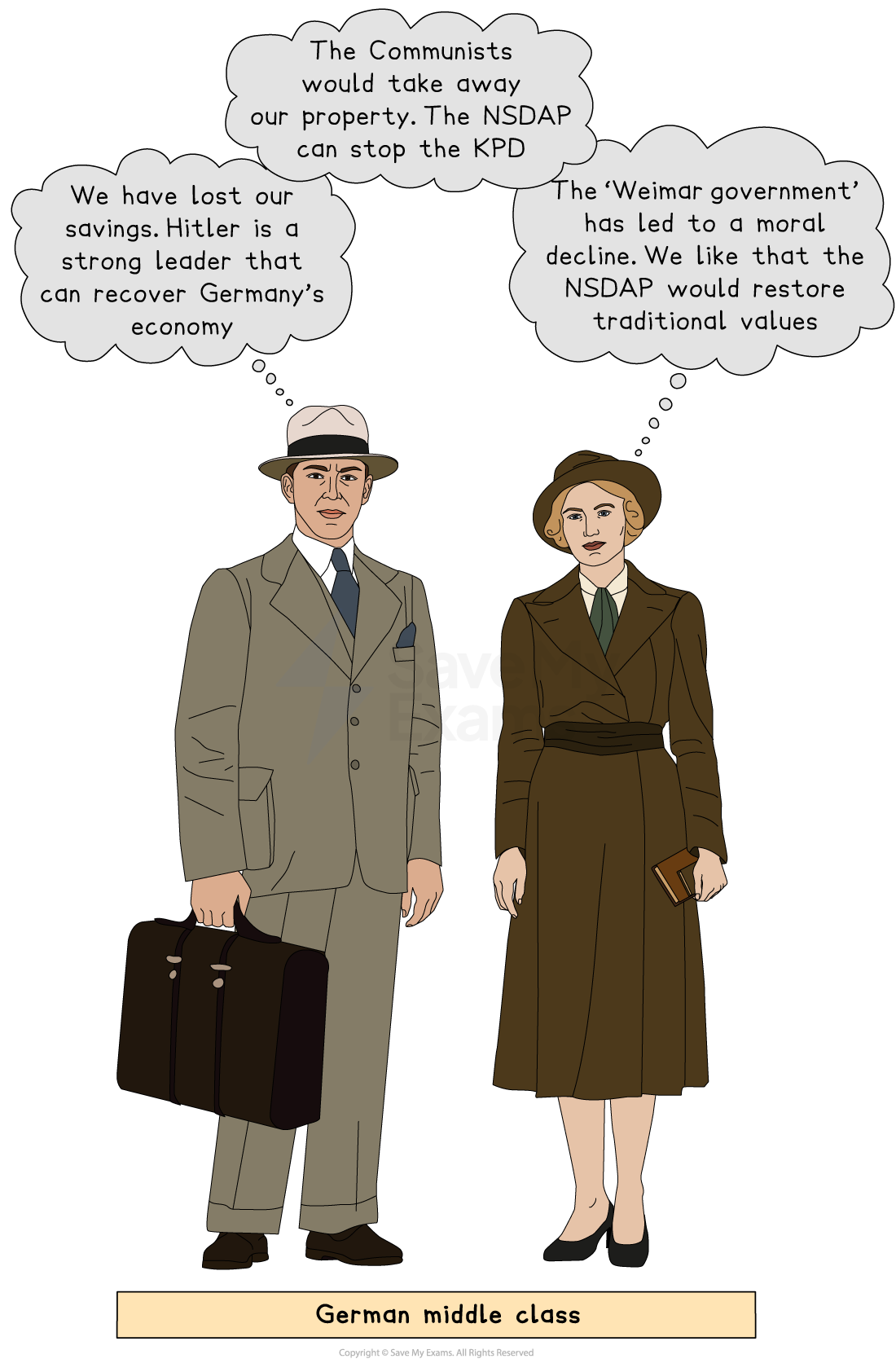
The middle classes contained teachers, lawyers and smaller business owners
They often owned property and had savings
From 1929 to 1933, the middle classes no longer supported moderate parties
Farmers
In 1930, the Nazi Party gained 60% of the rural vote in some areas
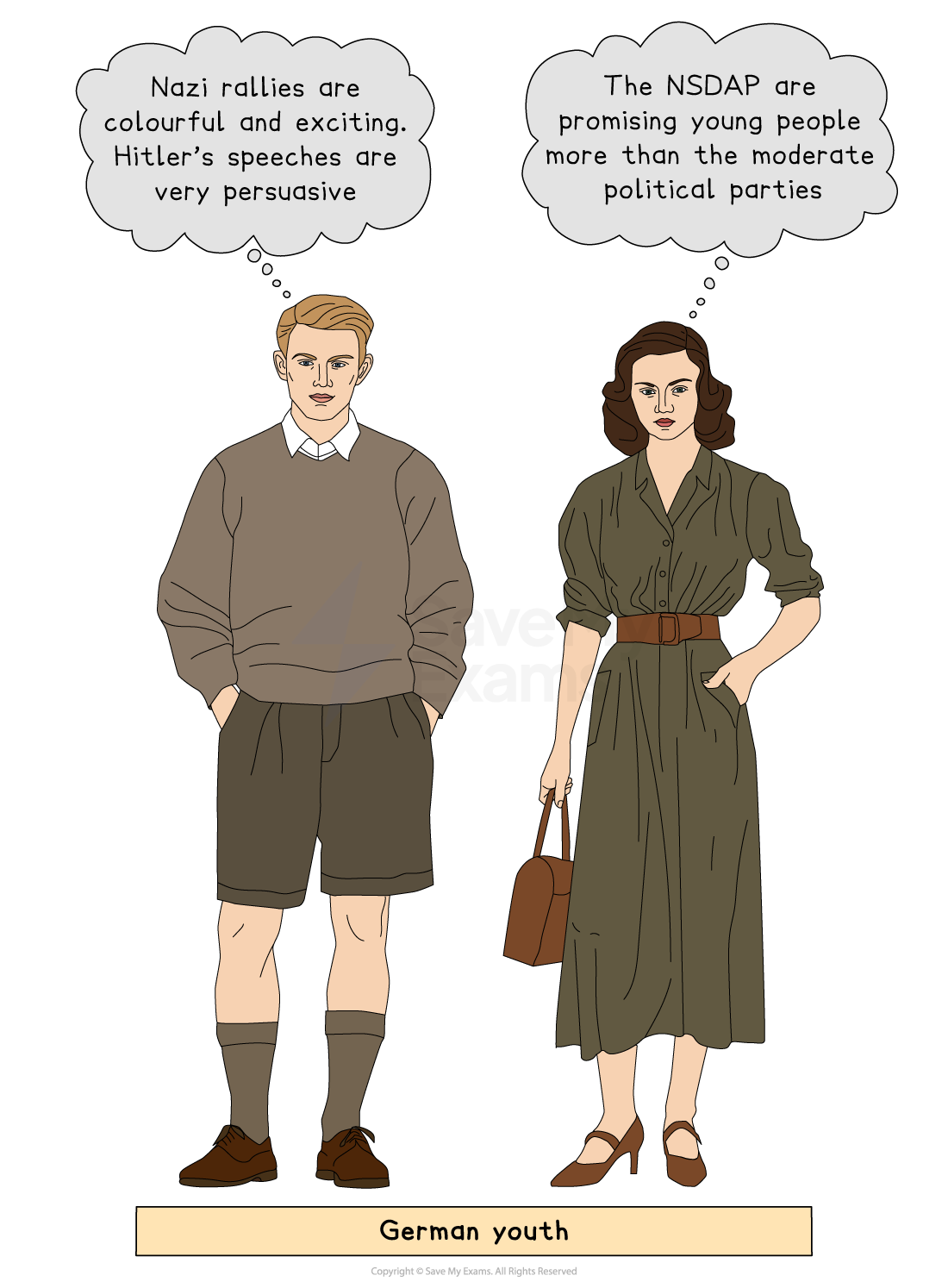
Young people
Young people suffered greatly from the economic crisis in the 1930s
This made them more likely to respond to Nazi promises of jobs and a better future
Women
Nazi propaganda persuaded more women to vote for the party by stating that:
voting for the Nazi Party would be the best for the country
Hitler’s government would provide a successful future for their children
The role of the SA
A private army bigger than the Communists'
By 1932, the SA had grown to 400,000 members
This gave the Nazis a larger private force than their main rivals, the Communists
A show of force
At rallies, the SA used lights and symbols of power such as swords and flags
This reinforced the idea that the Nazis could bring order and a better future to Germany
Political violence
The SA disrupted the meetings of political opponents
In the elections of 1930 and 1932, it used violence to threaten opposition parties, killing some people and intimidating voters at polling stations
Examiner Tips and Tricks
A question could ask you how far you agree that the growth in support of the Nazis between 1929and 1932 stemmed from fear.
To structure your response, it may help you to consider "the carrot and the stick" approach.
The carrot is something that lures someone in
You could argue that many groups in Germany were lured to support the Nazis due to the promises the party made to them
The stick is something that threatens or punishes someone if they do not comply
You could argue that the SA forced more people to show outward support for the Nazis
Why did support for the Nazi Party grow after 1929?
Economic despair
The Depression caused mass unemployment and hardship affecting nearly every group in German society
Chancellor Brüning's government, from March 1930, made matters worse
He raised tax and cut benefits
His government ruled largely through Article 48 presidential decrees rather than through the Reichstag
This left many Germans feeling that the Weimar system itself had failed them
The Depression also boosted the Communist Party (KPD), whose seats rose from 77 in 1930 to 100 in November 1932
Fear of communism drove many middle-class voters, business owners and farmers towards the Nazis
Examiner Tips and Tricks
This is a direct continuity with the Weimar Constitution's weaknesses you studied at the very start of the course. The vague emergency powers of Article 48 are exactly the "gateway" that let Germany drift away from real democracy between 1930 and 1933, well before Hitler became Chancellor
Nazi tactics
Skilful, targeted propaganda presented Hitler as the strong leader Germany needed
SA violence intimidated rivals and demonstrated Nazi strength
Financial backing from business, fearful of communism, funded the party's campaigns
Conclusions
Economic collapse created millions of desperate, frightened voters
However, it was Nazi propaganda and organisation that persuaded so many of them specifically to choose the Nazis rather than the Communists or another party
The Depression explains why Germans wanted change
Party tactics explain why so many voters chose the Nazis
Worked Example
'Nazi support grew mainly because of the Great Depression, rather than because of Nazi tactics.'
How far do you agree? Explain your answer.
You may use the following in your answer:
the Great Depression (1929–1932)
Nazi use of propaganda.
You must also use information of your own.
(16)
Partial answer:
The Great Depression caused the desperation that made extreme parties attractive. After the Wall Street Crash of October 1929, the USA recalled its loans to Germany. German businesses collapsed as a result. Unemployment rose from under a million and a half in 1928 to well over five million by 1932, and groups across German society were affected, such as farmers and workers. Chancellor Brüning's response, cutting benefits and raising taxes while ruling mainly by Article 48, made people feel that the Weimar system itself had failed them. Without this economic collapse, there is little reason to think that millions of Germans would suddenly have turned to an extremist party promising to tear up the constitution.
Examiner Tips and Tricks
For a 16-mark question, your answer could be written in three PEEL paragraphs:
P - Make a point about the question
This should include your judgement
E - Use evidence that supports the point that you have made
Evidence needs to be relevant and specific to the question
E - Explain why this evidence supports your point
Your explanation should be focused on the second-order concept outlined in the question
L - Link your explanation back to the question to help sustain your argument and show your understanding of the question
To reach Level 4 in the 16-mark question, set out how you will judge whether the Depression was the main reason Nazi support grew, for example which factor won over the most voters, or whether Nazi tactics would have worked without the economic crisis. State it in your introduction and use it to reach your conclusion

Unlock more, it's free!
Join the 100,000+ Students that ❤️ Save My Exams
the (exam) results speak for themselves:

Was this revision note helpful?
