Using a Laser or Light Source (OCR AS Physics): Revision Note
Exam code: H156

Using a Laser or Light Source
A laser or light source is used to investigate characteristics of light such as interference and diffraction
A laser is preferred to a lamp since they produce coherent, monochromatic light
This produces a sharper and brighter interference pattern
The contrast between the bright and dark fringes is much easier to see in laser light, compared to a lamp with a low intensity that emits light of all wavelengths
In experiments such as Young's double-slit experiment, it is important to be able to see the fringes clearly to determine the fringe width
If these were not clear, there will be a large error in the measurement of the fringe widths

Single slit diffraction of a laser producing an interference pattern on the screen
Safety Issues with Lasers
Lasers produce a very high energy beam of light
This intense beam can cause permanent eye damage or even blindness
In schools, only class 2 lasers are allowed - these are lasers with a power output of less than 1 mW
However, more powerful lasers can reach outputs of more than 500 mW
These are known as class 4 lasers. They are so powerful they can make a person instantly blind and can even damage the skin

The four classes of laser: In a school laboratory, only Class 2 lasers may be used
Precautions with Lasers
It's important to use lasers safely and follow the guidelines in all practicals:
Never look directly at a laser or its reflection
Don’t shine the laser towards a person
Don't allow a laser beam to reflect from shiny surfaces into someone else's eyes
Wear laser safety goggles
Place a ‘laser on’ warning light outside the room
Stand behind the laser
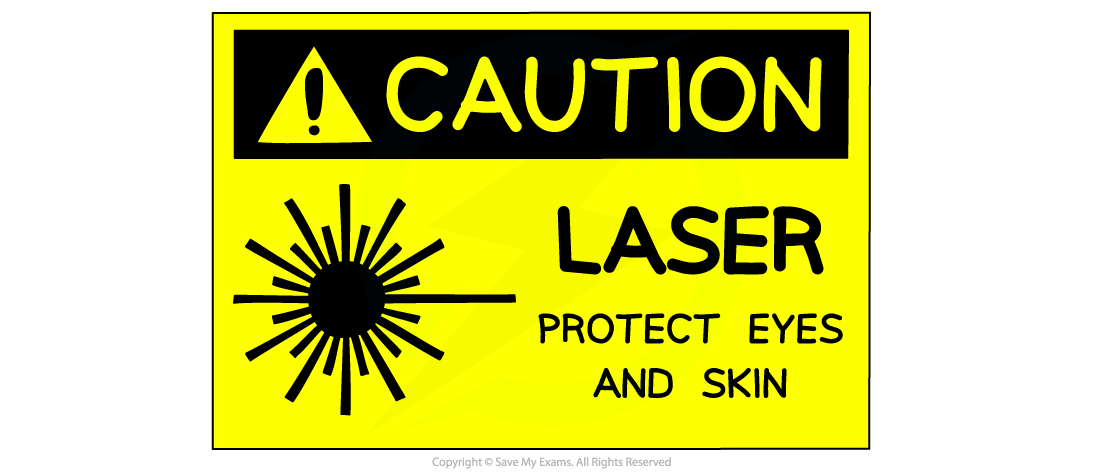
Placing a laser warning sign outside of the door is one precaution that can be taken when using lasers

Unlock more, it's free!
Join the 100,000+ Students that ❤️ Save My Exams
the (exam) results speak for themselves:

Was this revision note helpful?
Build on this topic
